




If you have half a day or a full day in the Tarn, visiting Cordes-sur-Ciel is one of those decisions you simply can’t get wrong. The climb is steady, and you definitely feel it, but in less than two hours you can explore the medieval heart at an unhurried pace. It’s the kind of village that rewards slow wandering, discovering artisan workshops, and getting lost among Gothic façades that open onto wide valley views.
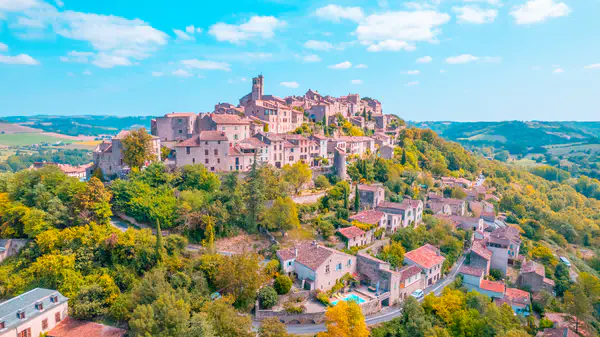
When people ask me what to see in Cordes-sur-Ciel, I always say the same thing: you don’t come here to “check off monuments,” you come to stroll. This small hilltop village, perched 300 meters high in Occitanie, seems suspended in the clouds on misty days, which is exactly how it earned its name.
Chosen as the French people’s favorite village in 2014, Cordes-sur-Ciel captivates you from the very first moment. Not because of one single landmark, but because of the whole ensemble: cobblestone lanes, medieval merchant houses, and that rare feeling of walking through a place that has quietly stayed apart from mass tourism.
The visit itself is not complicated, but it is vertical. You’ll want comfortable shoes and no tight schedule, because every corner invites you to pause. And that, truly, is part of its charm.
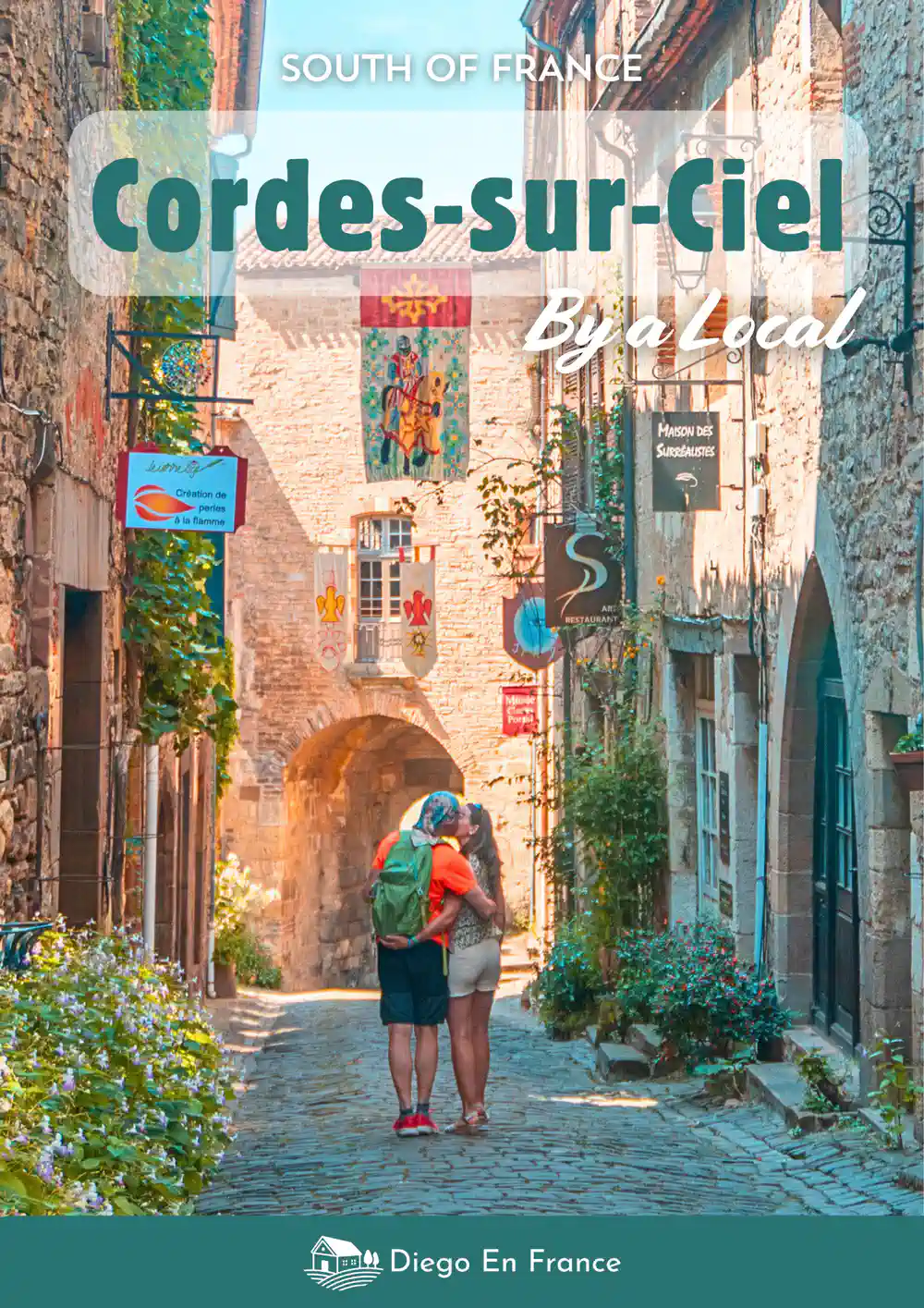
This village is a place where the past comes alive at every corner, offering an unforgettable experience for the whole family.
If you want to know more about what this special place has to offer, keep reading my article. I will tell you what to see in Cordes-sur-Ciel, a destination that will undoubtedly stay in your heart.
ℹ️ Population 856 inhabitants in 2020. Source INSEE
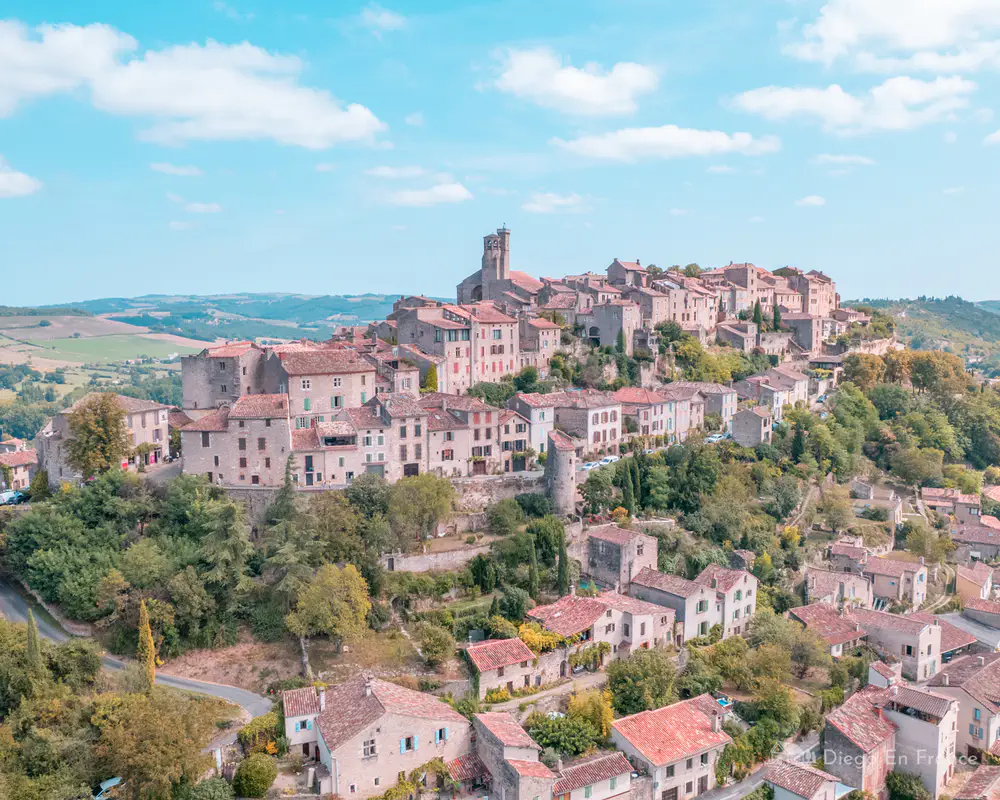
Best Things to do in Cordes sur Ciel, South of France
Stroll through the medieval Old Town
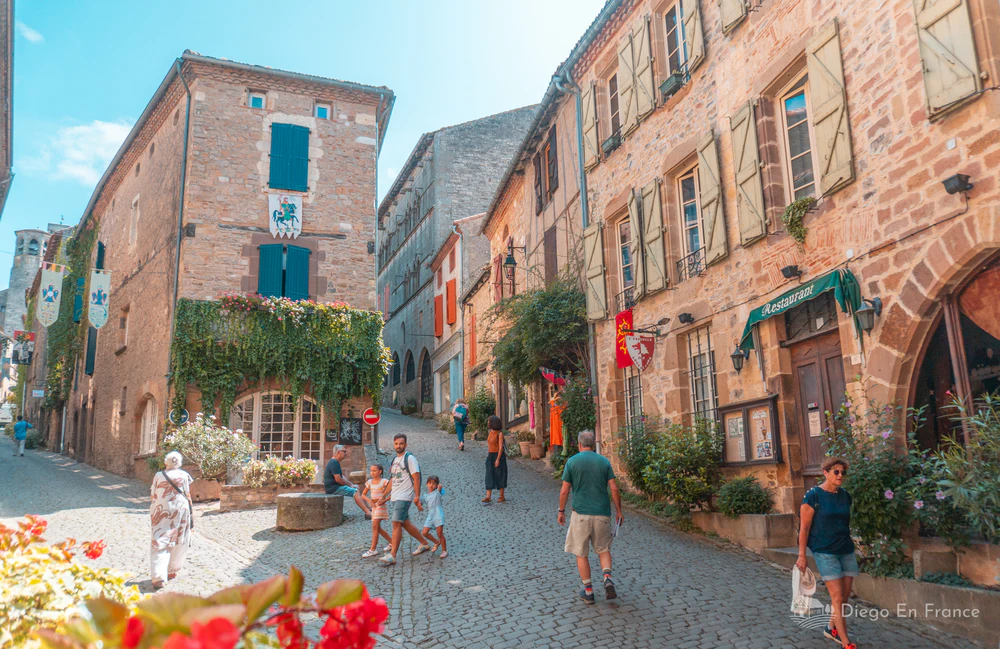
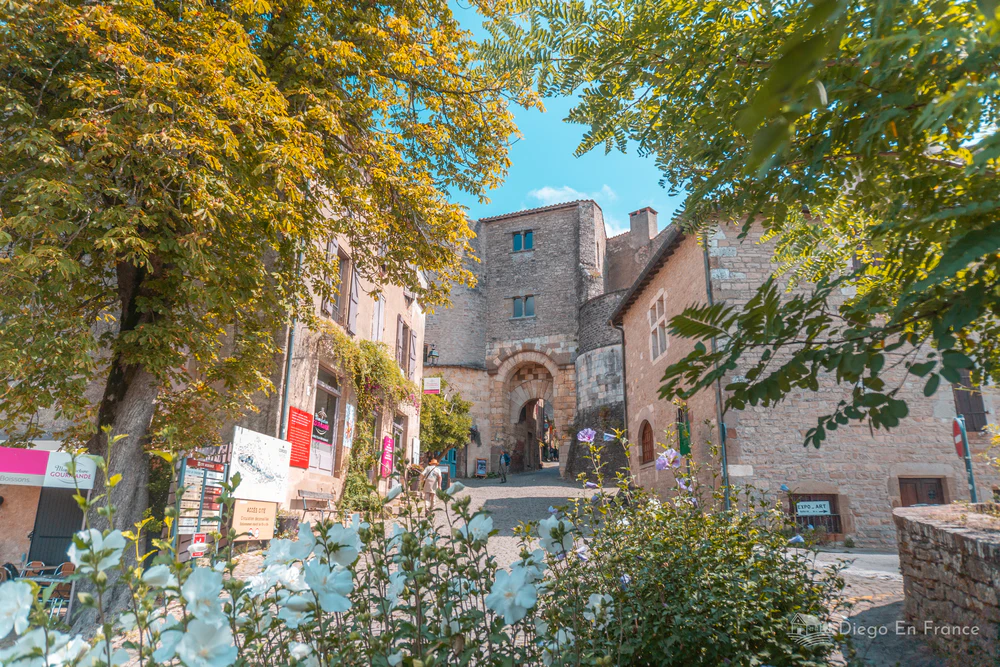
The very first thing you should do in Cordes-sur-Ciel is get lost in its charming medieval lanes.
If you only have half a day, this walk is the true heart of the visit. Here is where you really begin to understand the soul of the village.
Before You Start Climbing
- Estimated time: 1h30 – 2h if you explore at a relaxed pace.
- Physical level: steady cobbled incline; gentle and pleasant if you take your time, more demanding with a stroller.
- Best time: early in the morning or late in the afternoon (the light is softer and there are fewer people).
Although the village sits at 300 meters above sea level, as you make your way up its cobbled streets, you’ll come across charming boutiques, art studios where artisans craft true masterpieces, and small museums. Everything is so lovely that the climb turns into a captivating stroll, and you barely notice the ascent. Before you know it, you find yourself right in the very heart of the village.
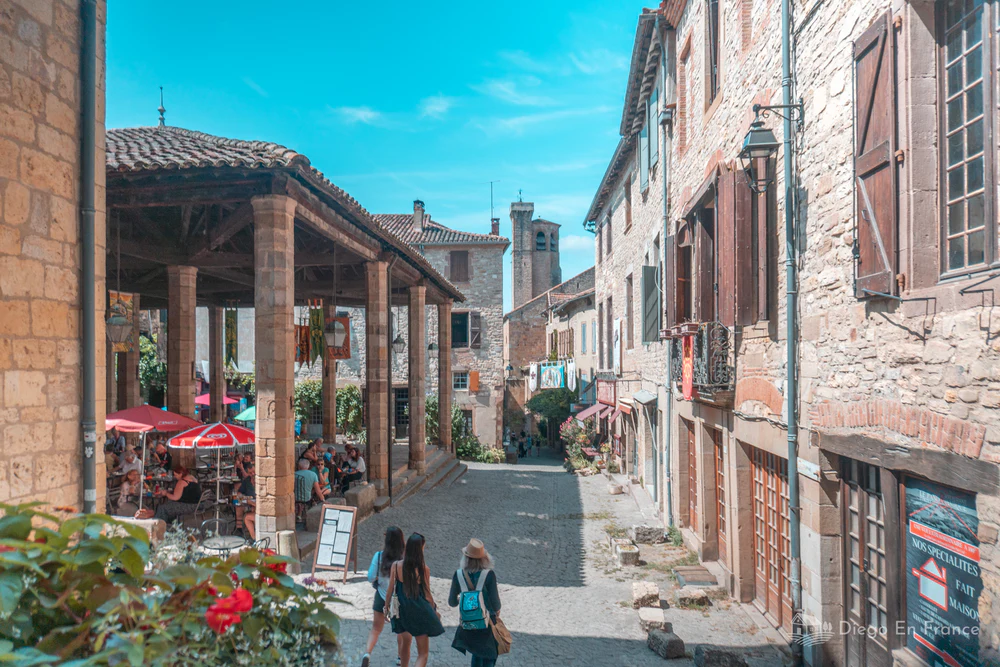
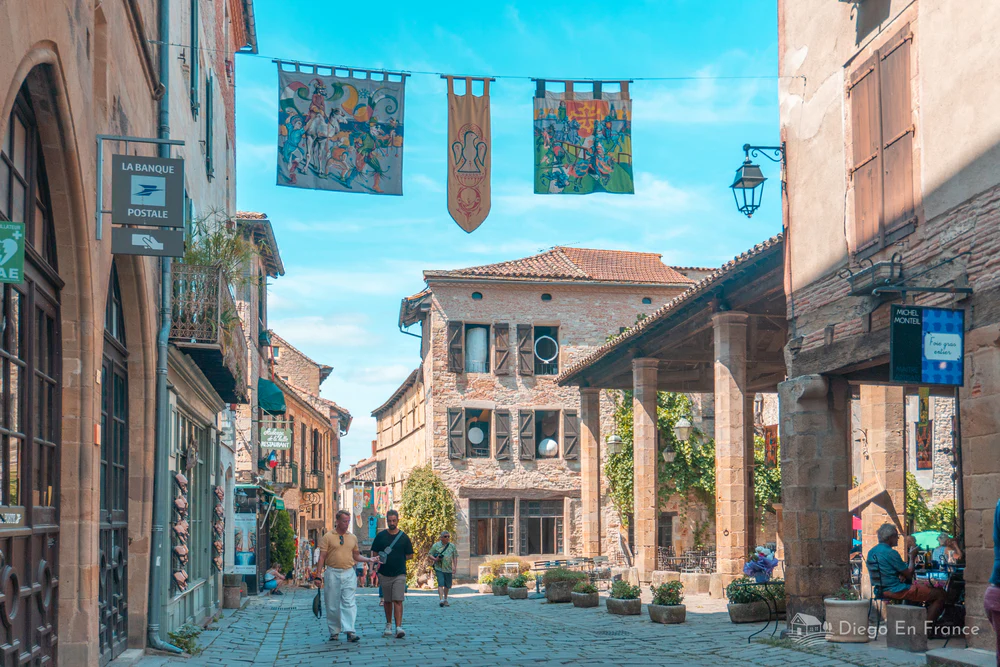
I can promise you that every step brings a new surprise, with breathtaking views and corners full of charm. Best of all, despite being such a beautiful place, Cordes-sur-Ciel is not overcrowded with tourists, so you can savor every detail in complete tranquility.
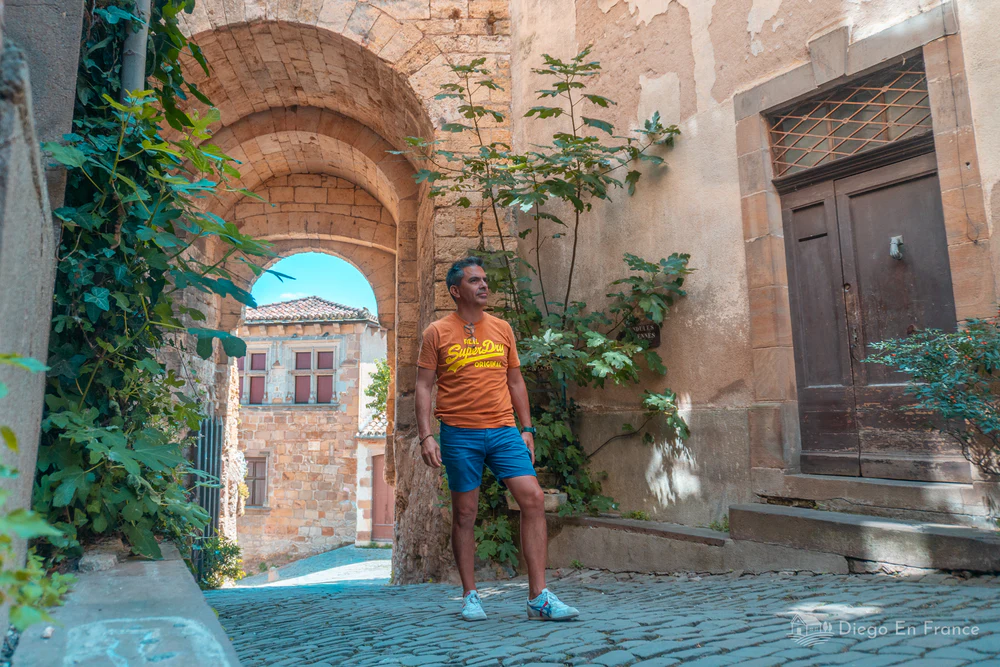
And no matter which gate you enter through, all roads lead to the heart of the village, where the magic of this unique corner of France completely surrounds you.
- Église Saint-Michel in Cordes-sur-Ciel
- Musée d’Art Moderne and Contemporain
Is the climb in Cordes-sur-Ciel difficult?
The visit involves a steady uphill walk along cobblestone streets. It’s not technically difficult, but it does require taking your time and wearing comfortable shoes. With a stroller, it can feel awkward due to the slopes and uneven pavement. If you prefer to avoid the steepest section, it’s best to park in the higher areas of the village.
How much time do you need to visit Cordes-sur-Ciel?
Most travelers spend between half a day and a full day here. In about two hours, you can explore the medieval center at a relaxed pace, but if you add museums, gardens, and a lunch break, it’s best to plan for at least half a day. If you enjoy slow travel and stopping in artisan workshops, you could easily spend an entire day here.
Best Day Trips from Toulouse: Explore Hidden Gems & Medieval Towns

Discover the Treboul’tout and experience the Medieval Builders in Cordes-sur-Ciel
Entering through the Porte de la Jane, head uphill to the right and you’ll find my friends, the medieval builders (Le Bâtisseurs Médiévaux). They look as if they’ve stepped straight out of the Middle Ages, and they show you the very tools that were once used to build churches, castles, and cathedrals.
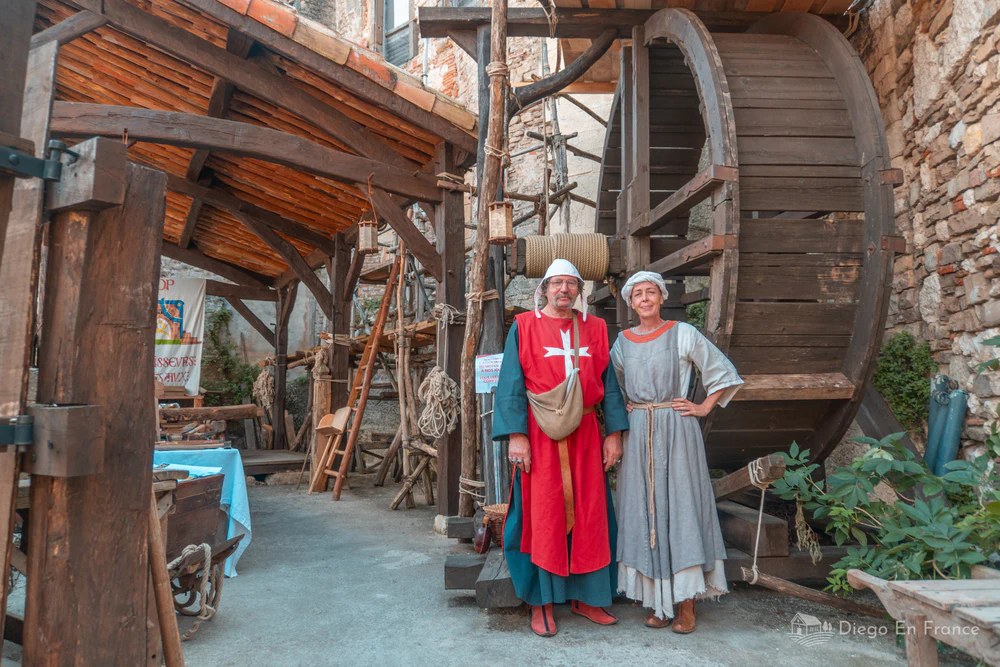
Here, you can see the treboul’tout in action and, even better, operate it yourself. It’s an enormous wooden wheel that you walk inside, like a giant hamster wheel, and it was once used to lift heavy stones and materials. When you step in and begin to walk, you truly understand how they were able to move tons of weight without modern machinery.
The experience isn’t long (around 20–30 minutes if you take your time), but it’s surprisingly educational and entertaining. This is not a static museum where you simply look at displays. Here, you touch, test, and experiment.
If you’re interested in medieval architecture or traveling with curious kids, this stop is well worth it.
I usually recommend coming here mid-morning, before large groups arrive, so you can try the wheel without waiting too long.
More than just a demonstration, it’s a very tangible way to connect with medieval engineering and to understand how the very village you’re walking through was built.
Visit the fascinating Museum of Sugar and Chocolate

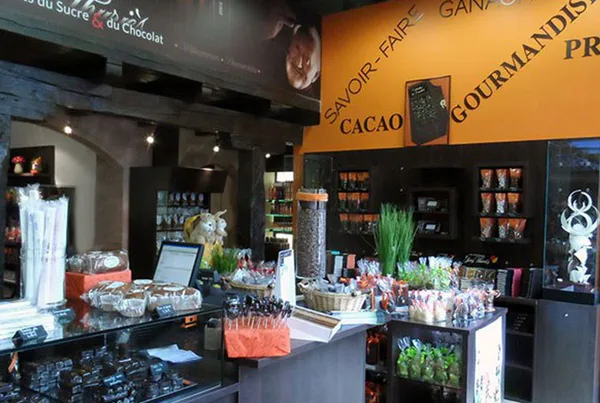
Right on Grand Rue, you’ll come across one of the most curious spots in the village: the Sugar and Chocolate Museum, created by pastry chef Yves Thuriès.
Here, you don’t just walk past display cases. What truly surprises you are the sculptures made entirely of sugar and chocolate: castles, delicate figures, and intricate compositions that seem almost impossible to keep standing. Some pieces are so detailed that it’s hard to believe they’re made from something edible.
Yves Thuriès was twice awarded the title of Meilleur Ouvrier de France, one of the country’s most prestigious artisanal honors, and this museum is his way of sharing that passion for meticulous and creative work.
If you’re in the mood for a different kind of break between climbs up the cobbled streets, this is an original stop that’s easy to weave into your stroll.
ℹ️ For updated opening hours, it’s best to check the official website before your visit.
📍 33 Grand Rue Raimond VII, Cordes-sur-Ciel
Who is M. Yves Thuriès ?
Yves Thuriès was twice awarded the title of Meilleur Ouvrier de France, one of the most demanding artisanal distinctions in the country. This title is not granted for popularity, but for absolute technical mastery.
Beyond the awards, what’s truly interesting is that he chose to create in Cordes-sur-Ciel a space dedicated to showcasing the artistic work that can be achieved with sugar and chocolate, something that remains rare even in France.
A Breath in the Jardin des Paradis: An Oasis of Tranquility
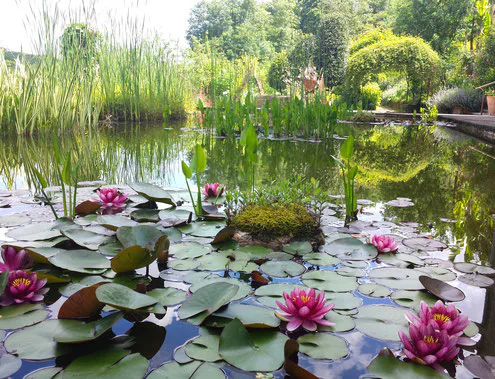
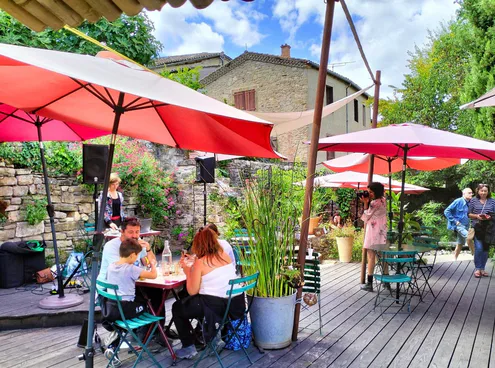
After wandering through several cobbled streets and tackling a few uphill stretches, the Jardin des Paradis feels like a well-earned pause. It isn’t large, but that’s precisely what makes it intimate and easy to explore without rushing.
Classified as a “Jardin Remarquable,” it blends Islamic and Mediterranean influences with small ponds, discreet fountains, and shaded corners where you can sit and rest. In summer, it’s especially welcome, offering a sense of coolness when the rest of the village can feel quite exposed to the sun.
The visit takes no more than 30–40 minutes, but it’s a lovely place to slow down, settle into a hammock, and simply listen to the sound of running water. I usually stop here when I need a break before continuing up toward the higher part of the village.
If you’re traveling as a couple or looking for a quiet moment away from the busier streets, this garden fits beautifully into your route.
ℹ️ Admission 4 € from 8 years old
Place du Théron, Cordes-sur-Ciel
Outdoor Experiences Around Cordes-sur-Ciel
If, after exploring the medieval center, you’re in the mood for something more active, the surrounding area offers a couple of interesting options that complement your visit beautifully.
Take to the Skies of the Tarn: Experience a Hot Air Balloon Adventure
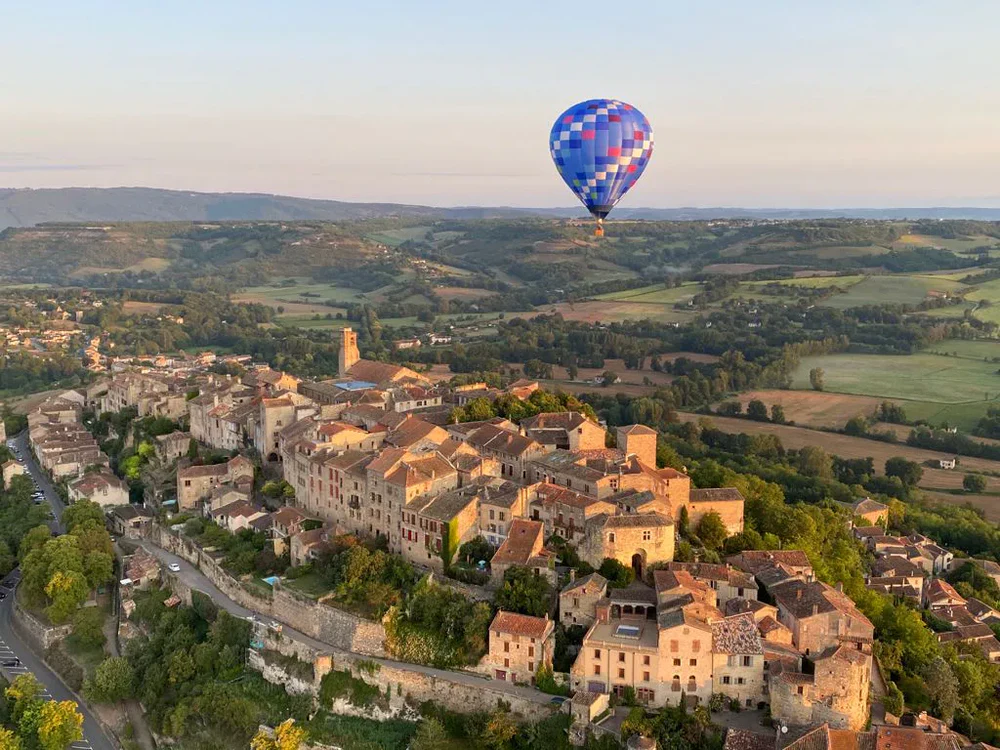
Seeing Cordes-sur-Ciel from below is already impressive, but from the air you truly grasp why it was built on that hill. A hot air balloon flight over the Tarn Valley allows you to appreciate its strategic setting and the vast landscape that surrounds it.
Flights usually take place at sunrise or late in the day, when the wind is more stable. The full experience lasts around 3 hours, including preparation and inflation, although the actual flight is about one hour.
It’s not an essential activity for visiting the village, but it’s a special option if you’re looking for something different or celebrating a particular occasion. It’s better suited for adults or teenagers who enjoy the calm experience of flight, as this is not about adrenaline but about quiet contemplation.
If you decide to do it, it’s wise to book in advance during high season, as spots are limited and highly dependent on weather conditions.
ℹ️ For information and reservations call +33 (0) 6 83 06 16 56
Touring the treetops in Accro-Tyro
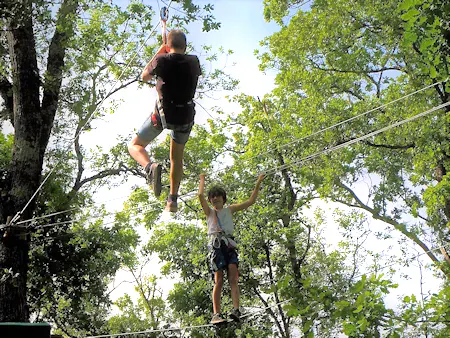
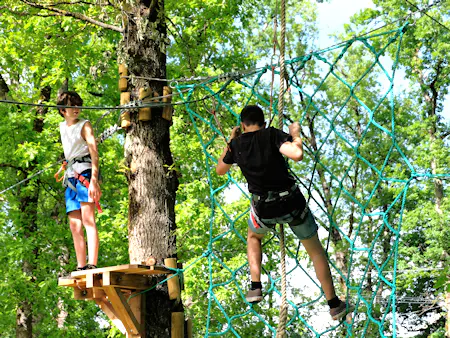
Just a few minutes from the center, surrounded by oak trees, Accro-Tyro offers treetop adventure courses with different levels of difficulty. Walkways, suspension bridges, and zip lines, one stretching up to 150 meters, make it easy to spend 2 to 3 active hours immersed in nature.
It’s a great option if you’re traveling with children or teenagers and want to balance the cultural visit with something more dynamic. Keep in mind that it’s not located in the historic center, so you’ll need a car to get there.
910 route de cordes sur ciel, Vindrac-Alayrac
What is accrobranche?
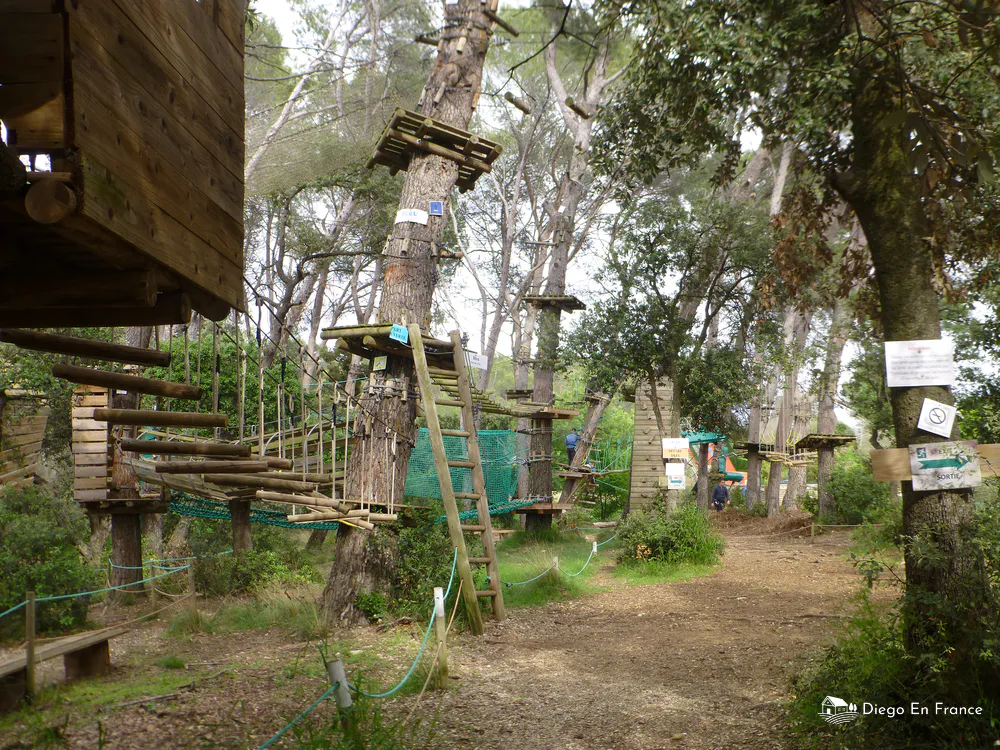
The word accrobranche comes from the French “accroché à la branche”, which roughly means “clinging to the branch.” And that’s essentially what it is: tree-top adventure courses with suspended bridges, walkways and zip lines at different heights, always secured with a harness and a continuous safety system.
In France, these parks are almost a classic of family and nature tourism. There are more than 500 across the country, and they are part of a culture of spending the day outdoors, having a picnic and combining physical activity with time in nature.
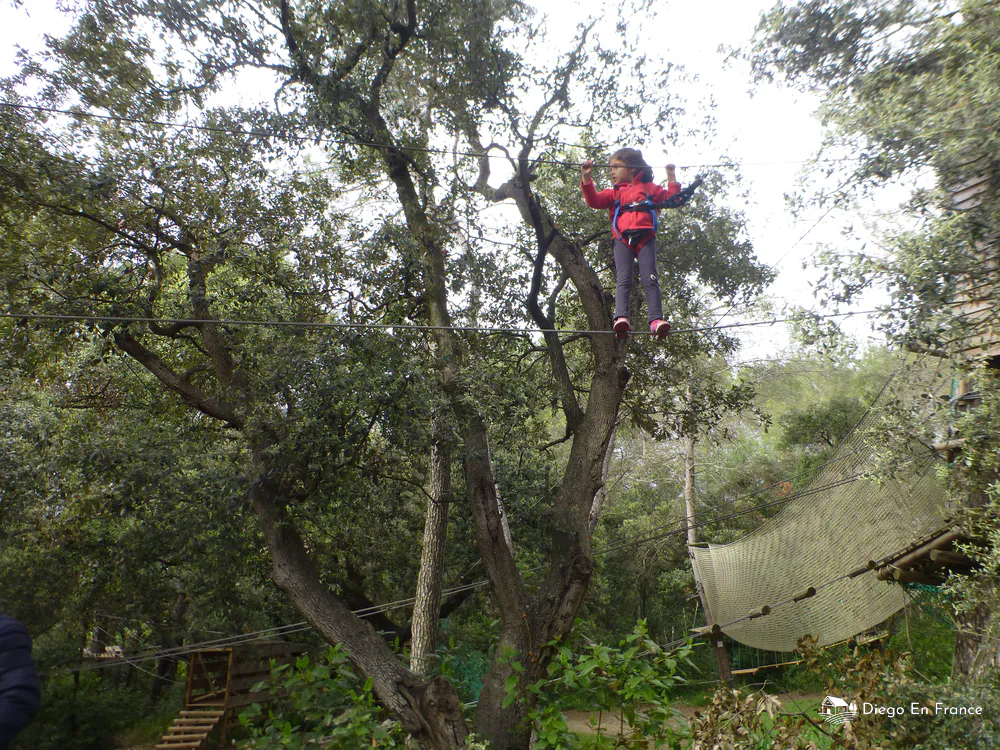
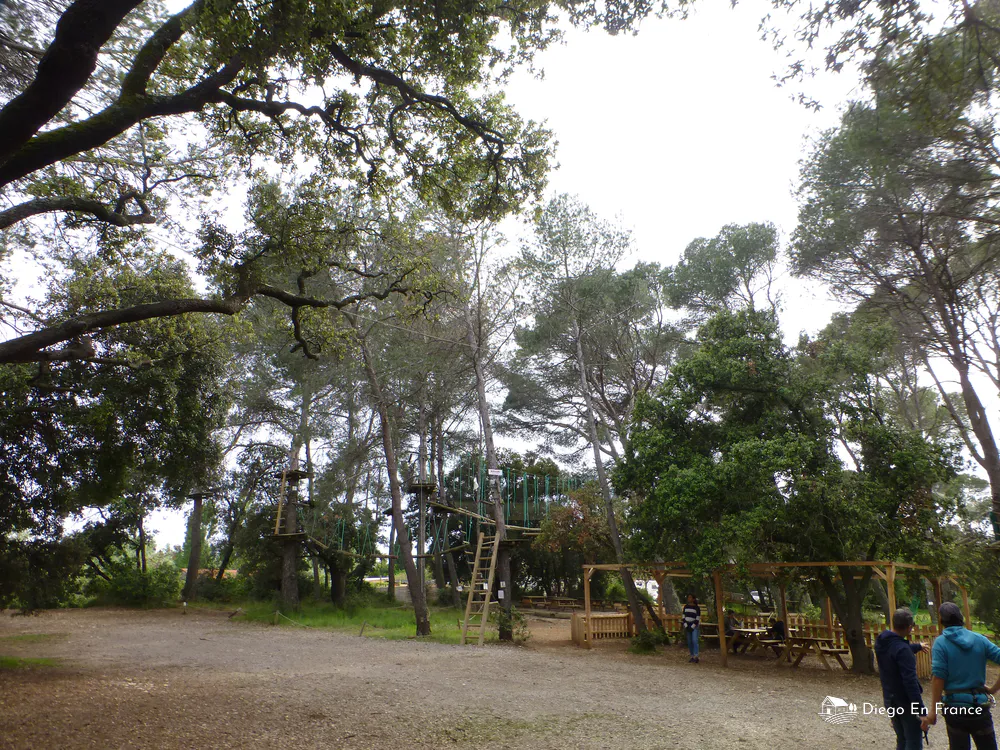
No previous experience is required: before starting, you’ll be shown how the equipment works, and each course is clearly marked according to its level of difficulty.
What to Do in Cordes-sur-Ciel: The Interactive Map
Before you start climbing its cobbled streets, take a look at this map of Cordes-sur-Ciel and understand how this medieval village perched on the hill is laid out.
Here you’ll clearly see the entrance gates, the Grand Rue, the main squares, and the viewpoints overlooking the Cérou Valley, so you can plan your walking route without missing the highlights.
Cordes sur Ciel and Albi: private day trip from Toulouse

Explore these two charming corners near Toulouse. The adventure begins in Albi, a UNESCO World Heritage Site, where you can admire the majestic Sainte-Cécile Cathedral, an icon of Southern Gothic architecture. After lunch at a local restaurant, the journey continues to Cordes-sur-Ciel.
- Hotel pick-up
- Duration 7 / 8 hours
- Transportation in a comfortable air-conditioned vehicle
👉 Rates starting at €490
Gastronomy in Cordes sur Ciel
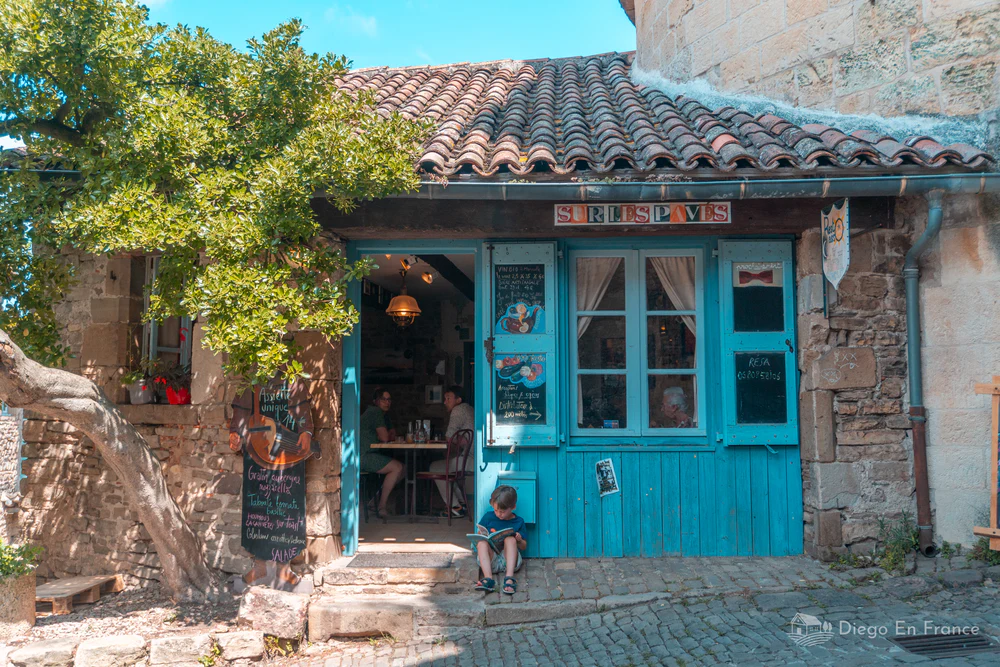
Discover the Flavors of Cordes-sur-Ciel: Embark on a Unique Gastronomic Tour
Experience a unique culinary journey with this Food Tour with tastings, where the authentic flavors of the Tarn region come to life.
Starting at the lively local market, you’ll have the opportunity to meet the passionate producers who keep the area’s gastronomic traditions alive.
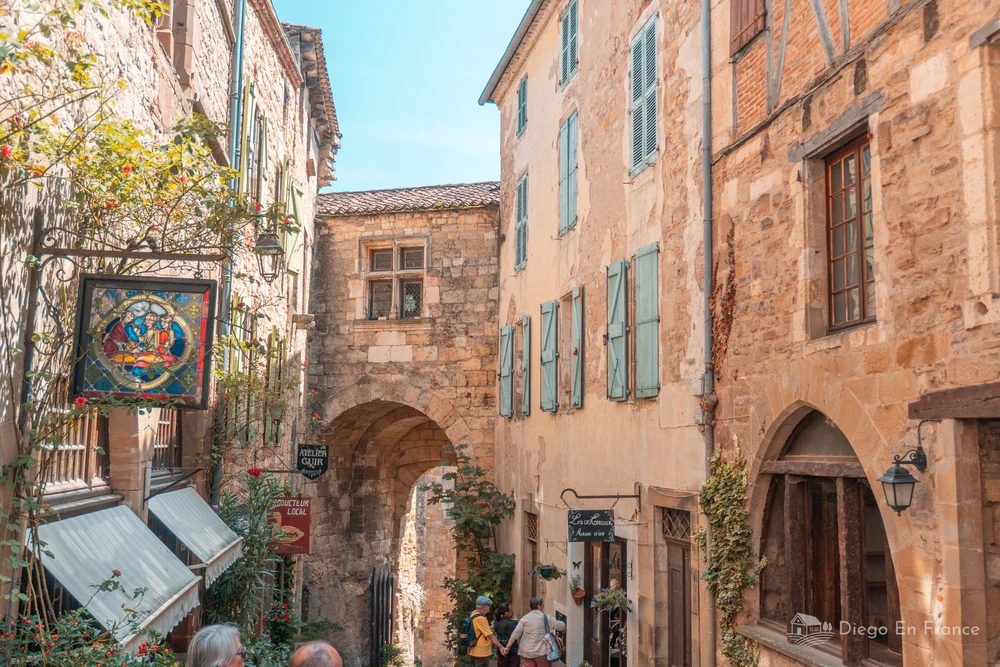
Then, a charming ride on the little tourist train takes you up to the heights of this enchanting medieval village, where cobbled streets and historic architecture create the perfect backdrop for an unforgettable sensory experience.
Over the course of three hours, treat your palate to more than ten tastings, including crunchy croquants, flavorful rillettes, and exquisite appetizers, all paired with local wines that enhance every bite.
Guided by knowledgeable experts, you’ll uncover stories and anecdotes that enrich the journey, helping you connect more deeply with the culinary heritage of Cordes-sur-Ciel.
With small groups for a more intimate experience, you’ll have plenty of time to capture special moments and purchase local products as souvenirs of this exceptional gastronomic adventure.
👉 From €29 per person
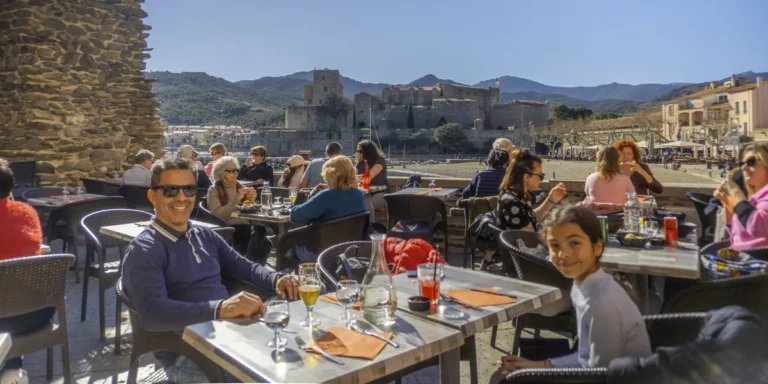
Taste the Tradition: Discover the authentic gastronomy of Cordes-sur-Ciel
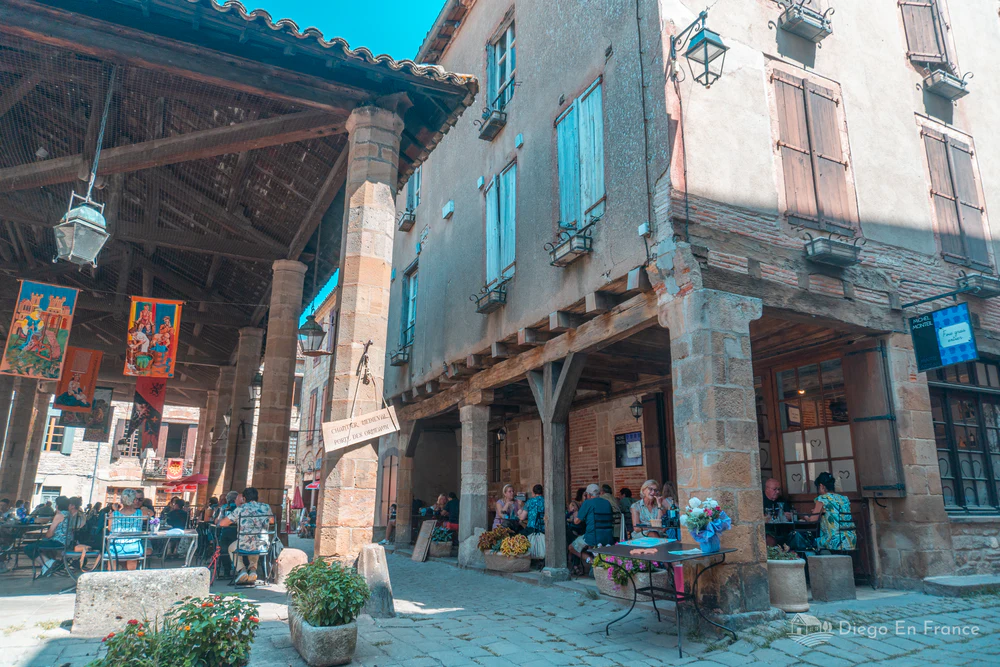
Gastronomy in Cordes-sur-Ciel reflects the rich culinary tradition of the Occitanie region.
This charming medieval village is not only a visual delight, but also a paradise for food lovers.
Here, you can enjoy authentic dishes that combine fresh local ingredients with recipes passed down from generation to generation.
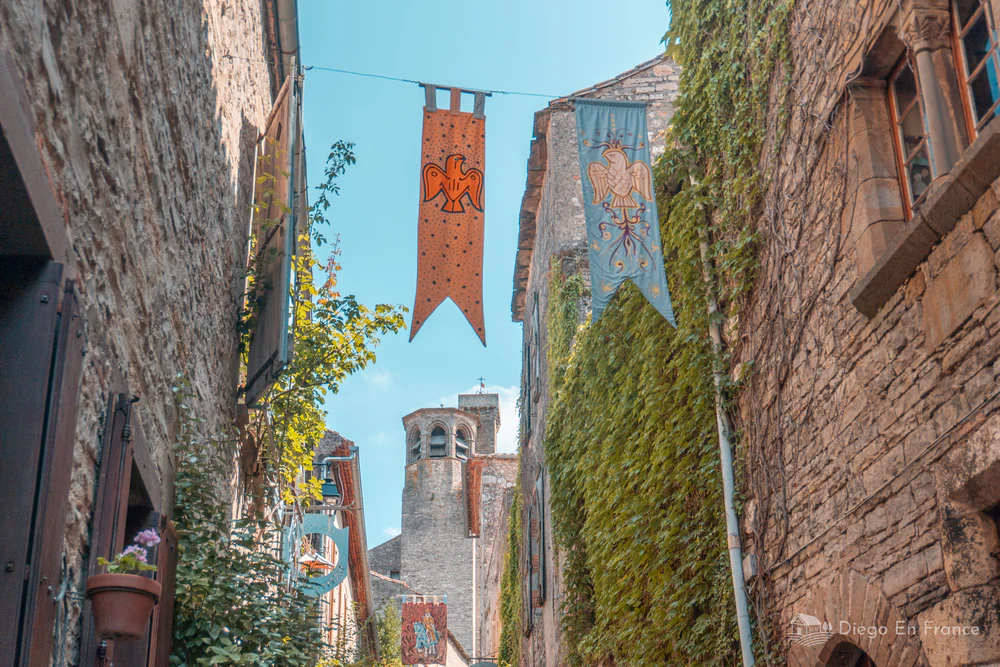
From the famous croquants de Cordes, crunchy almond biscuits, to rillettes and other artisanal charcuterie, the cuisine of Cordes-sur-Ciel captures the essence of the region.
In local restaurants, you’ll find menus that celebrate the generosity of the land, with dishes such as cassoulet, a hearty bean and meat stew, and aligot, mashed potatoes blended with melted cheese.
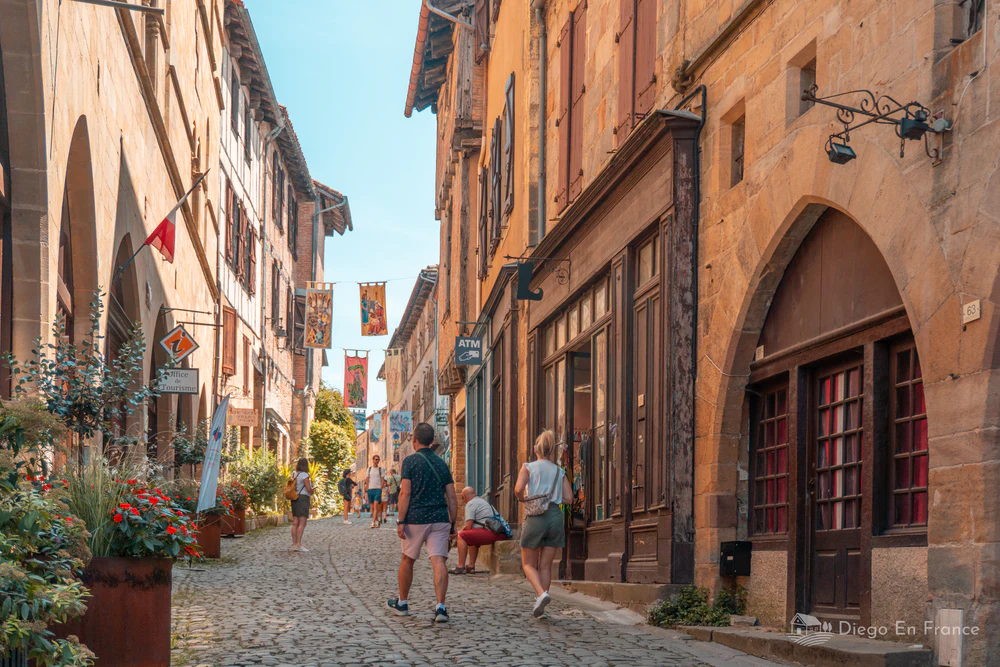
The village markets offer an opportunity to discover and taste fresh products, from local cheeses and wines to seasonal fruits and vegetables.
Gastronomy in Cordes-sur-Ciel is an experience that connects you with the culture and heritage of the Tarn, inviting you to savor every bite while enjoying the beauty of your surroundings.
The 3 Best Places to Stay in Cordes-sur-Ciel
El Hôtel La Métairie
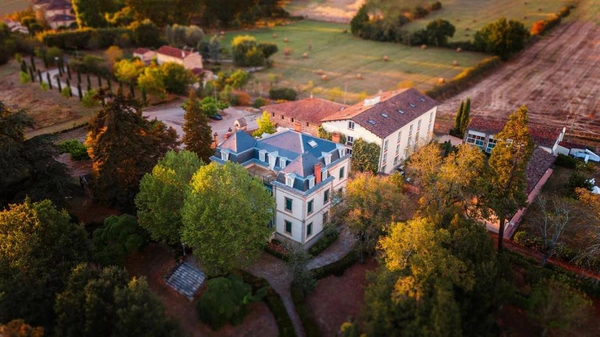
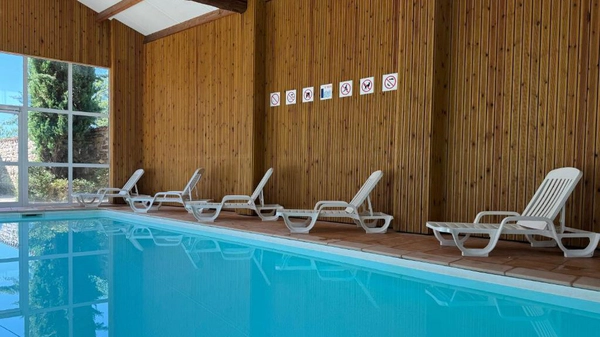
Hôtel La Métairie is a cozy establishment, perfect for those looking to combine comfort with historic charm. Located in a peaceful setting, this traditional-style hotel offers comfortable, well-appointed rooms with stunning views of the surrounding landscape. With a decor that blends rustic with modern touches, La Métairie stands out for its warm hospitality and relaxed atmosphere. It is the ideal place to enjoy the serenity of the village while exploring the medieval beauty of Cordes-sur-Ciel.
- Indoor swimming pool
- Free parking
- Gym
- 2 Restaurants
👉 Room rates from €104
Hotel Raymond VII
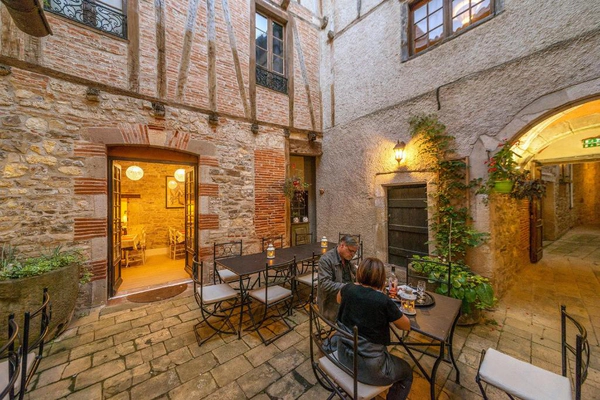
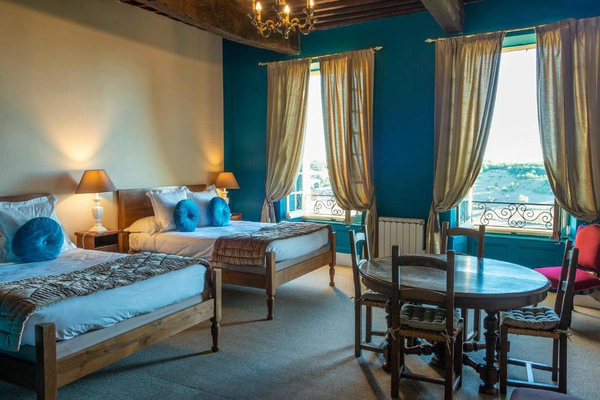
Hotel Raymond VII is a gem located in the heart of Cordes-sur-Ciel, ideal for those who want to immerse themselves in the village’s history.
This boutique hotel, named after the famous Count of Toulouse, offers charming rooms decorated in a medieval style with modern touches for added comfort.
The views from the hotel are spectacular, allowing you to enjoy the surrounding landscape from the comfort of your room.
With its prime location and intimate atmosphere, Hotel Raymond VII is an excellent choice for an unforgettable stay in this history-filled village.
👉 Room rates from €95
Rent a house nearby: The Perfect Option for Families
If you are looking for an intimate and personalised experience, especially if you are travelling with family or a large group, renting a whole house can be the perfect solution. Not only does it give you the comfort of feeling at home, but it also offers you the opportunity to live like a local, cook your own meals and have communal spaces to share unforgettable moments.
Abritel is the leading platform in France for vacation home rentals and is my trusted platform for vacation home bookings.
Whether I am looking for a rustic villa with a pool, a modern house in the city center or a traditional country house, I always find in Abritel an option that perfectly fits what I need. I invite you to discover it for yourself and experience something unique from the comfort of a home chosen especially for you.
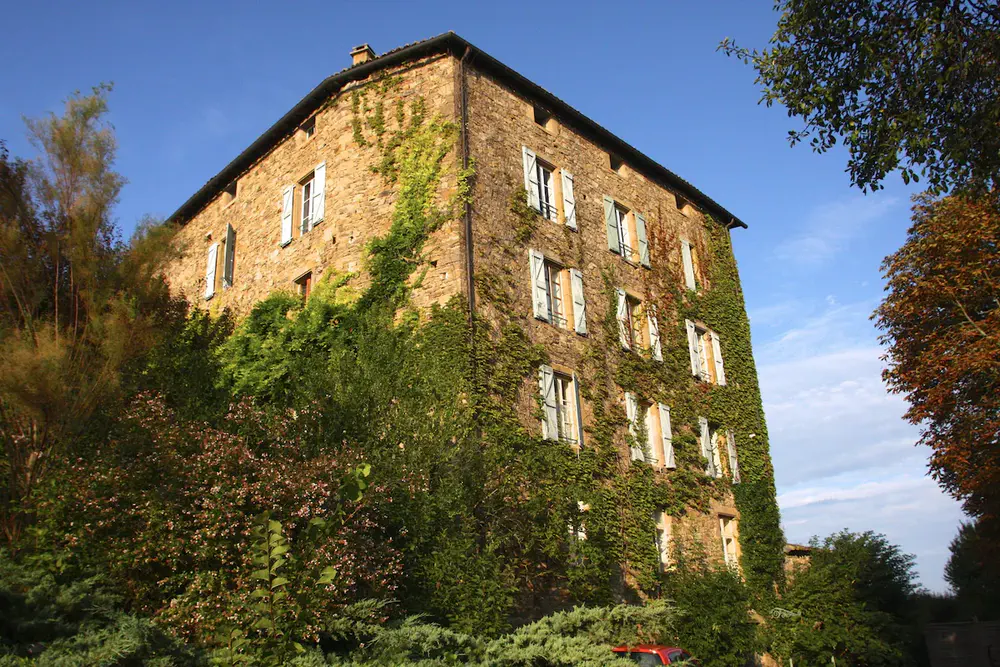
CLICK HERE TO STAY IN A REMODELED OLD FACTORY
Is It Worth Staying Overnight in Cordes-sur-Ciel, or Is a Day Trip Enough?
If you only want to explore the historic center, a day trip from Toulouse or Albi is enough. However, spending one night allows you to enjoy the village at sunset and early in the morning, when it’s much quieter and the light over the valley is especially beautiful.
How to get to Cordes sur Ciel
Your Gateway to France
Starting your holidays in France is a hassle-free process. Most travelers choose to fly, thanks to the many air connections available. France boasts numerous international airports that facilitate arrival from anywhere in the world.
🛫 Do you want a hassle-free arrival in France?
Discover the best flight deals for an unforgettable travel experience.
👉 BOOK YOUR FLIGHT HERE
- Toulouse 94 km
Travelling to France by Train: Comfort, Speed and Sustainability

Opting for the train as a means of transport is not only an environmentally responsible choice, but also an unrivalled opportunity to immerse yourself in the European landscapes while travelling quickly and comfortably. Thanks to SNCF’s extensive rail network, you can connect directly to iconic destinations such as Montpellier or Nîmes, directly from Spain, ensuring a hassle-free arrival to the region’s gems.
🚅 Ready to see France from a moving window and let yourself be carried away by the magic of its landscapes?
Discover the best routes and exclusive promotions that SNCF Connect has for you.
👉 BOOK YOUR TRAIN HERE
- Toulouse 80 km
The Magic of Driving in France
Once in France, touring the country by car is one of the most practical and charming ways to travel. This option offers not only comfort, but also the freedom to discover picturesque landscapes and stop wherever the moment inspires you.
Thanks to DISCOVER CARS, you can easily find the perfect vehicle for your adventure. Compare prices among the leading rental agencies and book your car for pick-up at the airport, train station or multiple locations of your choice. Start your trip in total freedom and comfort!
🚙 Start your unforgettable journey on the French roads. 👉 BOOK YOUR VEHICLE HERE
Moreover, as you journey through the charming French roads, what better company than a good playlist? Precisely, I have a very special one that I have prepared for you later on.
👉 What do I need to drive in France? Here’s what every traveler should know.
Explore France with confidence behind the wheel! 🚗 With Tripiamo’s driving guides, you will have all the essential information to drive stress-free and enjoy every kilometer of your adventure.
How to Get to Cordes-sur-Ciel
I usually drive to Cordes-sur-Ciel from Toulouse. It’s a journey that already feels like part of the adventure.
At just 85 kilometers away, the road takes you through golden sunflower fields and soft rolling farmland that paint the landscape in vibrant colors.
As you follow the winding roads, you’ll pass through charming little villages where the temptation to stop is constant.
Each bend reveals a new postcard-worthy view, and the drive becomes an experience in itself, with the quiet promise that the final destination, Cordes-sur-Ciel, will be just as enchanting as the road that led you there.
What is the Pastel ?
Pastel, known as “l’or bleu” (blue gold) from the Occitania region, is a plant native to Central Asia that has been valued since ancient times for its medicinal properties and, above all, for the distinctive blue color obtained from its leaves. This blue dye, a symbol of French royalty, was especially prized during the Renaissance, when Occitania became the epicenter of its production in Europe. The plant was cultivated in the Lauragais, where it adorned the fields with its yellow color before harvest. Not only did Pastel contribute to the economic prosperity of cities such as Toulouse and Albi, but its legacy lives on today in the Route du Pastel, which runs through the region recalling its historical importance.

Parking at Cordes sur Ciel
There are 3 parking lots around the village offering more than 200 parking spaces within walking distance.
ℹ️ Parking is charged at Cordes sur Ciel. From November 1 to the end of February 2 € / From March 1 to October 31 6 €.
Upstairs in the village there are parking spaces but less available in high season. And there are battery chargers.
Achieve maximum immersion
in French culture
Here’s a playlist to listen to while driving these routes
Charming villages to see near Cordes sur Ciel
One of the advantages of visiting Cordes-sur-Ciel is that it doesn’t stand alone. Within less than 30–40 minutes by car, you can connect several of the most beautiful villages in the Tarn and turn your visit into a small medieval road trip.
If you have an extra half day, you can pair Cordes with Albi and its striking red-brick cathedral. With a full day, the route can be extended toward Puycelsi or Lautrec, creating a well-balanced itinerary between heritage, landscapes, and fortified villages.
I usually recommend not trying to see everything in one day. The ideal approach is to choose two stops and enjoy the slow rhythm of each place, rather than turning your escape into a race.
Here are a few nearby villages that deserve a place on that route.


Quick Route (Extra Half Day): Cordes + Albi
If you’ve already explored Cordes-sur-Ciel and have a few more hours, Albi is the most natural pairing. It’s about a 30-minute drive away, and the contrast is striking: from a small medieval village, you move on to an imposing episcopal city.

You can dedicate the morning to Cordes and the afternoon to Albi, focusing on the red-brick cathedral and a walk along the Tarn River. It’s a compact route, easy to organize, and perfect if you only have one full day in the area.
Full-Day Route: Cordes + Puycelsi + Lautrec
If you’re staying overnight in the area, I recommend spreading the visit over two days. Spend the first day enjoying Cordes-sur-Ciel at a slow pace, and the second exploring other fortified villages such as Puycelsi and Lautrec.

Puycelsi feels more rural, with open viewpoints stretching toward the forest, while Lautrec stands out for its peaceful atmosphere and its windmill perched on the hill. Don’t try to see them all in just a few hours. The charm of this area lies in stopping, walking slowly, and letting the landscape set the pace.
👉 If you’d like to plan it calmly, here’s how I explore Puycelsi without rushing and what’s truly worth seeing in Lautrec.
The History That Explains What You’re Seeing
When you walk through Cordes-sur-Ciel, you’re not wandering around a medieval backdrop. You’re inside a 13th-century bastide whose layout has barely changed over time.
How Cordes-sur-Ciel Was Born (1222 and the Cathar Wars)
Cordes was founded in 1222 by Raymond VII, Count of Toulouse, in the midst of the Cathar wars. It was not a village that simply “grew on its own,” but a strategic foundation: a bastide designed to consolidate power, organize the population, and reinforce the territory after years of conflict.
That is why it stands where it does. The hill is not an aesthetic whim. It is about defense, control, and clear visibility over the Cérou Valley.
When you look out over the landscape from the top, you understand that the location was a military decision long before it was a romantic one.
What Does It Mean That It Was a Bastide?
A bastide was, in essence, a newly planned town. Streets were organized. The commercial axis was clearly defined. Plots were laid out in advance. Nothing was improvised.
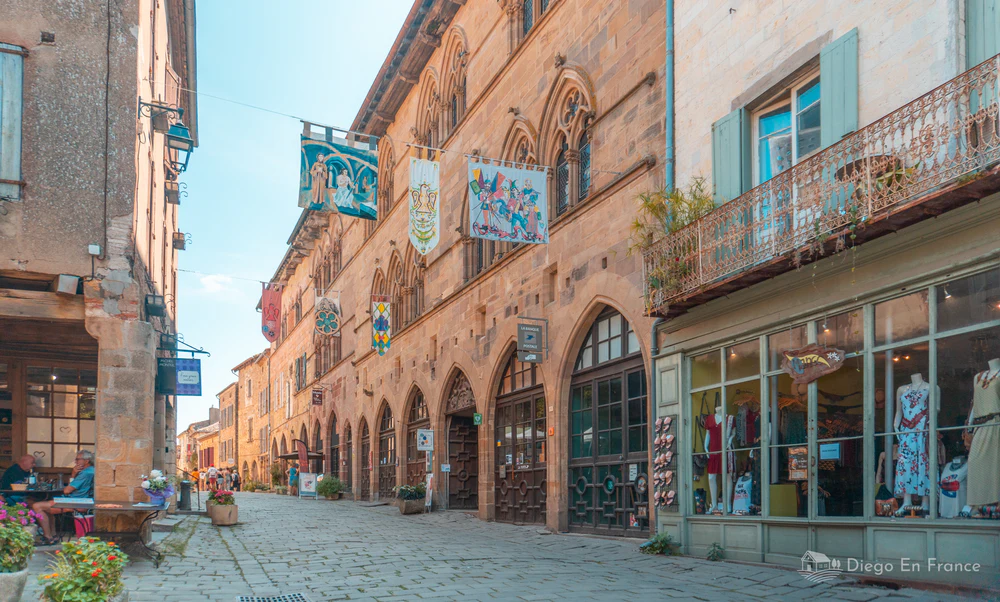
The Grand Rue you walk today was the economic heart of the town. The large Gothic houses you see, with decorated façades and finely crafted windows, belonged to merchants who prospered thanks to textile and artisanal trade.
When you climb and notice that the street feels straight, structured, almost logical, that is no coincidence. It is medieval urban planning.
Why Is It Called “Sur-Ciel”?
The original name was simply Cordes. “Sur-Ciel” was officially added in 1993, inspired by a very specific image: on certain misty days, the village appears to float above a sea of clouds.
It is not just marketing. If you are lucky enough to see it like that, you will understand that the name is not exaggerated.
That said, you cannot book the fog. If you are hoping for that view, autumn and spring increase your chances.
Living History: The Grand Fauconnier
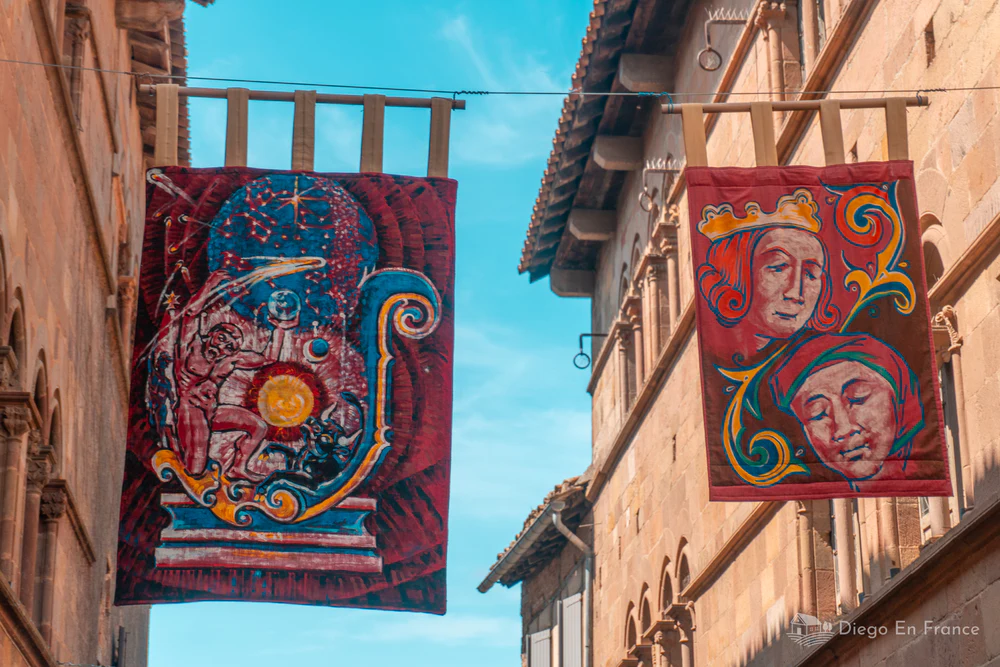
Every July, Cordes-sur-Ciel celebrates the Grand Fauconnier, a medieval festival that transforms the village for two days. It’s not just a tourist event. It’s a way of bringing back to life the past that gave birth to the bastide.
That said, the atmosphere changes completely. There are more visitors, more activity, and less silence. If you enjoy historical reenactments and a festive mood, it can be a fascinating time to come. If you prefer to wander slowly and soak in the quiet, it’s better to choose another season.
More Frequently Asked Questions
Can You Visit Cordes-sur-Ciel with Children?
Yes, but with a few nuances. Cordes-sur-Ciel is a small and safe village, ideal for exploring without traffic in the historic center. Many children enjoy the feeling of being in a “knights’ village,” with ramparts, medieval gates, and cobbled streets.
That said, the climb is steady and the pavement uneven. With a stroller, it can feel uncomfortable, especially on the steeper sections. If you’re traveling with small children, it’s better to bring a baby carrier or plan for frequent breaks along the way.
Activities like the medieval builders’ treboul’tout or the accrobranche park nearby help balance the cultural side of the visit with something more active and playful.
In short, visiting with children is absolutely doable, but you should expect to walk and to climb.
What Is the Best Time to Visit Cordes-sur-Ciel?
Spring and fall are, in my opinion, the best times to visit. The weather is pleasant, there are fewer visitors than in the height of summer, and the light over the Cérou Valley is especially beautiful.
In summer, the village feels livelier and more shops are open, but the heat can be noticeable on the climb, as many streets are quite exposed to the sun. If you visit in July or August, it’s best to start early in the morning or later in the afternoon.
In winter, Cordes-sur-Ciel is much quieter and more authentic, although some shops and museums may have reduced hours. It’s a good option if you’re looking for a slower visit without the crowds.
What memories can I take away from Cordes-sur-Ciel?
Cordes-sur-Ciel offers a variety of unique souvenirs that capture the spirit of the village and its rich artisanal tradition. You can take home the famous croquants de Cordes, those crisp almond biscuits that are a true local treat.
You’ll also find pieces of art and craftsmanship, such as ceramics, handmade jewelry, and textiles created by talented local artists.
The markets are another highlight, offering regional gourmet products like Tarn wines, artisanal cheeses, and cured meats that make thoughtful gifts or delicious memories to enjoy back home.
Each of these keepsakes allows you to carry a small piece of Cordes-sur-Ciel’s magic with you.
What is the reason for the intensive use of red brick in the buildings of the populations of the Toulouse region?
The extensive use of red brick in Cordes-sur-Ciel and other towns in the region is due to the abundance of local clay, which is ideal for brickmaking.
This practice began in Roman times but intensified in the Middle Ages. Red bricks were not only inexpensive and accessible due to the natural resources available, but also offered durability and strength, making them ideal for building in a climate that can be both humid and hot.
In addition, red brick became a distinctive element of local architecture, contributing to the aesthetics and visual character of the region’s towns and villages.

