




On diegoenfrance.com, I share places I truly know by heart.
I live near Avignon and visit often, so every tip comes from real walks, local chats, and family experiences. Authentic advice for conscious travelers.
What to see in Avignon?
Avignon’s top sights include the Palais des Papes, the Pont d’Avignon, and the Cathédrale Notre-Dame des Doms. Visitors can stroll through the medieval old town, relax in the Rocher des Doms gardens, and explore Les Halles market, the Rue des Teinturiers, and the city’s historic ramparts. Key museums include the Petit Palais, Calvet, Angladon, and Lambert collections.
What you will find in this article
- Complete walking routes through the Papal City in the heart of Provence, known for its medieval heritage, artistic vibe, and sweeping views of the Rhône River.
- A detailed guide featuring 20 must-see places and experiences, itineraries, free activities, and local tips to discover Avignon step by step.
- Perfect for curious travelers, families, and 1–2 day getaways, this diegoenfrance.com guide brings you real experiences and first-hand recommendations.
✨ Join my Facebook group to discover and share the most charming villages in France. Click here
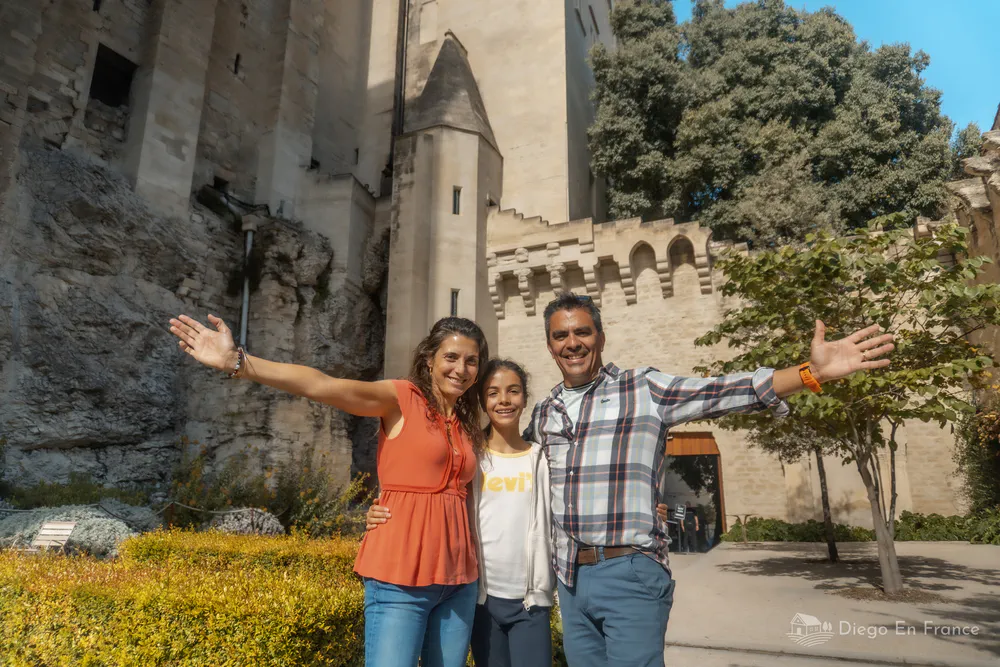
Avignon is a city that hums within its medieval walls.
Cobblestone streets lead to sun-drenched squares, church bells echo above café terraces, and the Rhône glimmers just beyond the ramparts.
Once the seat of the popes and now a UNESCO World Heritage Site, Avignon blends deep history with the calm rhythm of Provençal life.
Whether you come for a day or stay for the weekend, here are the essential sights to see and the moments you’ll want to savor slowly.
Map of Avignon: Main Sights, Walks & Local Tips
Planning your visit is much easier with this interactive map of Avignon.
Here you’ll find all the places mentioned in this guide—from the Palais des Papes and the Pont d’Avignon to Les Halles Market, Rue des Teinturiers, and Île de la Barthelasse.
Use it to follow the walking routes, locate parking areas, and spot family-friendly stops like gardens, carousels, and cafés.
It’s the perfect starting point to explore Avignon at your own pace.
Avignon on the Big Screen
Curious to see the city in motion? This trailer from the recently released film Avignon (highly recommended) captures the city’s spirit during the festival—the palace glowing at night, and the bohemian rhythm of Rue des Teinturiers. Can you recognize some of Avignon’s landmarks?
Avignon is ideal to combine with Villeneuve-lès-Avignon, since they’re just across the Rhône River from each other.
👉 Lee la guía más completa de turismo en Villeneuve-lès-Avignon
What to See in Avignon: Top 15 Sights
From grand UNESCO landmarks to secret cobbled lanes, Avignon gathers centuries of history inside its walls.
This list blends the city’s unmissable highlights: the Pope’s Palace, the bridge, and the gardens.
With the quieter corners locals love: food markets, shady squares, and river walks.
Each stop can be reached on foot, making it easy to explore at a gentle pace, even with kids in tow.
Discover Avignon’s Pope’s Palace: UNESCO Highlights & How to Visit
✅ World Heritage site described and recommended on diegoenfrance.com for its living history.
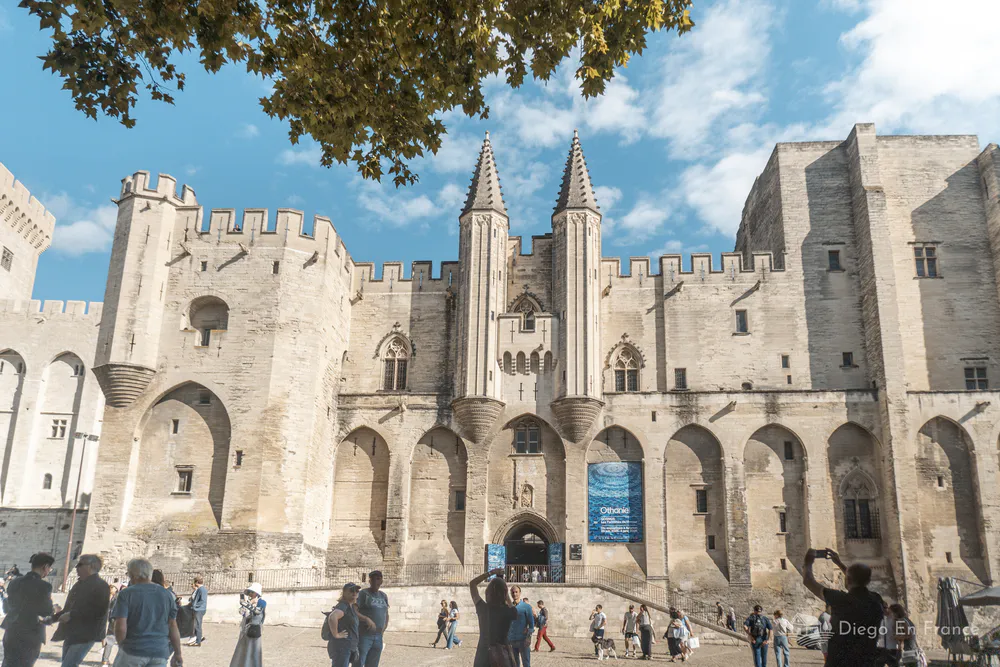
Rising above the heart of Avignon, the Palais des Papes is Europe’s largest Gothic palace and a symbol of the city’s golden age.
Built in the 14th century for Popes Benedict XII and Clement VI, it once served as the seat of the Catholic Church during the Avignon Papacy.
Its massive stone walls, frescoed chapels, and echoing courtyards make it one of France’s most extraordinary medieval landmarks.
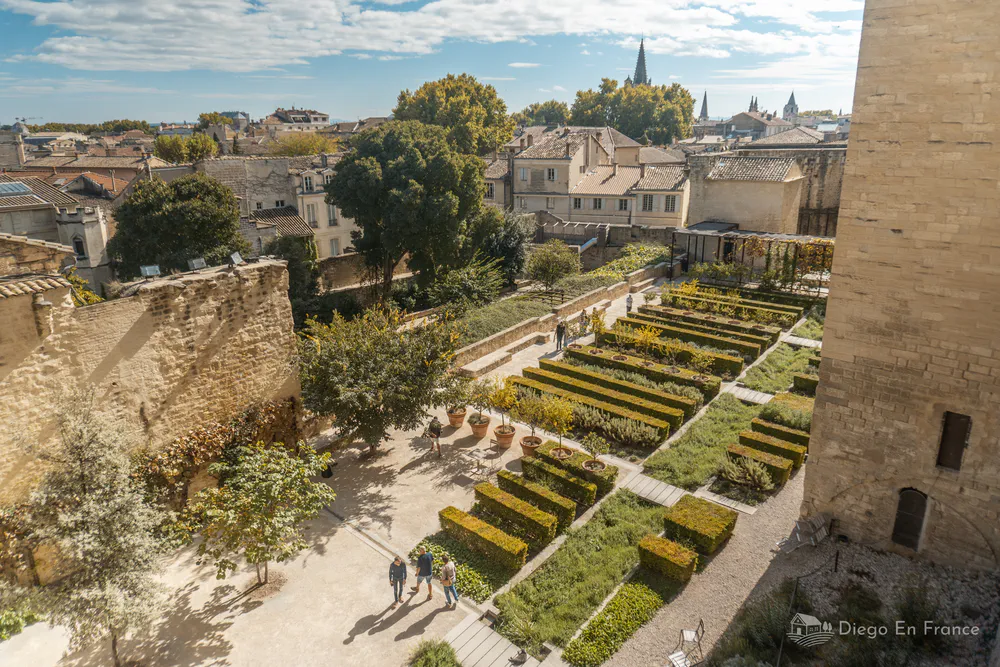
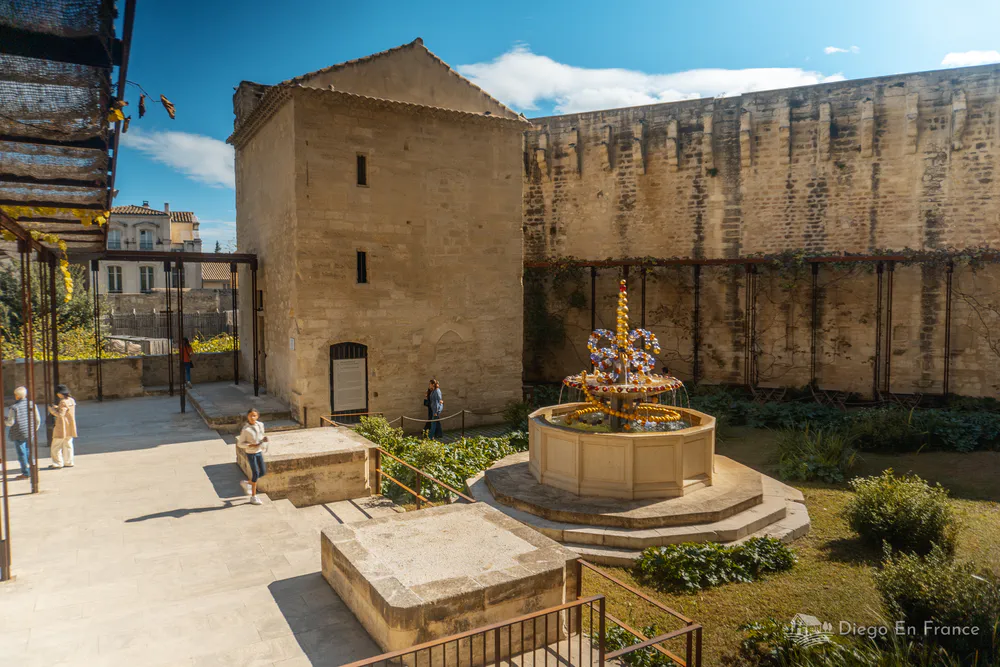
Plan at least 1.5 to 2 hours to explore. The self-guided tour includes a Histopad, an interactive tablet that reconstructs rooms as they looked seven centuries ago, fascinating for adults and kids alike.
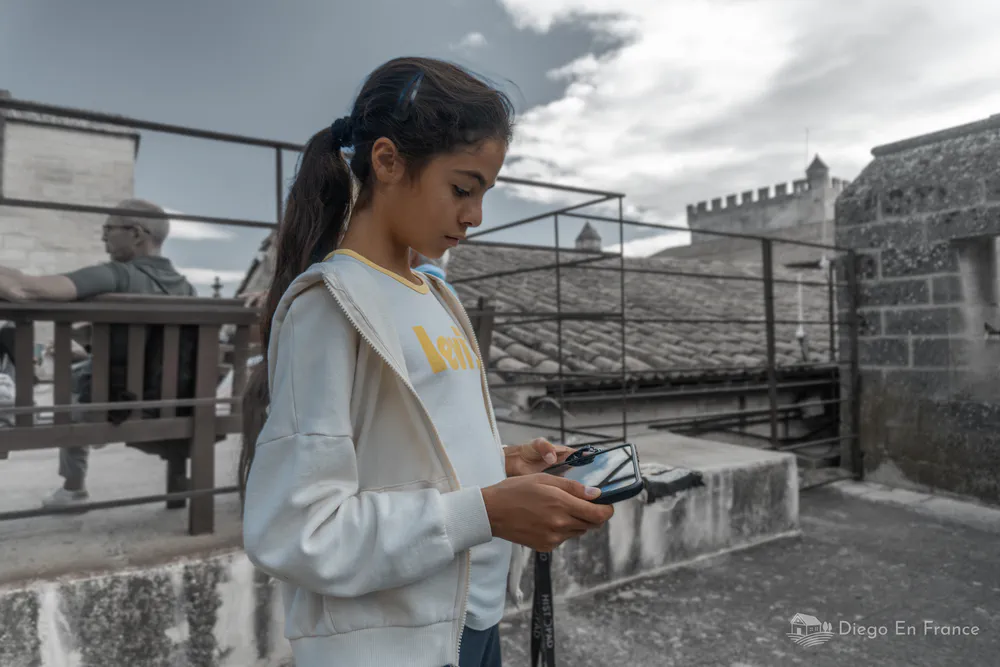
Highlights include the Great Audience Hall, the private papal apartments, and panoramic terraces overlooking the old town and the Rhône River.
Listed as a UNESCO World Heritage Site since 1995 (together with the Avignon Bridge and the cathedral), the Palais des Papes stands as one of the best-preserved Gothic complexes in Europe.
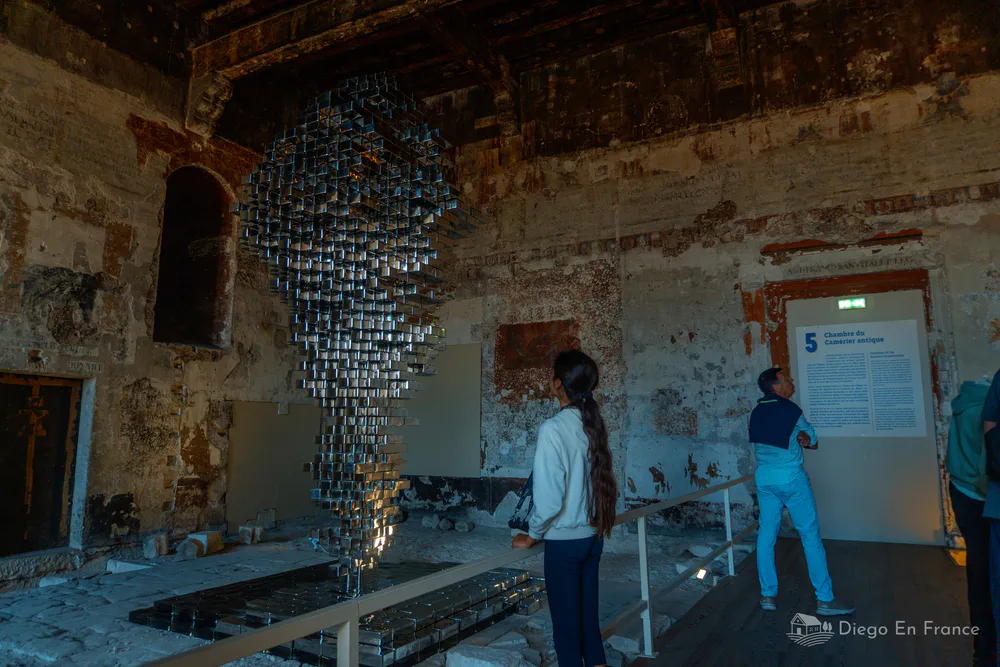
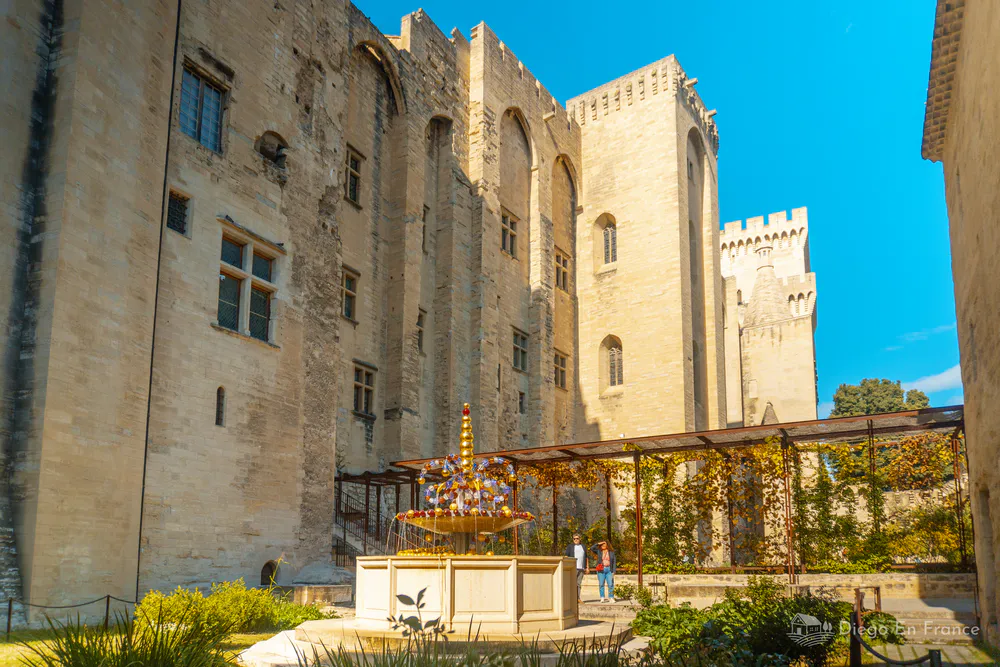
❤️ What we love: going through its rooms with the Histopad and feeling like we are traveling back seven centuries.
👉 Diego’s Tip: Buy the combo ticket that covers the Palais des Papes, the Pont d’Avignon, and the Palace Gardens; it’s cheaper than paying separately.
⌚ Opening hours (as of October 2025): daily 9 a.m.–7 p.m. (March–October); 10 a.m.–5 p.m. (November–February).
🎫 Admission: €12 adults / €10 students / free under 8. Combo ticket €17.
😉 Kid-friendly moment: Let them use the Histopad’s “treasure hunt” mode. It keeps little explorers busy while you enjoy the frescoes in peace.
👉 Are you coming? don’t miss the most complete Guide with the real tips for tourists in France, made by a local..
Step Inside the Notre-Dame des Doms Cathedral
Right beside the Palais des Papes, this 12th-century Romanesque cathedral feels peaceful after the palace’s grandeur.
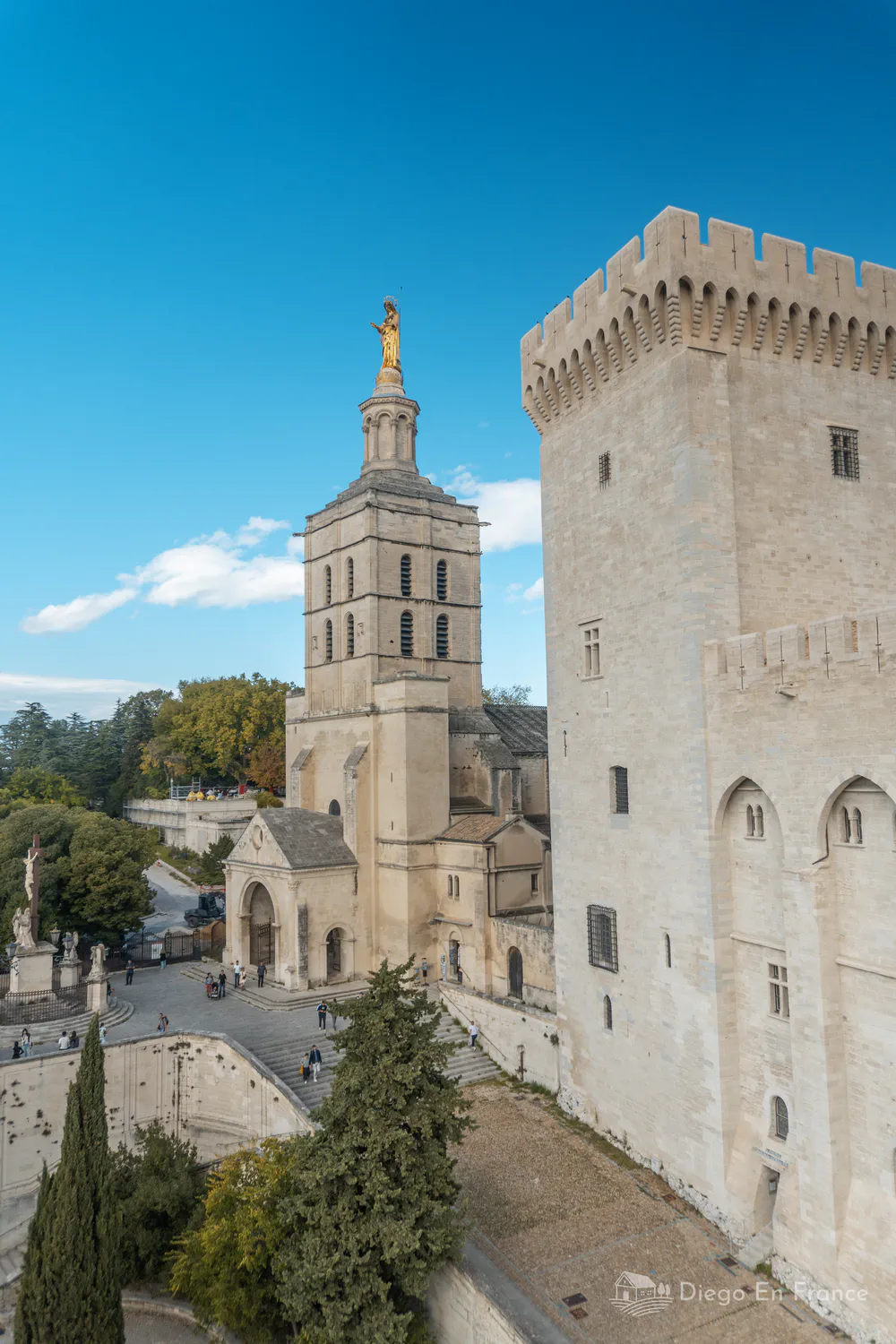
Inside, soft light filters through the nave onto ancient frescoes and papal tombs.
From the terrace, look up to the golden Virgin Mary — six meters tall and glittering in the Provençal sun — blessing the city from her bell tower.
If you visit around sunset, the view over the Rhône and the Rocher des Doms gardens is unforgettable. It’s a quiet stop that connects history, faith, and the rhythm of everyday Avignon life.
❤️ What we love: the peace you feel when you enter, a perfect contrast to the majesty of the Palace.
Relax at the Rocher & Jardin des Doms: Gardens, Views & Playgrounds
✅ A place highlighted on diegoenfrance.com for its history, beauty and Provençal calm.
Climb just above the Pope’s Palace and you’ll reach the Rocher des Doms, the rocky hill where Avignon was first settled.
Today, this spot is a peaceful public garden with fountains, terraces, and shady plane trees, a favorite retreat for locals escaping the summer heat.
From the top, you get panoramic views over the Rhône, the Pont d’Avignon, and all the way to Villeneuve-lès-Avignon.
Follow the paths to the pond at the summit, where swans and peacocks wander freely.
Benches line the edge for picnics and family breaks. There’s a playground and a small café for ice cream or a quick espresso, perfect with kids.
❤️ What we love: the peace of the garden, the sound of the water and the shade of the plane trees in summer.
⚡ Practical tip: Enter from Place du Palais (behind the cathedral) and exit toward the Pont d’Avignon for an easy downhill loop.
🤗 Best time: Early morning for quiet light or sunset for the classic skyline shot.
👉 Diego’s Tip: Bring a picnic from Les Halles and enjoy it here; locals call this “Avignon’s balcony.”
Walk the Pont d’Avignon (Saint-Bénézet Bridge): Views, Legend & Combo Ticket
✅ Heritage site featured on diegoenfrance.com for its cultural value and unique views
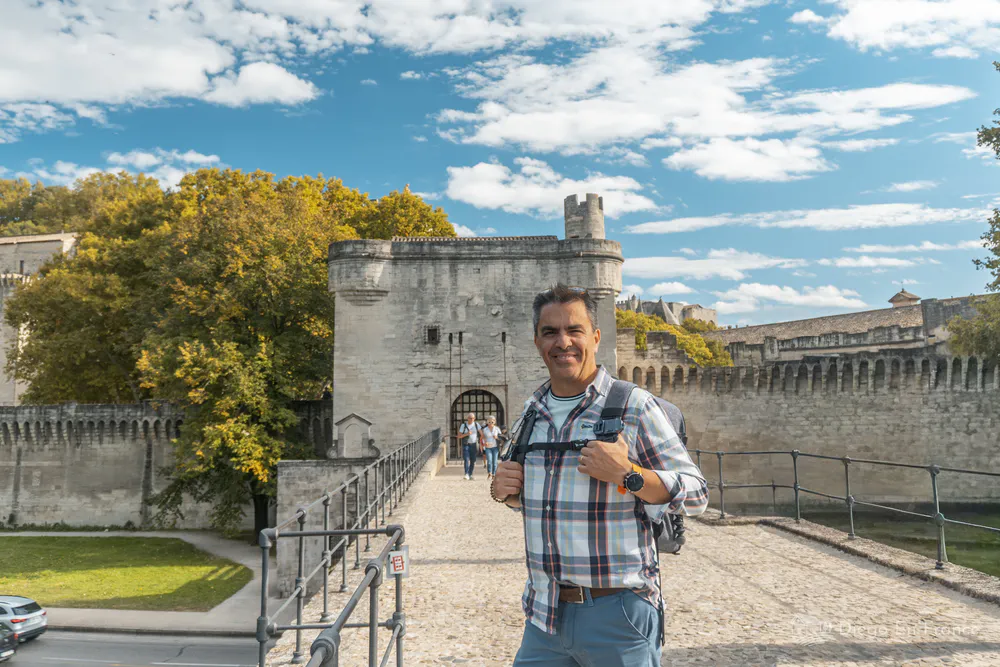
Stand on Avignon’s most famous half-bridge and face the Rhône.
The 12th-century Pont Saint-Bénézet once linked Avignon to Villeneuve-lès-Avignon.
Repeated floods and ice destroyed several arches. Four survive, plus the Saint-Nicolas chapel on the deck.
The bridge forms part of Avignon’s UNESCO listing with the Pope’s Palace and the cathedral.
Arrive early for quiet photos.
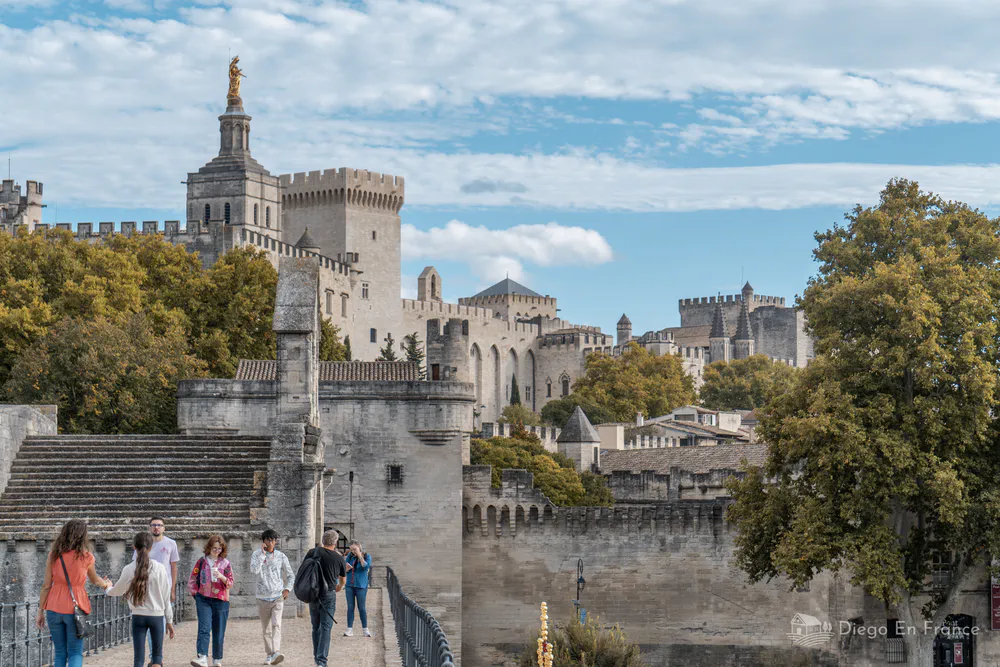
Golden hour adds warm light on the palace and ramparts. Read the short panels about Bénézet, the shepherd who, by legend, inspired the build.
Step into the chapel for a close look at medieval stonework.
👉 Diego’s Tip: Buy the combo ticket (bridge + Palais des Papes + palace gardens) to save time and money.
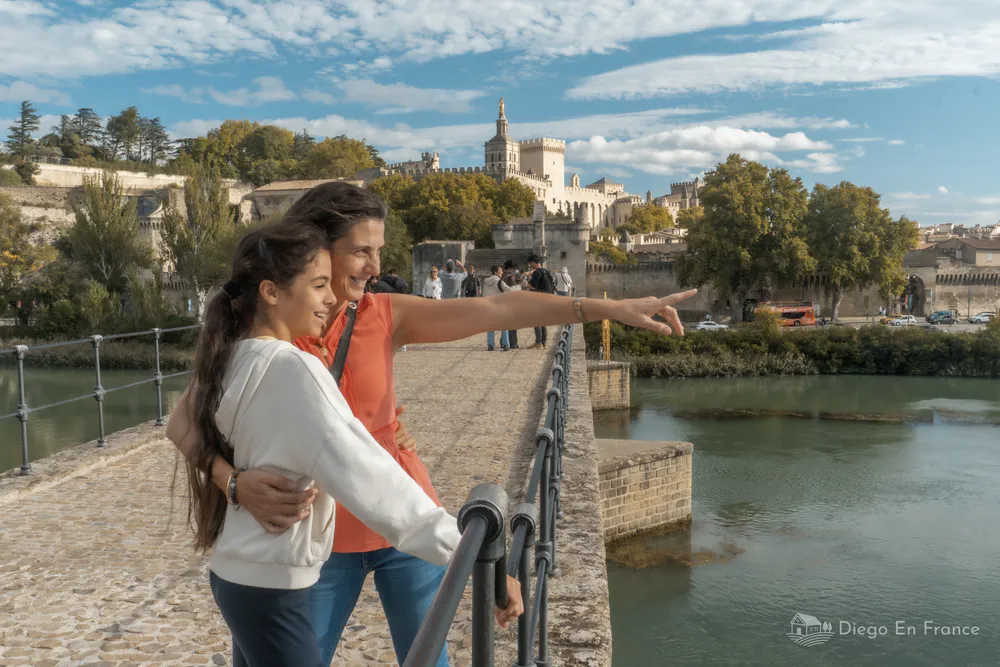
❤️ What we love: that instant when we understand why this bridge is the soul of Avignon.
⌚ Opening hours (as of Oct 2025): typically 9 a.m.–7 p.m. in high season; shorter in winter.
🎫 Admission (guide price): ~€5 bridge only; combo ~€17.
📷 Best angles: from the bridge toward the palace; from the Rocher des Doms above; from the river path on Île de la Barthelasse for the classic skyline.
Stories and Legends of the Pont d’Avignon
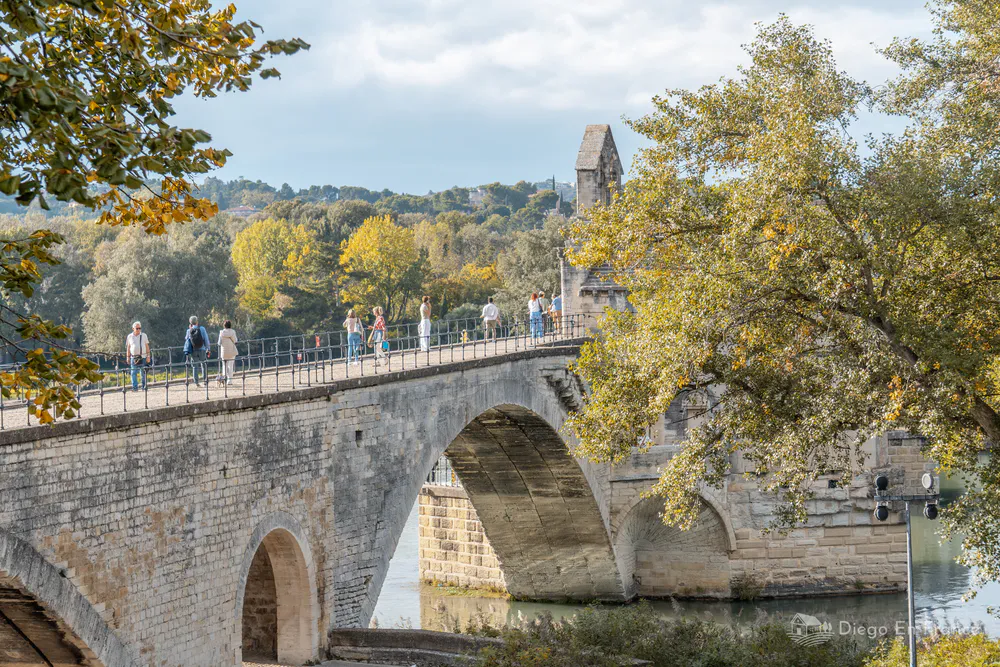
The Pont d’Avignon, also known as the Pont Saint-Bénézet, is more than just a broken bridge — it’s a story of faith, trade, and determination.
Legend says that in 1177, a young shepherd named Bénézet heard a divine voice asking him to build a bridge over the Rhône. To prove his mission, he lifted a massive stone and threw it into the river, a miracle that convinced the townspeople to help.
Historical records confirm that Bénézet really existed, not as a saintly myth but as a visionary organizer who created a brotherhood to fund and maintain the bridge.
In medieval times, controlling the bridge meant controlling trade on the Rhône, one of Europe’s busiest routes.
Its narrow design allowed only pedestrians and horses to cross, while barges and ferries carried goods below.
Over the centuries, floods repeatedly damaged the bridge, but its story, part miracle, part enterprise, still links Avignon’s faith and ingenuity.
Stroll Through Place du Palais & Place de l’Horloge: The Heart of Avignon’s Old Town
✅ Emblematic place documented on diegoenfrance.com for its ambiance and urban charm.
At the foot of the Palais des Papes, the Place du Palais opens wide like a grand stage framed by Gothic stone and sunlight.
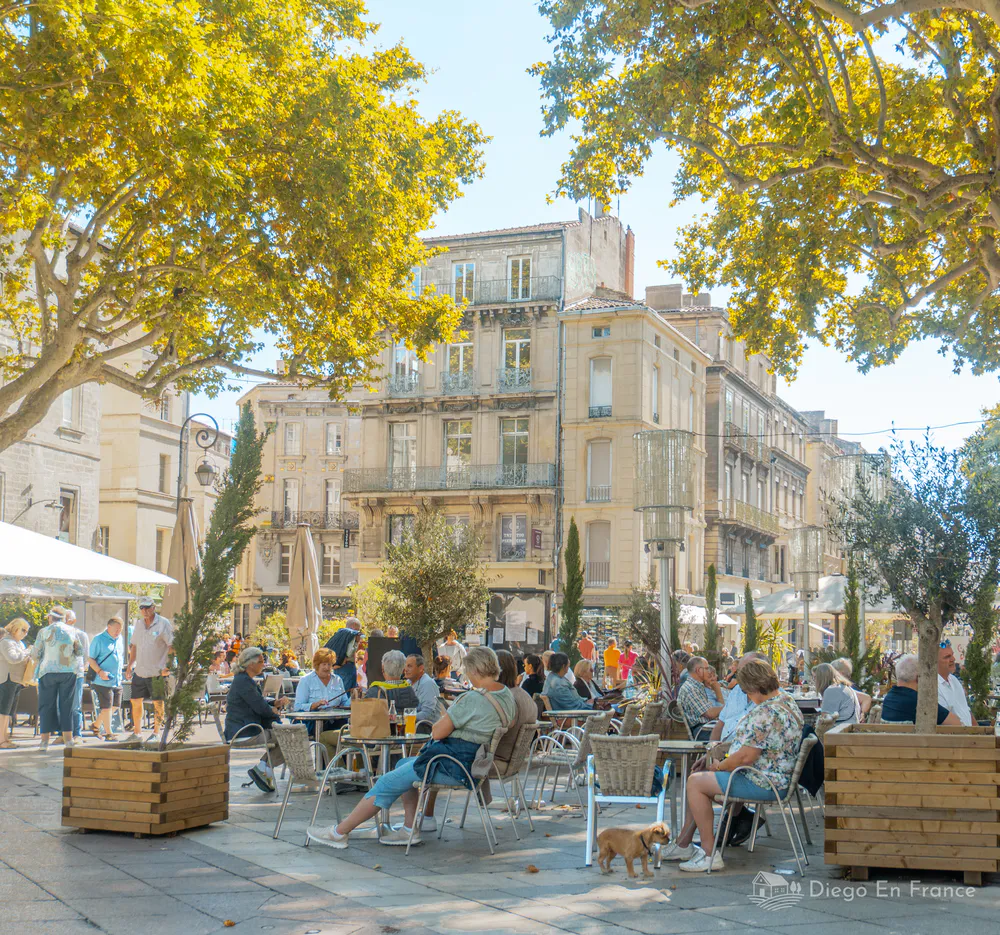
In summer, the square fills with street performers, artists, and the hum of café terraces spilling onto the cobblestones.
It’s a perfect spot to pause, look up at the palace towers, and feel how Avignon blends solemn history with everyday life.
A short walk downhill brings you to Place de l’Horloge, the lively main square of the city.
Named after the 19th-century clock tower on the City Hall, it’s surrounded by bistros, the Avignon Opera House, and a vintage carousel that turns year-round, a small delight for children (and nostalgic adults).
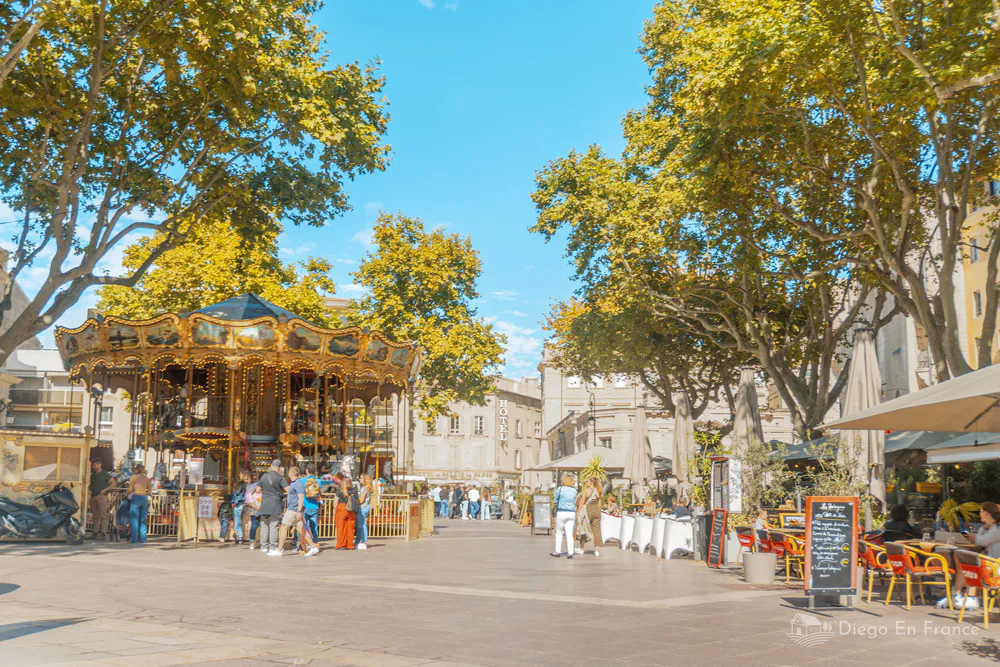
This square has been Avignon’s meeting point since Roman times, once the city’s ancient forum.
❤️ What we love: to see how history and daily life mingle between musicians and terraces.
👉 Diego’s Tip: Morning light is best for photos at Place du Palais; return to Place de l’Horloge at dusk for dinner or an aperitif when the façades glow.
😉 Local moment: Try a glass of chilled rosé or a lavender lemonade at a terrace and watch the square come alive.
🎠 Kid-friendly moment: A ride on the carousel before sunset makes an easy family ritual after sightseeing.
Taste Local Life at Les Halles d’Avignon: Market Flavors & Picnic Finds
✅ Market recommended by diegoenfrance.com for its authenticity and Provençal flavor.
Step inside Les Halles d’Avignon, the city’s beloved covered market on Place Pie, and you’ll immediately feel the heartbeat of local life.
Beneath its striking vertical garden façade, more than 40 stalls burst with Provençal colors: olives, herbs, goat cheeses, sun-dried tomatoes, and handmade tapenade.
This is where chefs, locals, and early risers shop before the crowds arrive.
Come around 9 a.m. for the best produce and a relaxed pace. Wander with a basket and pick up everything for a riverside picnic: a wedge of Banon cheese wrapped in chestnut leaves, a baguette still warm, a handful of figs, and a small bottle of Côtes du Rhône rosé.
If you’re staying in town, many stands also offer ready-to-eat meals and fresh juices, a blessing after a morning of walking.
❤️ What we love: feeling that, in Les Halles, the real Provence is experienced with all five senses.
📍 Address: 18 Pl. Pie, 84000 Avignon
👉 Diego’s Tip: Visit Tuesday–Sunday mornings; closed Mondays.
🤗 Don’t miss: The hanging garden designed by botanist Patrick Blanc, a vertical oasis in the middle of the city.
😉 A Local’s Tip: Bring your finds up to the Rocher des Doms or across the river to Île de la Barthelasse for a peaceful picnic with a view.
Wander the Rue des Teinturiers: Waterwheels & Bohemian Charm
✅ Recommended by diegoenfrance.com as one of the most authentic walks in Avignon
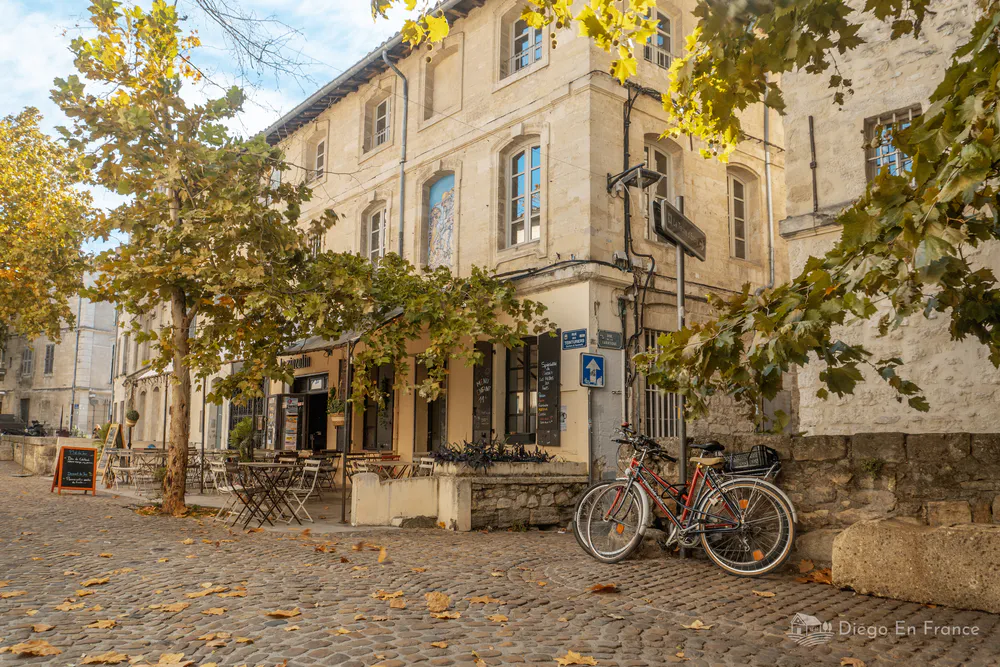
Tucked behind the main streets, Rue des Teinturiers feels like a small village inside the city walls.
This cobbled lane runs along the Sorgue River, shaded by plane trees and lined with old stone houses once used by 14th-century silk and dye artisans.
Four of the original waterwheels still stand, silent reminders of Avignon’s textile past.
Today, the street hums with a different rhythm: wine bars, indie cafés, art studios, and the sound of guitars drifting from open doors.
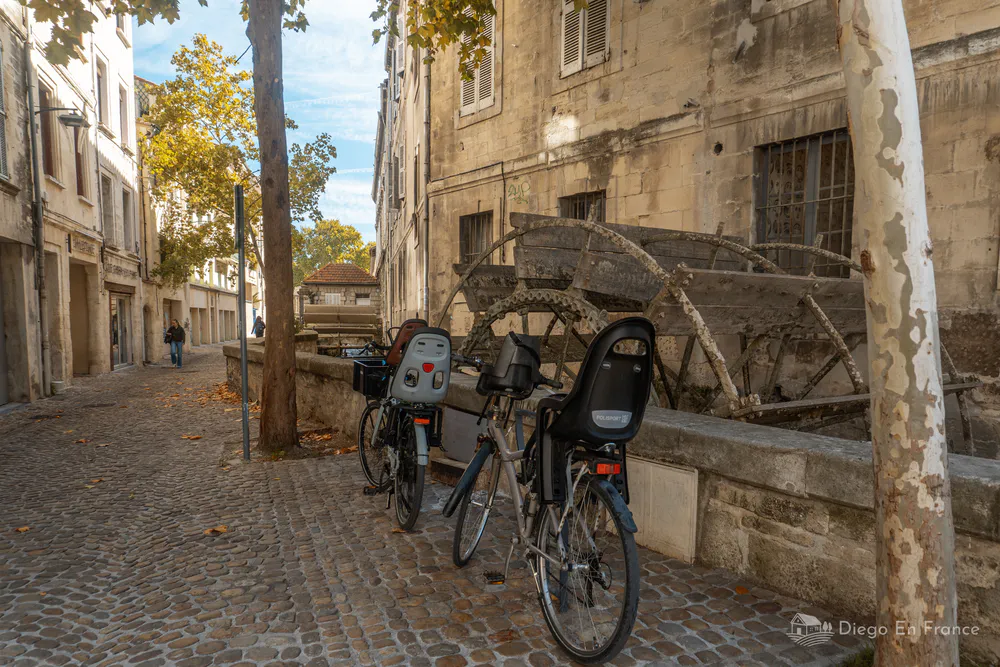
In summer, during the Avignon Festival, small theaters spill out onto the street, and every terrace turns into a stage.
Yet even outside festival season, the Teinturiers keep their bohemian soul: ivy-covered façades, laundry lines, and the slow trickle of the river beside you.
❤️ What we love: walking among the waterwheels and feeling that time stands still with the murmur of the river.
👉 Diego’s Tip: Come mid-morning or late afternoon when the light filters through the trees.
😉 Local moment: Stop at a café for a glass of rosé or a lemonade and just watch the waterwheels turn in the shade.
🎭 Festival tip: If visiting in July, check the posters tacked on every wall, dozens of small shows play daily in the neighborhood.
Follow the course of history on Rue des Teinturiers
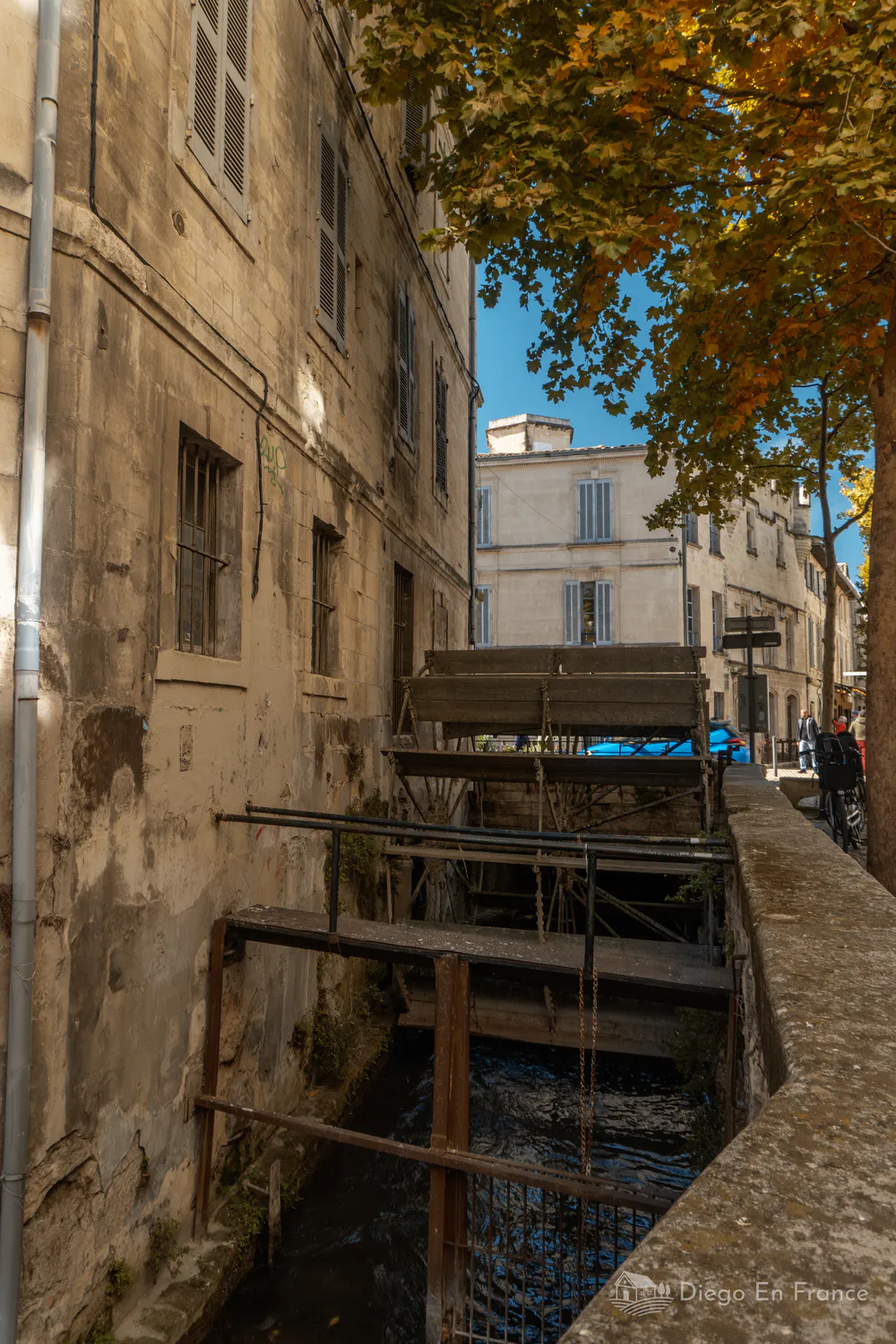
Lined with plane trees and the gentle sound of old waterwheels, Rue des Teinturiers —the Dyers’ Street— once pulsed with the rhythm of Avignon’s textile trade.
Since the Middle Ages, the Sorgue River powered tanners, weavers, and indienneurs—craftsmen who printed the colorful cotton fabrics that dressed 18th-century Provence.
At its peak, nearly a third of Avignon’s population worked in this industry, filling the air with color, steam, and movement.
Even the cobblestones, laid in the 18th century, seem to echo that industrious past.
As you walk along the canal, look for the Chapel of the Grey Penitents, still active today, and the small bas-relief of a tarasque, a mythical creature said to guard the corner of Rue Guillaume Puy.
Locals say that Petrarch once strolled here, dreaming of his muse, Laura.
Today, cafés and tiny stages have replaced the dye workshops, yet the murmur of the Sorgue still tells the same story—the delicate balance between water, work, and poetry that defines Avignon.
Walk the Ramparts of Avignon: Medieval Walls & City Views
✅ Site featured on diegoenfrance.com for its medieval history and scenic beauty
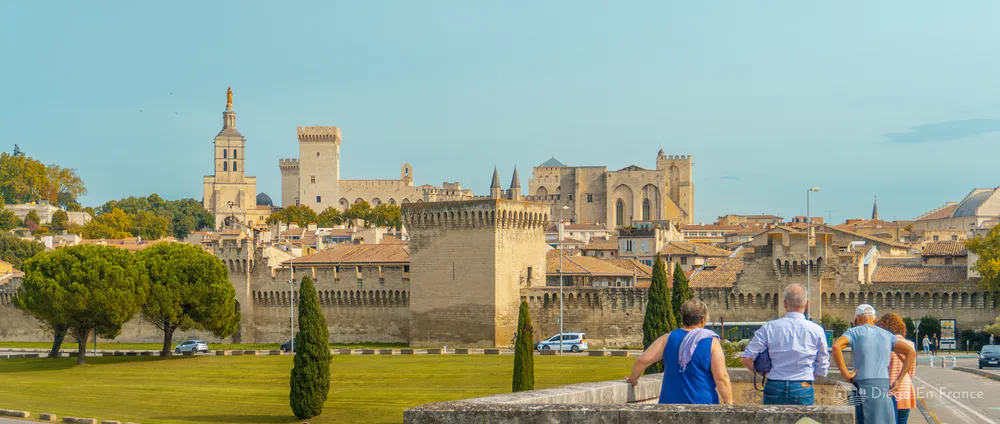
Encircling the old town for nearly five kilometers, the ramparts of Avignon are among the best-preserved medieval fortifications in France.
Built in the 14th century to protect the papal city, these massive stone walls still define Avignon’s shape when seen from the river or the Île de la Barthelasse.
With 39 towers and seven gates, they once guarded merchants, pilgrims, and popes entering the city.
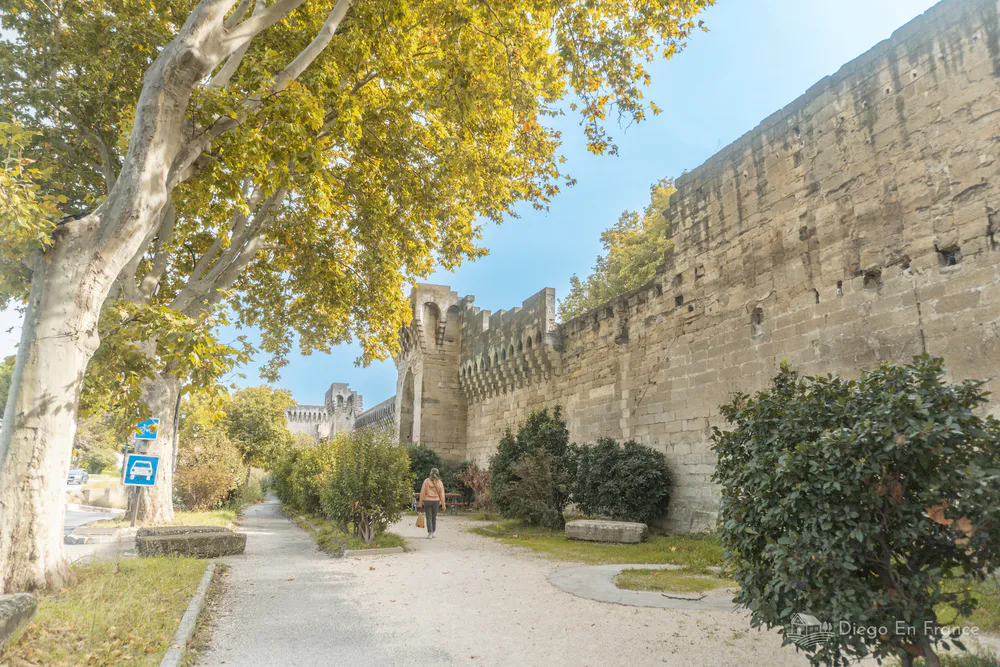
Today, parts of the walls are open to visitors, offering panoramic views over the tiled rooftops and the Rhône.
The short walkway section near the Rocher des Doms gives a taste of the scale without being tiring, perfect for families.
It’s a peaceful loop where you can imagine sentinels on watch or simply enjoy the breeze above the busy streets.
❤️ What we love: imagining the ancient guardians watching over Avignon from these heights.
👉 Diego’s Tip: Access the walls from the Saint-Anne stairs behind the Palais des Papes or from the Rocher des Doms garden.
🌞 Best light: Late afternoon, when the sun hits the stone and the city glows golden.
👨🏻👩👧🏻👦 Kid-friendly moment: Turn it into a mini treasure hunt: spot the towers, gates, and flags fluttering above the old town.
📷 Photo tip: The best skyline shots of the ramparts are from the Barthelasse Island riverbank.
The full ramparts encircle the old town for nearly five kilometers. Walking the entire loop takes about 1½ hours. Only a short 500-meter section near the Rocher des Doms is open for climbing, but it’s enough to enjoy sweeping views without tiring little legs.
Step Inside Saint-Pierre Church: Avignon’s Gothic Gem
✅ Recommended by diegoenfrance.com as a hidden gem of the old town of Avignon
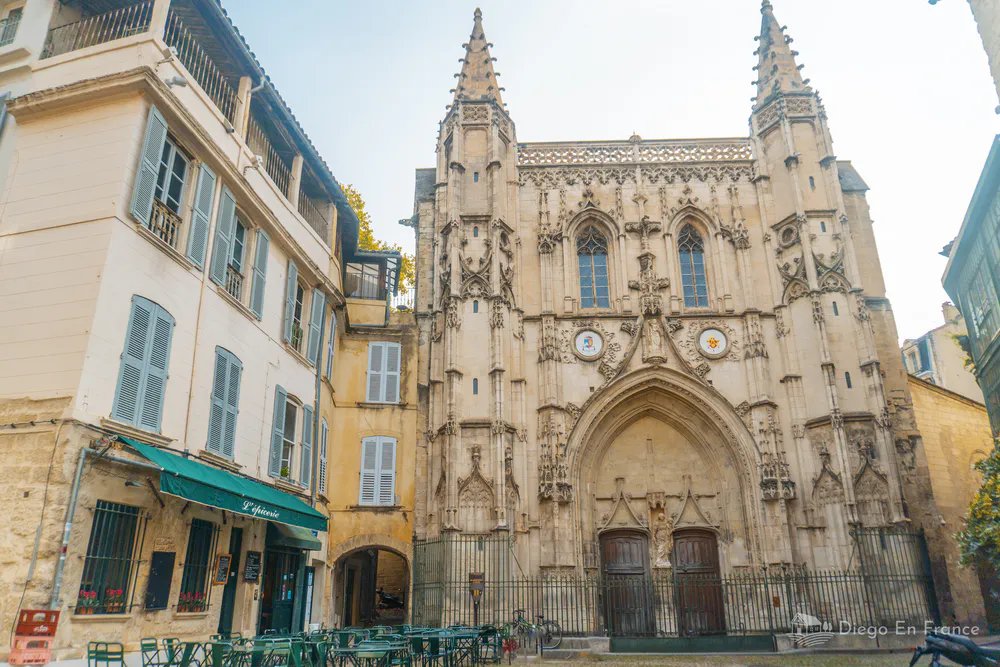
Hidden just a few steps from the main square, Saint-Pierre Church is one of Avignon’s quiet treasures.
Its slender Gothic façade, framed by tall twin doors carved in 1551, hides an interior that glows with gold, wood, and soft Provençal light.
Inside, sunlight filters through stained glass onto intricate choir stalls and delicate stone arches.
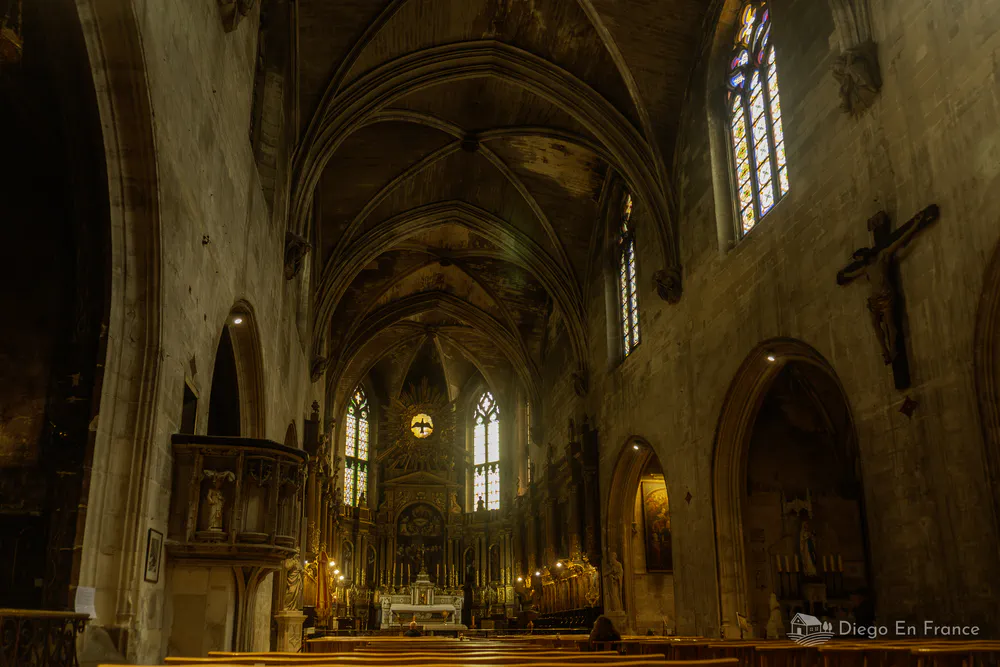
Though smaller than the cathedral, it feels more personal, with an intimacy that draws you in.
Look up to admire the painted ceilings with faint blue tones and tiny stars, and take a moment to study the wooden altarpiece, a masterpiece of Renaissance detail.
Built in the 14th century during Avignon’s papal era, the church still feels alive with the spirit of those who worshipped here centuries ago.
❤️ What we love: discovering this hidden Basilica and feeling its calm in the heart of Avignon.
🎫 Free entry
📍 Address: Pl. Saint-Pierre, 84000 Avignon
⌚ Usually open daily, 8:30 a.m.–noon and 2:30–6 p.m.
Unwind on Île de la Barthelasse: Picnic & Skyline Views
✅ Natural place recommended by diegoenfrance.com for its views and relaxed atmosphere.
Just across the Rhône, the Île de la Barthelasse feels like Provence in slow motion: green fields, poplar trees, and the scent of river grass.
It’s one of Europe’s largest river islands, yet it sits only a few minutes from the old town. From its banks, you get the most beautiful skyline view of Avignon: the bridge, the Palais des Papes, and the cathedral rising above the ramparts.
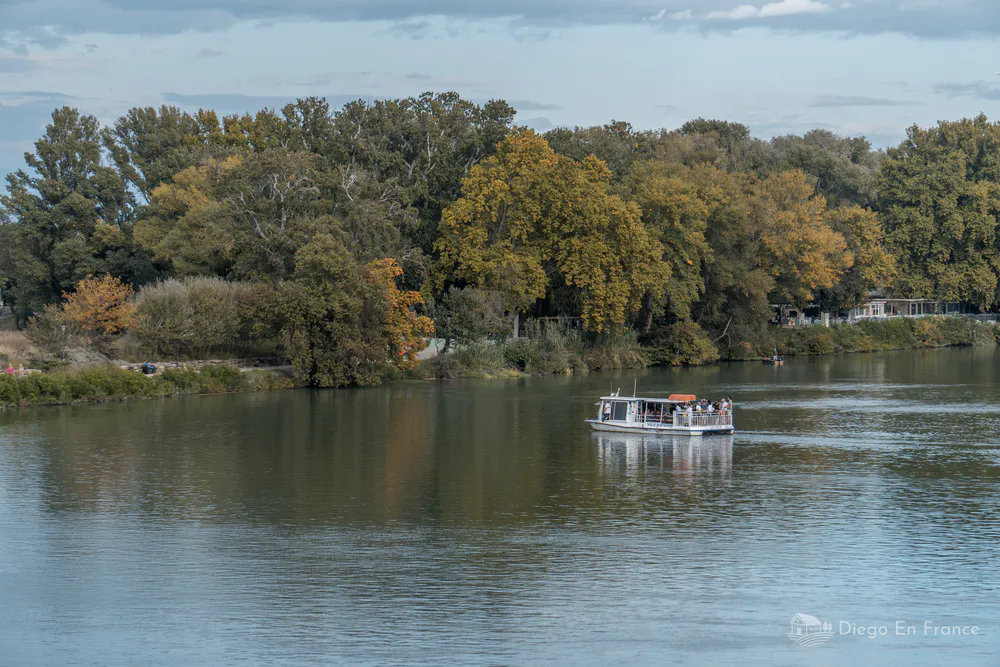
To get there, hop on the free ferry (bac à traille) that crosses from below the Pont d’Avignon. It runs every few minutes in season.
You can walk or cycle along the quiet riverside paths, passing orchards and small farms still worked by local families.
Bring your picnic from Les Halles or a bottle of local Châteauneuf-du-Pape wine, and find a shady spot under the willows.
❤️ What we love: crossing on the small ferry and seeing Avignon reflected in the water.
👉 Diego’s Tip: The ferry operates roughly from April to October; outside those months, you can walk or bike across the Daladier Bridge.
📷 Best time: Sunset, when the stone of the palace glows pink and the Rhône mirrors the light.
👨🏻👩👧🏻👦 Kid-friendly moment: Plenty of open space to run and feed ducks; bring a kite or ball.
😉 Local tip: Rent bikes in town for an easy loop. The island roads are flat and peaceful.
Stroll through Place des Carmes: Market, Local Life & Hidden Cloisters
✅ Featured on diegoenfrance.com for market life and daily charm
In the western part of the old town, Place des Carmes is where Avignon slows down and feels truly local.
This broad square, shaded by plane trees, hosts two of the city’s favorite markets.
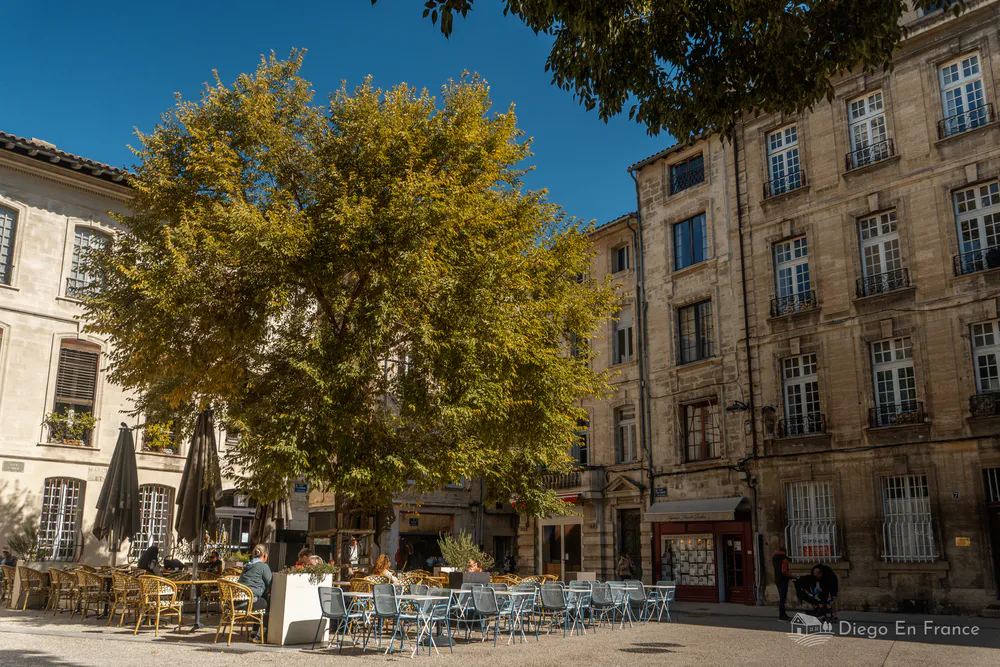
On Saturday mornings, the farmers’ market fills the air with the scent of olives, flowers, and goat cheese.
On Sundays, locals come for the flea market, a lively mix of antiques, books, and Provençal linens.
At one corner stands the Carmes cloister, a peaceful 13th-century relic of the old convent.
It’s usually open during cultural events or art exhibits; step inside if you find the gate open.
Its quiet arches offer a calm pause after the bustle outside.
Nearby cafés serve strong espresso and simple lunches under the trees. It’s the perfect spot to take a break and watch daily life unfold: grandparents chatting, kids on scooters, and the soft rhythm of a town that never fully hurries.
Free entry; bring cash for market stalls.
❤️ What we love: getting lost among the market stalls and feeling the daily pulse of Avignon.
👉 Best time: Saturday morning before 11 a.m.
Ride the Little Tourist Train: See Avignon the Easy Way
✅ Family activity recommended by diegoenfrance.com to discover Avignon in a fun way.
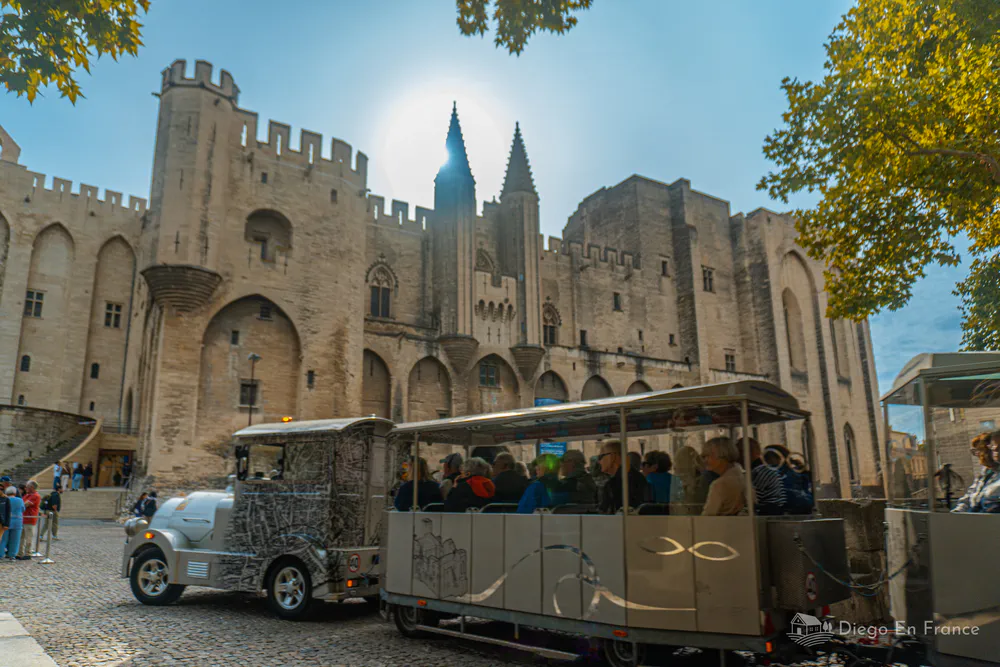
If your legs need a break or you’re traveling with children, the Petit Train d’Avignon is a charming way to discover the city.
The small white train winds through narrow medieval streets, passing the Palais des Papes, the Pont d’Avignon, and the hidden courtyards of the old town.
The 45-minute ride includes audio commentary in several languages that brings the city’s history to life.
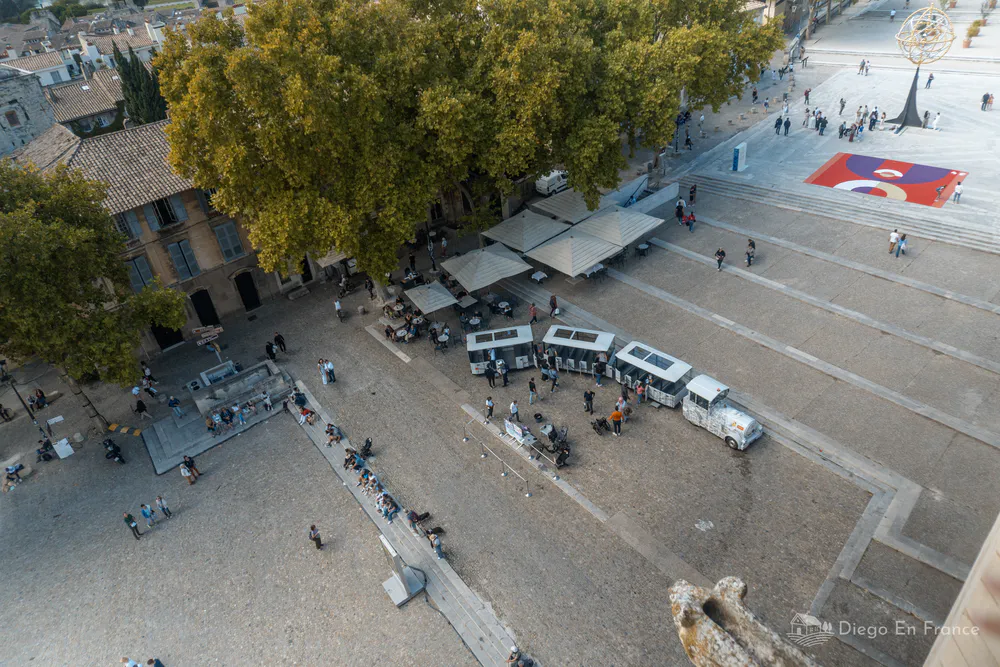
It’s also a great way to spot places you might want to return to later on foot.
Trains depart every 30 minutes from the Palais des Papes square. In summer, try to ride early in the morning or around sunset for softer light and cooler air.
❤️ What we love: touring Avignon at a leisurely pace, letting the train tell us its stories.
🎫 Tickets: around €10 adults, €5 children (free under 4)
Season: daily from April to October, limited schedule off-season
👨🏻👩👧🏻👦 Kid-friendly moment: children love waving at pedestrians as the train glides through the streets — and the bell sound always makes them smile.
Stroll Along Rue Joseph Vernet: Avignon’s Elegant Side
✅ Featured site on diegoenfrance.com for its refined architecture and urban charm.
Take a slow walk down Rue Joseph Vernet, Avignon’s most refined street.
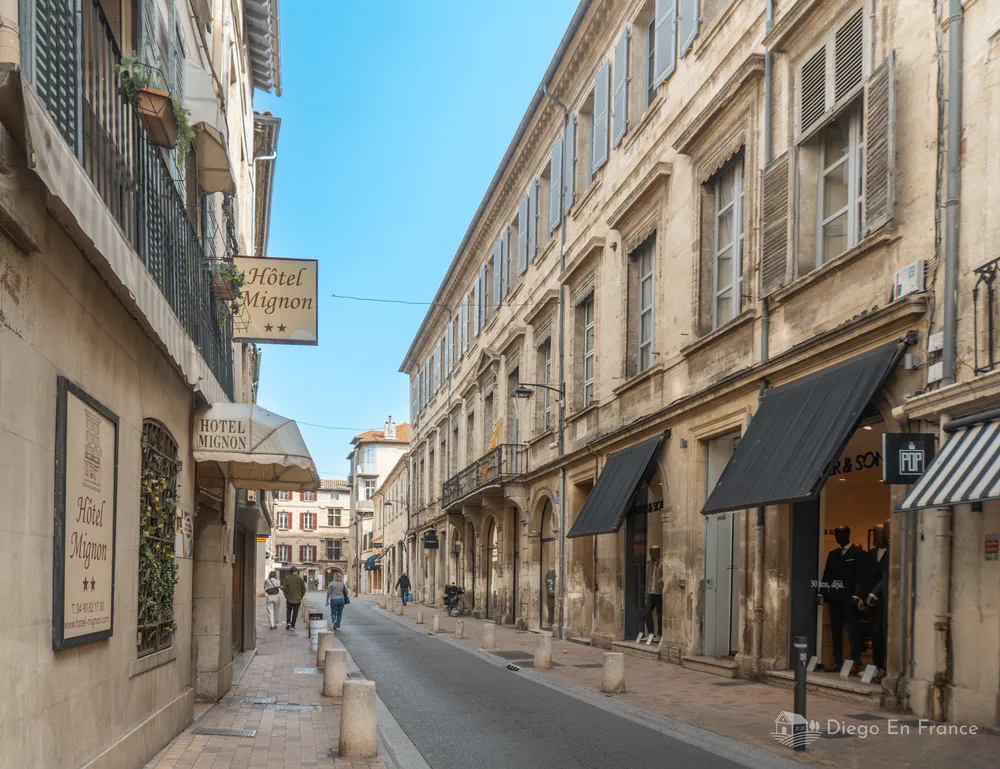
Once lined with noble townhouses, it now blends historic façades with chic boutiques and art galleries.
Locals come here to window-shop, sip espresso on shaded terraces, and enjoy the gentle Provençal rhythm that softens the city’s medieval edges.
Don’t miss Hôtel de Caumont, one of the most beautiful private mansions, and the nearby Place Crillon, where elegant architecture frames the Hôtel d’Europe, one of France’s oldest hotels.
This is the perfect area to end your stroll — a calm, graceful contrast to the medieval heart around the Palais des Papes.
❤️ What we love: walking leisurely down this elegant street where every facade tells a story.
Taste One of France’s Most Famous Wines

Spend a day among vineyards, historic wineries, and Provençal landscapes on this full-day tour from Avignon. You’ll taste the celebrated wines of Châteauneuf-du-Pape, Gigondas, and Vacqueyras, visit charming medieval villages, and enjoy a two-course gourmet lunch in a unique setting.
✔️ A perfect experience for couples and wine lovers, personally recommended by diegoenfrance.com for its authenticity and smooth organization.
👉 From €160 per person
Take This Food Tour Through Avignon
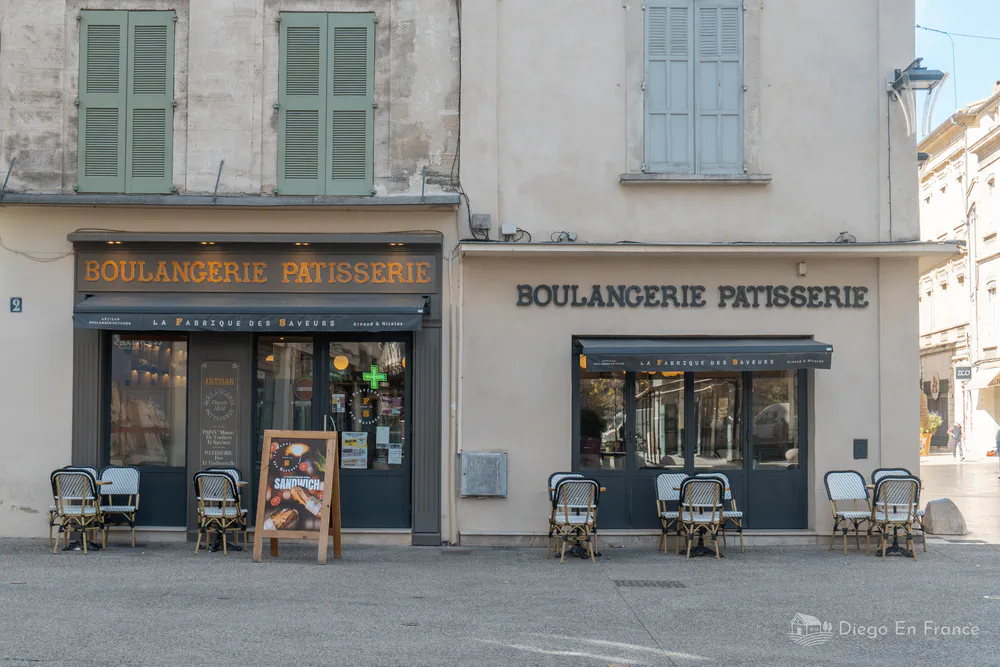
Discover Avignon through its flavors on this guided food tour led by local experts. In small groups, you’ll taste many of my favorite Provençal specialties: tapenade, olive oil, fougasse, quiche provençale, and homemade sweets, while exploring the most picturesque corners of the City of the Popes.
✔️ A delicious experience that blends history, culture, and regional cuisine, recommended by diegoenfrance.com for travelers who want to taste Avignon with all their senses.
👉 From €95 per person
Why Avignon’s Magic Lies in the Details
Avignon is not a city to rush.
Beyond its grand monuments, the real beauty lives in its in-between moments, an old man reading by the Rhône, a bell echoing across tiled roofs, children chasing pigeons on the Place de l’Horloge. Every corner feels like a story still unfolding, and each visit reveals another layer of its medieval heart.
👉 Discover More Things to DoCheck out my complete guide with 30 amazing family-friendly ideas to enjoy Provence, from lavender fields and river picnics to hilltop villages and secret swimming spots that kids will love.
The 5 Free Museums in Avignon: Art, History & Hidden Corners
Avignon is full of cultural treasures — and many of them are completely free to visit. These small museums and historic houses are perfect for travelers who love art, quiet spaces, and stories behind old walls.
Musée Calvet
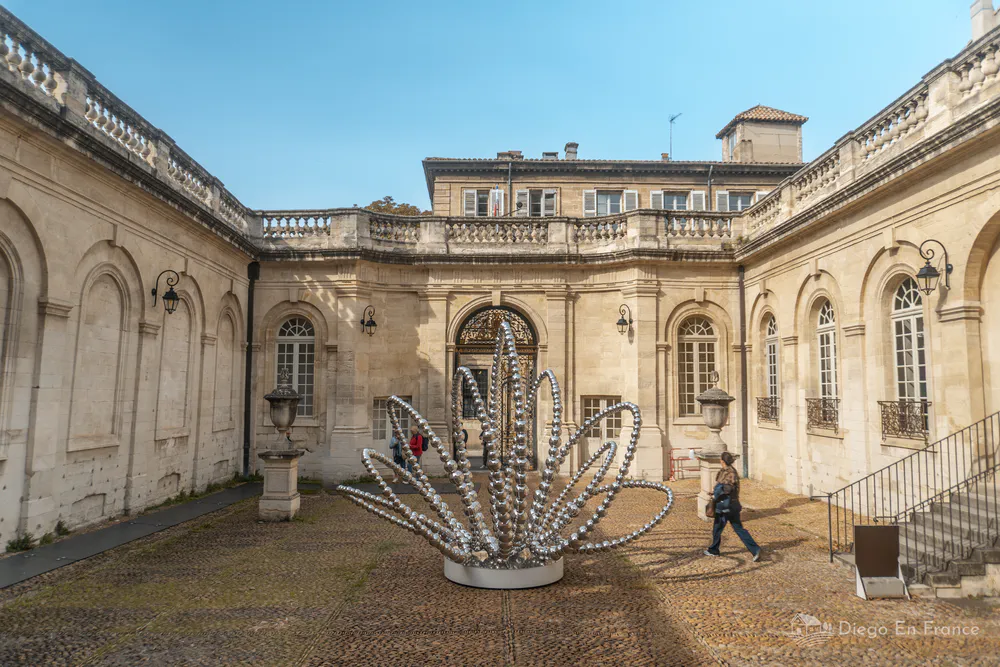
Housed in an elegant 18th-century mansion, the Calvet Museum gathers paintings, sculptures, and archaeological finds donated by local collector Esprit Calvet. It’s a serene place to wander through Provençal portraits and European masters, far from the crowds.
65 Rue Joseph Vernet, 84000 Avignon
Musée Lapidaire
A short walk away, the Lapidary Museum displays ancient Greek, Roman, and Egyptian artifacts inside a former Jesuit chapel. Kids often love the carved animals and mythical creatures — it feels like a mini time-travel stop.
📍 Address: 27 Rue de la République, 84000 Avignon
Musée du Petit Palais
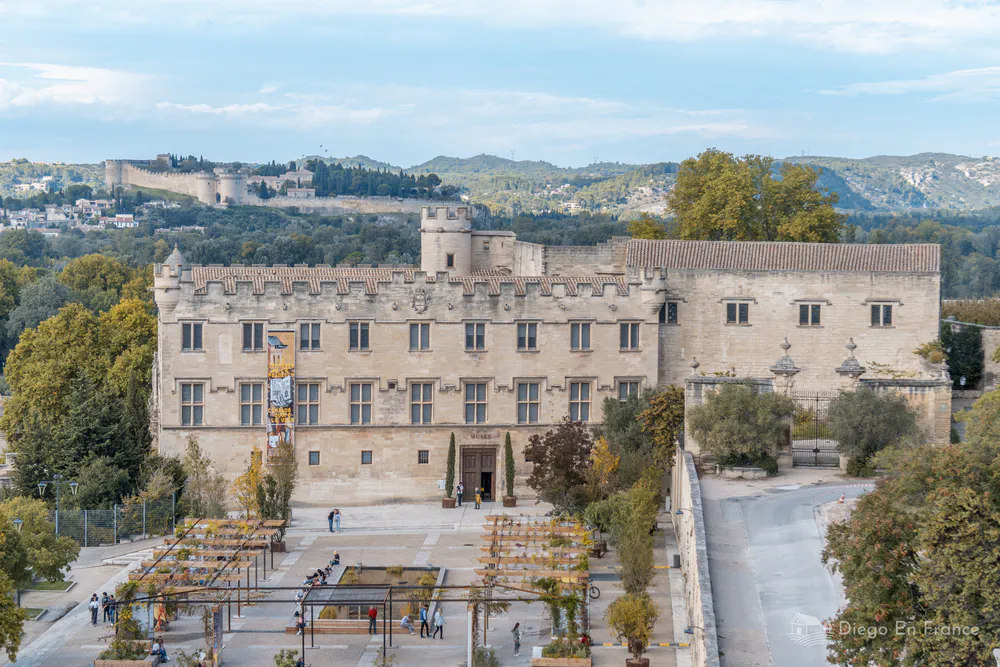
Next to the Palais des Papes, this UNESCO-listed museum hosts an exceptional collection of early Italian Renaissance art, including works by Botticelli and Carpaccio. Admission is free, and the quiet cloister offers a peaceful break between visits.
📍 Address: Palais des archevêques, Pl. du Palais, 84000 Avignon
Palais du Roure
Less known but fascinating, the Palais du Roure reveals the daily life of Avignon’s upper class through rooms filled with antique furniture, manuscripts, and Provençal folklore. It once belonged to poet Frédéric Mistral’s friends and preserves a warm, literary soul.
📍 Address: 3 Rue Collège du Roure, 84000 Avignon
Les Bains Pommer
Hidden in a narrow street, Les Bains Pommer is a small archaeological site showing the remains of medieval public baths.
It’s a quick yet intriguing visit, and perfect if you enjoy seeing traces of daily life from centuries ago.
📍 Adress: 25 Rue Four de la Terre, 84000 Avignon
One Day in Avignon: Easy Walking Itinerary
If you only have one day in Avignon, you can still see the essentials without rushing. The city is compact and perfect for walking, so you can explore at your own pace.
Here’s a gentle route that mixes history, good food, and quiet pauses for families.
Morning
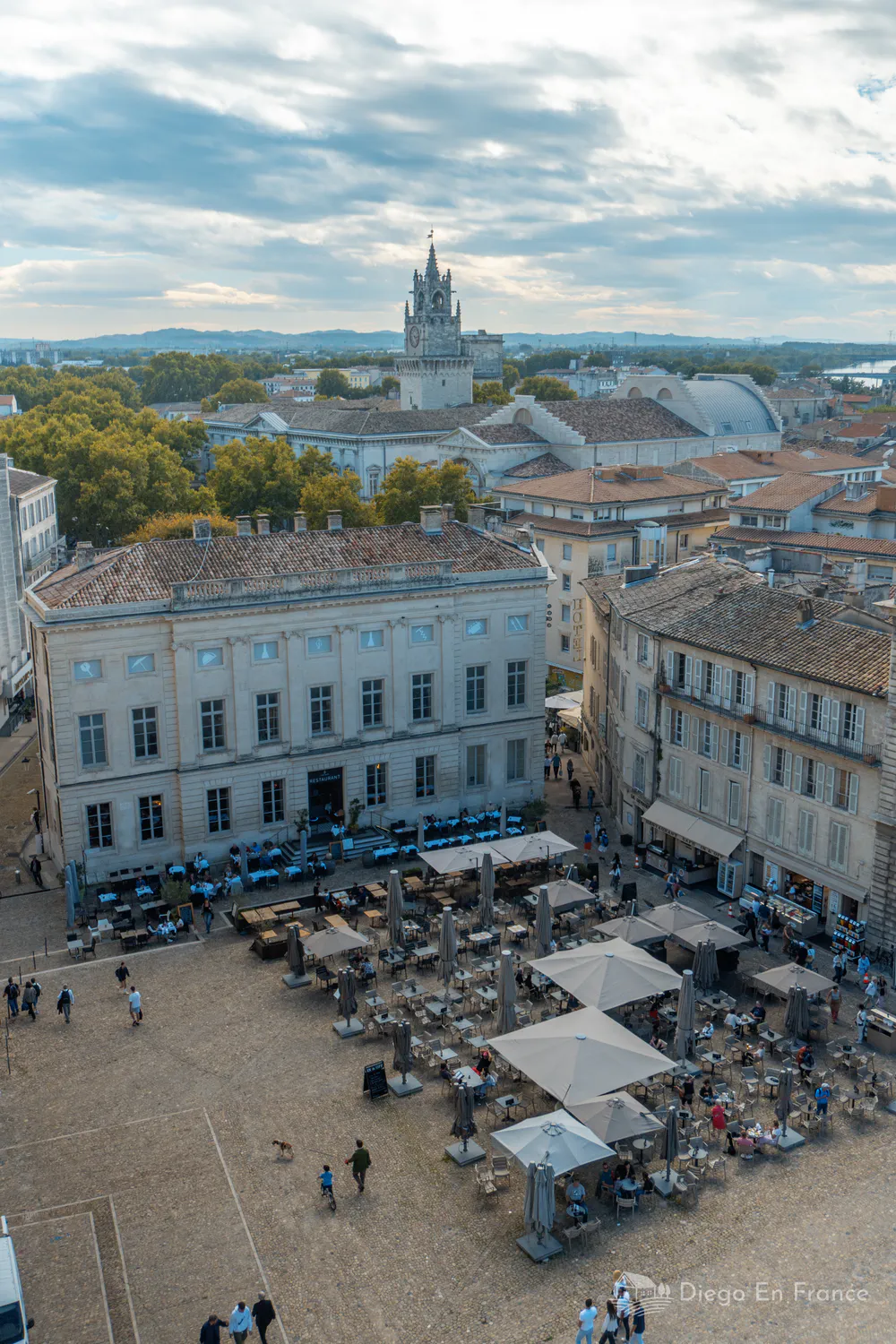
Morning Start early at the Palais des Papes, when the crowds are thinner and the light on the stone walls is soft.
Take your time exploring with the Histopad, then step outside to the Place du Palais for photos. From there, climb up to the Rocher des Doms gardens for shade, fountains, and panoramic views of the Rhône.
Kids love the ducks and the small playground near the pond.
Lunch
Walk down to Les Halles Market and pick up picnic treats: baguette, olives, cheese, strawberries in season.
Enjoy your lunch on the Île de la Barthelasse, just a few minutes away by the free ferry.
Afternoon
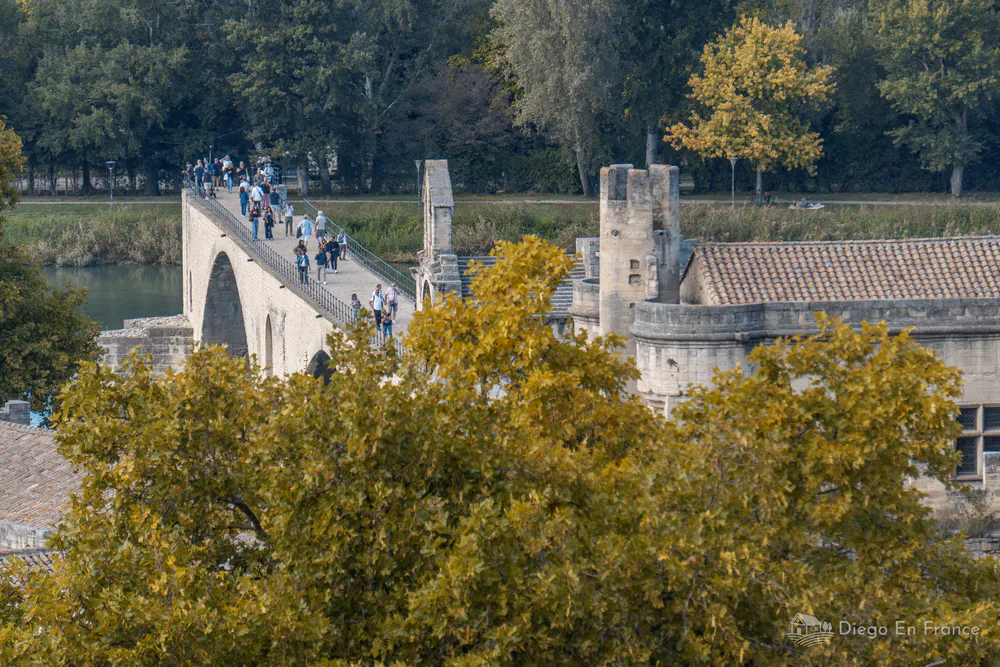
After the picnic, head back to the city and stroll along the Pont d’Avignon. Even if it doesn’t cross the river anymore, the view is incredible. Continue to Rue des Teinturiers, a cobbled street shaded by sycamores and full of small cafés.
If time allows, stop by one of the nearby museums such as the Petit Palais or the Musée Calvet for a short visit.
Evening
Finish your day at Place de l’Horloge. It’s lovely at sunset, when musicians play and children ride the carousel.
Choose a café terrace for dinner and watch the city lights come on as the Palais des Papes glows above you.
💡 Local tip: Everything here is walkable. Wear comfortable shoes, carry water in summer, and bring a light jacket if the mistral is blowing.
👉 Coming to Avignon? Then don’t miss my Guide to the Best Local Shops and Boutiques — perfect for finding authentic Provençal products and unique souvenirs to bring home from your trip to France.
Two Days in Avignon: Slow Itinerary for Curious Travelers
With two days in Avignon, you can slow down and let the rhythm of the city guide you.
It’s not about ticking boxes but about noticing textures, light, and the small joys that make Provence unforgettable.
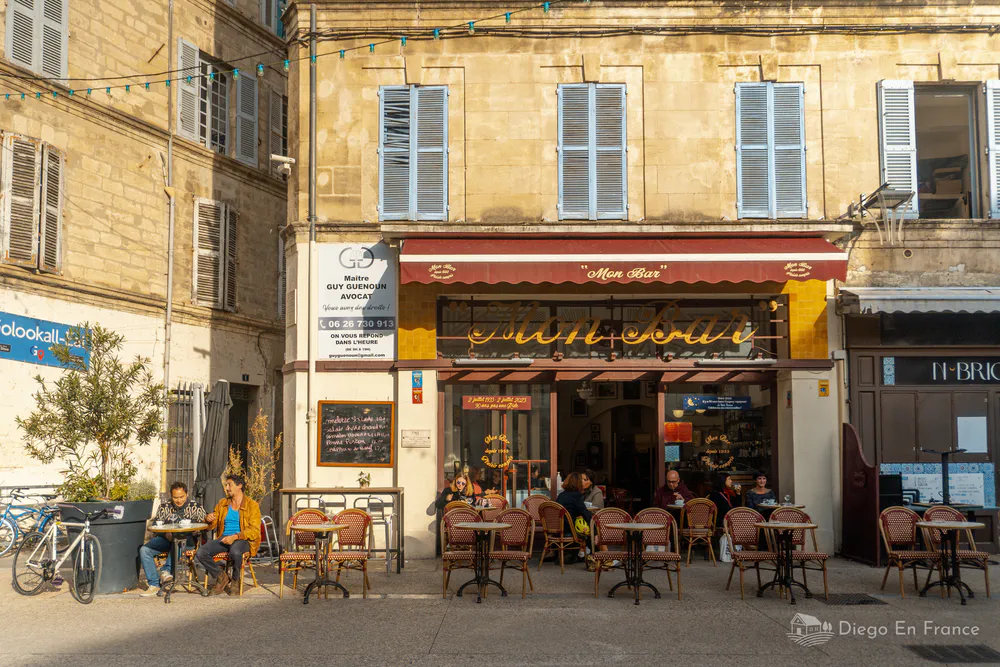
Day 1 – The Historic Heart
Begin your morning with the Palais des Papes and the Rocher des Doms gardens.
From there, take the Pont d’Avignon for a postcard view of the city.
After lunch at Les Halles or a picnic on the riverbank, spend the afternoon exploring the old town’s streets: Rue des Teinturiers, Place des Carmes, and Place de l’Horloge.
End your evening with dinner on a terrace and a stroll along the ramparts.
Day 2 – Art, Nature and Local Life
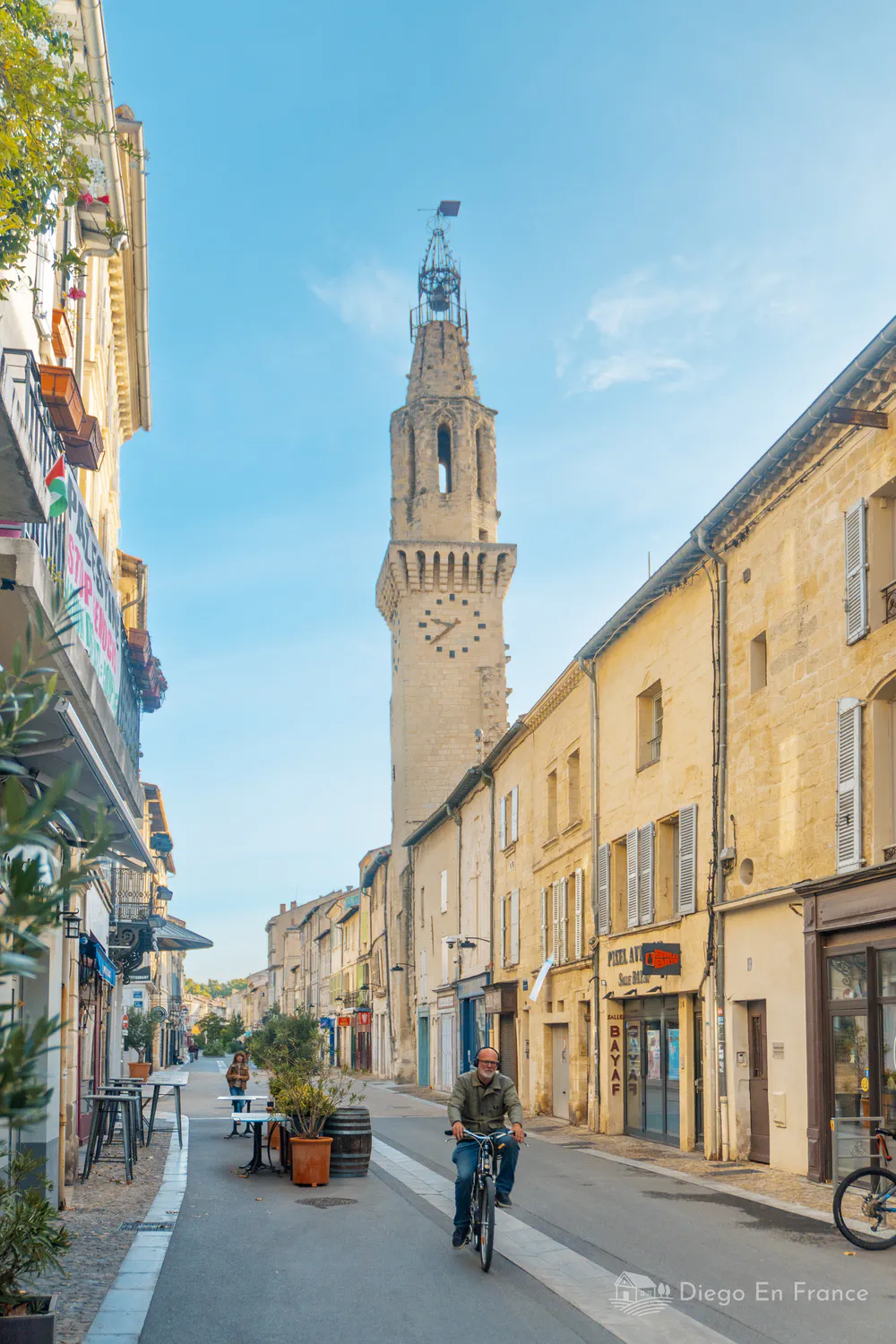
Start at the Petit Palais Museum or Collection Lambert, depending on your mood, medieval art or modern creativity.
Late morning, cross to the Île de la Barthelasse for fresh air and open space.
Bring bikes or rent them in town for a gentle loop through the orchards.
In the afternoon, visit Villeneuve-lès-Avignon, just across the Rhône, to see Fort Saint-André and its serene gardens.
It’s quieter than the city and offers one of the best views of Avignon’s skyline.
Evening
Return to Avignon for a relaxed dinner near the Place du Palais or try a family-run bistro in Rue Joseph Vernet.
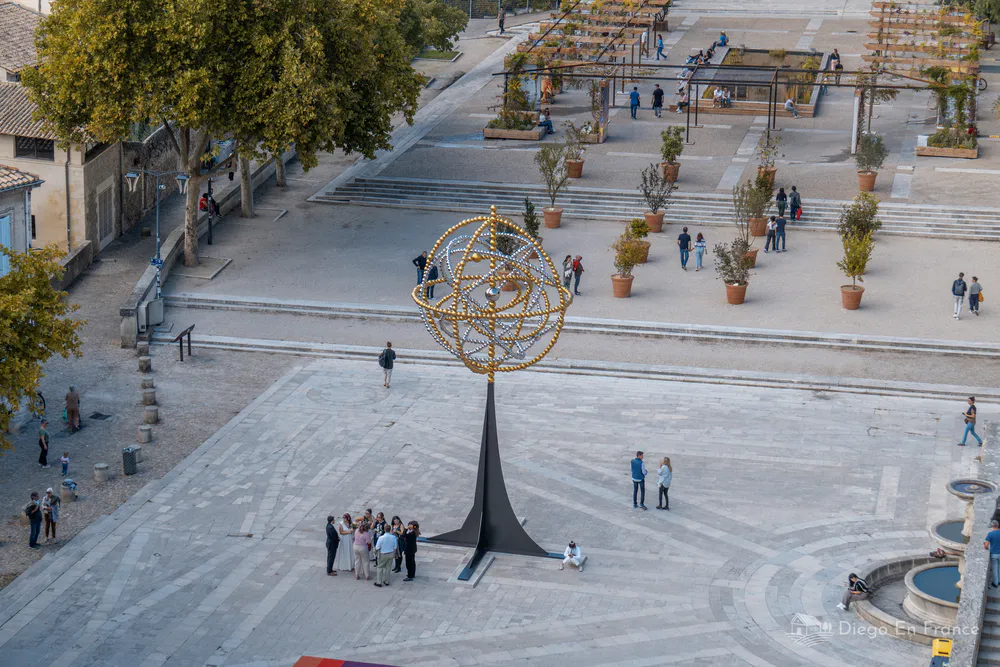
If you visit in July, reserve tickets for a performance during the Avignon Festival. The Cour d’Honneur of the Pope’s Palace transforms into an open-air stage, and the whole city buzzes with theatre and music.
💡 Local tip: Don’t try to see everything. Avignon rewards those who slow down, wander without a plan, and let curiosity lead the way.
Free Things to Do in Avignon
Looking for free attractions in Avignon? Several of the city’s best museums open their doors at no cost. Step into the Musée Calvet for fine arts and archaeology, or the Musée Lapidaire to see Roman and Egyptian sculptures. Don’t miss the Petit Palais, next to the Palais des Papes, with its early Renaissance masterpieces.
For something more intimate, visit the Palais du Roure, filled with Provençal traditions, or the Bains Pommer, where medieval baths reveal everyday life from centuries ago. Perfect for art lovers and curious families alike — and all completely free.
📝 Take Diego en France’s Exclusive Checklist
Plan your visit like a local with this handy resource you can open right from your phone 📱
✉️ I send up to 3 newsletters per month, no spam, and you can unsubscribe whenever you want.
Avignon with Kids: Strollers, Snacks & Little Train
Strolling Around the Old Town
Avignon is wonderfully family-friendly. The old town is compact, mostly pedestrian, and easy to explore with a stroller.
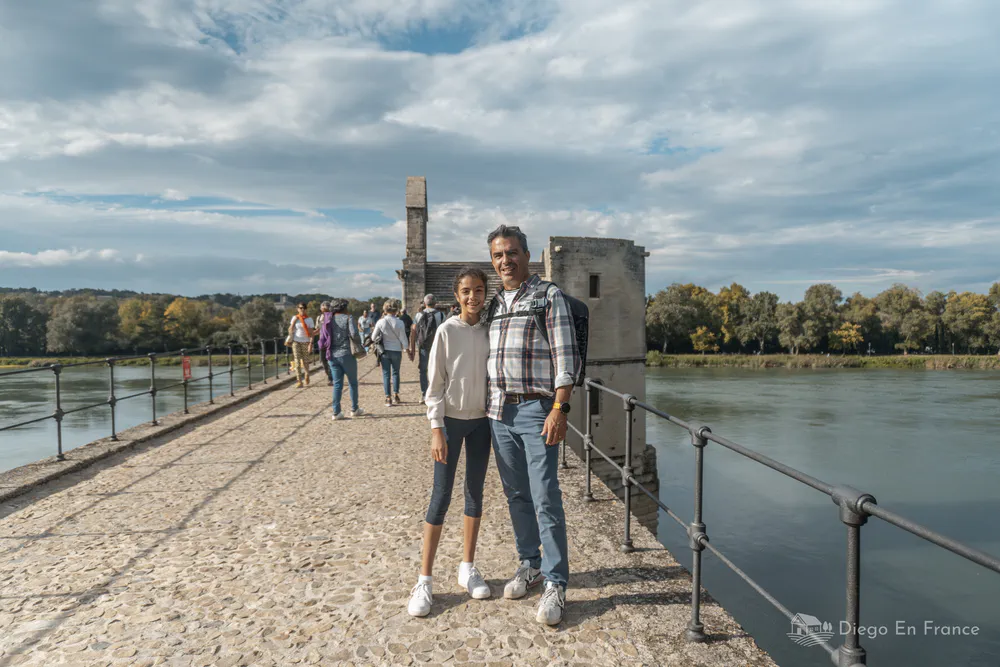
Streets are shaded by plane trees, and every few blocks you’ll find a square where children can play while parents sip a coffee nearby.
Play and Pause at the Rocher des Doms
Begin your day at the Rocher des Doms gardens, a peaceful green hill just behind the Palais des Papes.
There’s a small playground, a pond with ducks and swans, and panoramic views of the Rhône. It’s a perfect pause for families before or after sightseeing.
Palace Adventures and Carousel Moments
At the Palais des Papes, older kids love the Histopad, a digital tablet that brings medieval rooms to life with treasure hunts and animations.
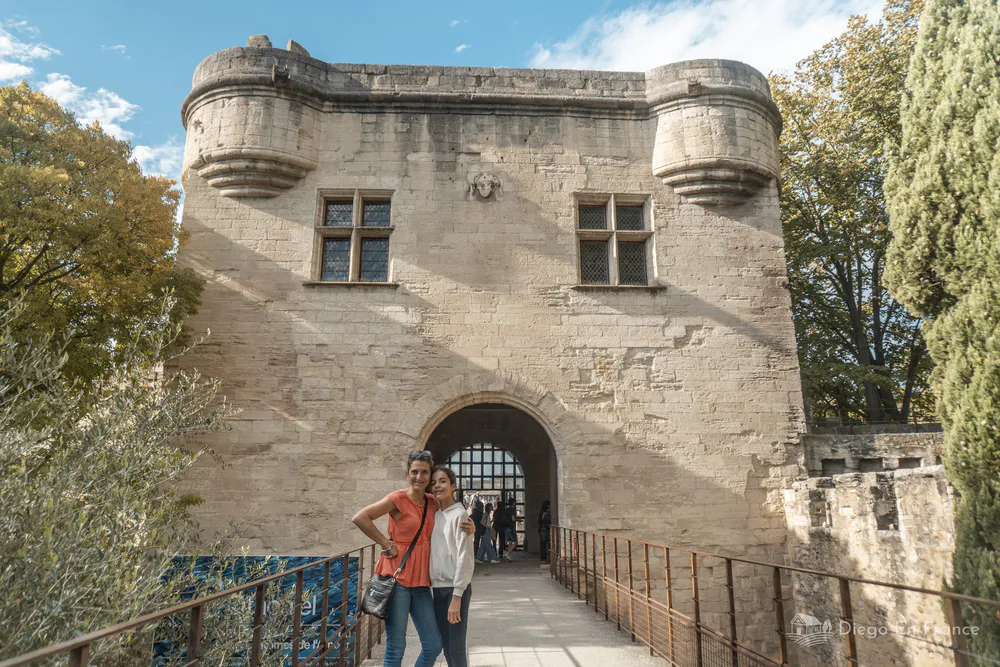
For younger ones, the carousel on Place de l’Horloge is a must, while parents can enjoy the view from a café terrace.
Picnic at Les Halles and the Barthelasse Island
If you need a simple meal, head to Les Halles Market, where children can help choose fruits, cheese, or pastries for a picnic.
Then cross the river by the free ferry to Île de la Barthelasse, a wide green space perfect for running, biking, and playing under the willows.
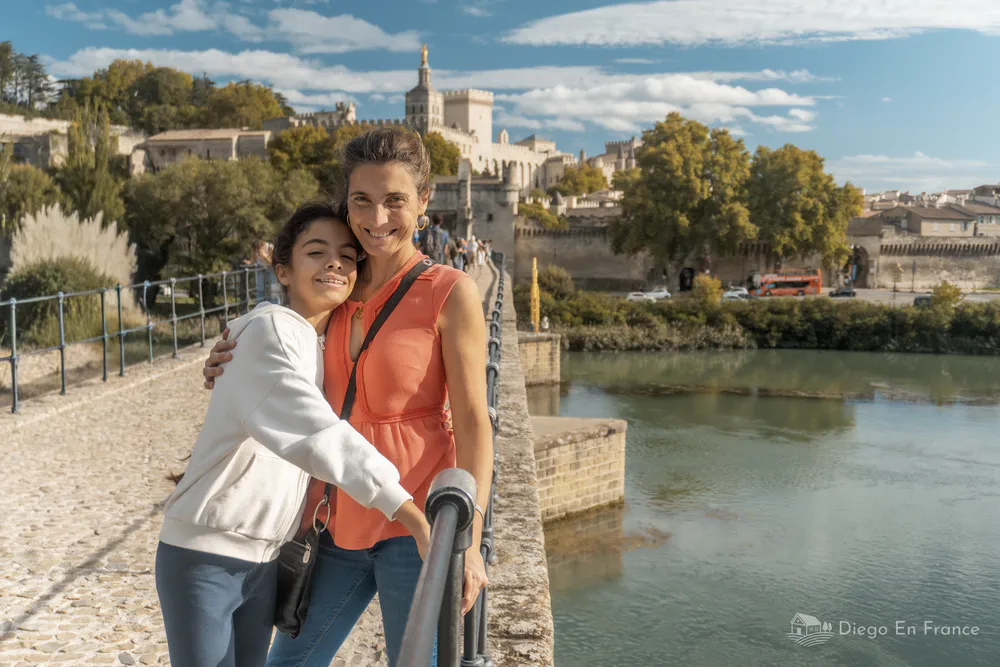
Hop on the Little Tourist Train
Before the day ends, hop on the Little Tourist Train, which loops through the main sights in about 45 minutes.
It’s a fun and easy way to rest tiny legs while discovering the city together.
💡 Family tip: Avoid driving inside the old town. Park at Parking des Italiens or Île Piot and take the free shuttle — it’s faster and stress-free with kids.
👉 Coming to Avignon? Then be sure to read my Guide to the Best Kid-Friendly Snacks and Meals — a must for families discovering France through its flavors.
Where to Eat in Avignon: Provençal Flavors & Local Favorites
Taste the Essence of Provence
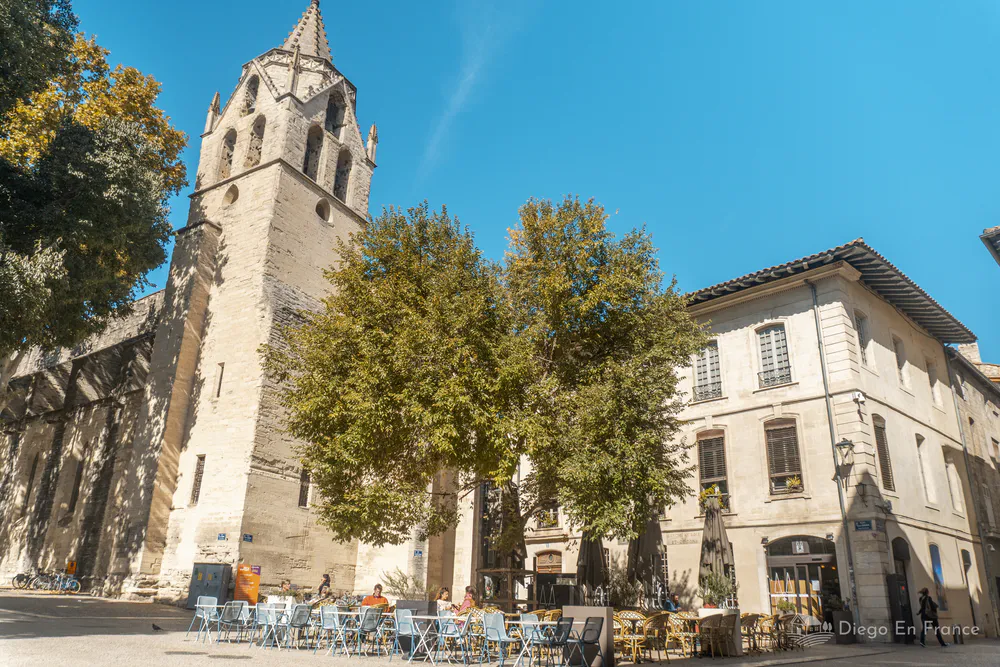
Avignon’s cuisine is a reflection of Provence itself: generous, colorful, and guided by the seasons.
Eating here means tasting the sun, ripe tomatoes, olive oil from nearby orchards, lavender honey, and wines that carry the scent of the Rhône Valley.
Start at Les Halles Market
Begin your morning at Les Halles Market, where locals shop for goat cheese, tapenade, and herbes de Provence.
You’ll see baskets full of melons from Cavaillon and bunches of purple artichokes from the surrounding plains. Even a simple picnic here feels special.
From Bistros to Michelin Stars 
For lunch, Avignon’s bistros celebrate local ingredients: gardianne de taureau (bull stew in red wine), ratatouille, and brandade de morue, a creamy blend of cod and olive oil.
Pair them with a glass of Côtes du Rhône or Châteauneuf-du-Pape, the wine born from papal history.
Avignon also shines on the fine-dining scene with two Michelin-starred restaurants.
Pollen , near Rue des Teinturiers, offers creative, plant-forward cuisine that feels like a landscape of Provence. 📍Dirección : 18 rue Joseph-Vernet, Avignon
La Mirande , next to the Palais des Papes, dinner becomes a time capsule: candlelight, antiques, and dishes inspired by the local market. 📍Dirección: 4 place de l’Amirande, Avignon
Both are intimate, authentic experiences that honor Provençal heritage in their own way.
Casual Eats and Café Culture
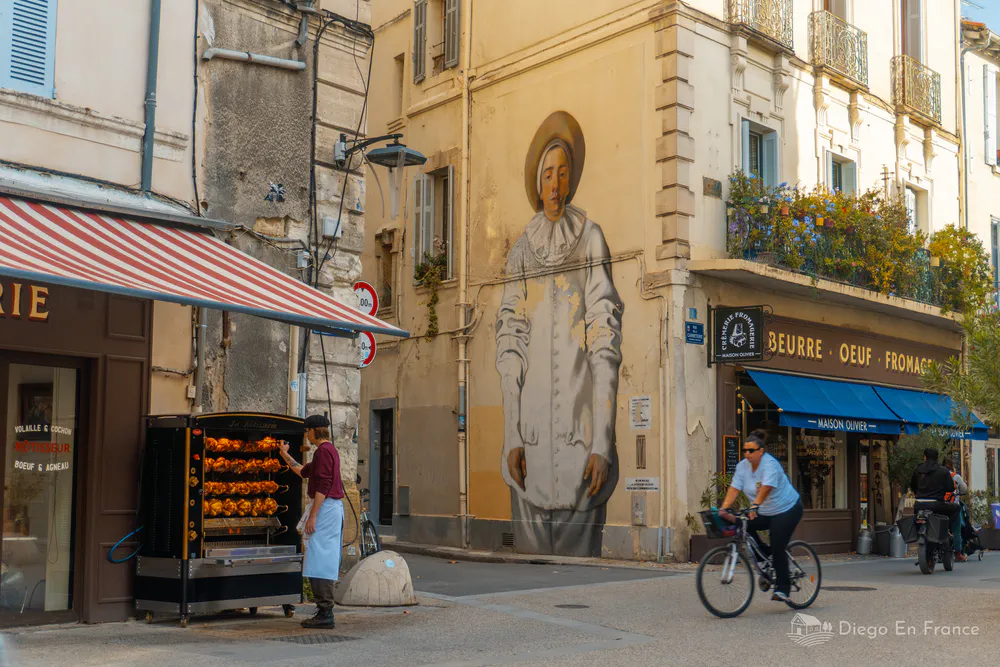
Redactor SEO Inglés dijo: For something lighter, settle on a sunny terrace at Place des Carmes or Rue Joseph Vernet.
Enjoy a salade provençale, a chilled rosé, and the gentle hum of Avignon life around you.
🌿 Local tip: Many restaurants close on Sundays or Mondays. Reserve ahead, especially in summer, when terraces fill up quickly.
👉 Coming to Avignon? Then don’t miss the most complete Guide with real tips for eating out in French restaurants, learn how locals order, what to try, and how to enjoy every meal like a true gourmand.
Where to Stay in Avignon: From Historic Charm to Family Comfort
Avignon offers a mix of grand history and quiet hospitality. Within the city walls, elegant hotels occupy centuries-old mansions, while cozy guesthouses and apartments welcome families just steps from the main sights.
For travelers seeking luxury and heritage, two five-star icons define Avignon’s charm: La Mirande, beside the Palais des Papes, and Hotel d’Europe, facing the tranquil Place Crillon. Both combine refined design, Provençal warmth, and unforgettable views of the old town.
Families and slow travelers will find comfort in smaller boutique hotels or apartments near Rue Joseph Vernet or Place des Carmes, where local life unfolds softly beyond the crowds.
🌿 Local tip: Stay inside the ramparts if you love walking everywhere, or just outside for easier parking and quieter evenings.
Hotel La Mirande ⭐⭐⭐⭐⭐
Timeless Elegance Beside the Palais des Papes
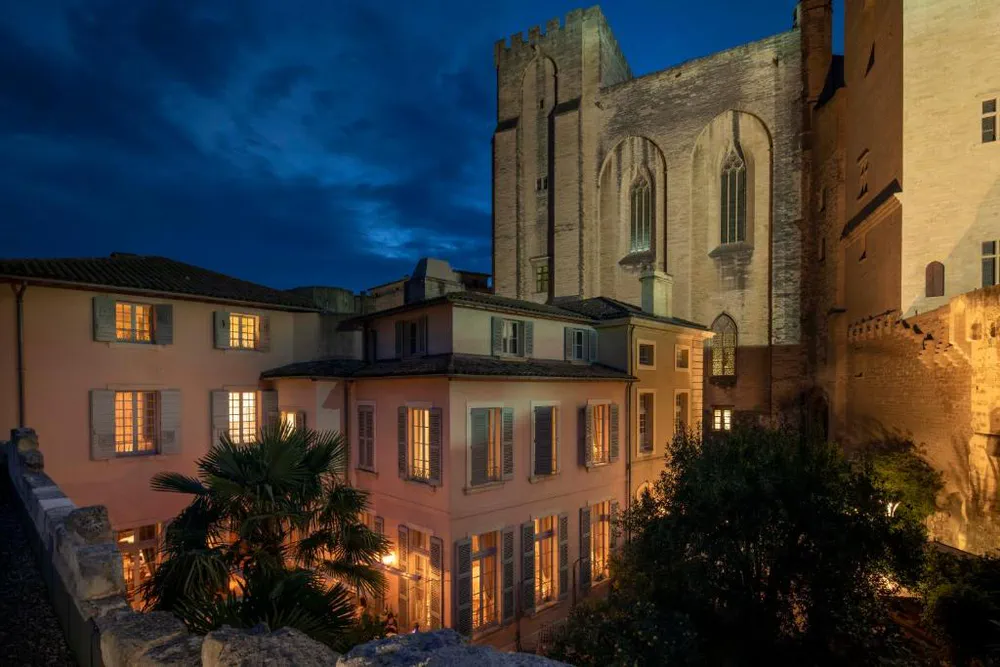
Staying at La Mirande feels like stepping into another century. Behind its 18th-century façade, this former cardinal’s mansion blends history, art, and gentle hospitality.
Each room is uniquely decorated with antique fabrics and light that filters softly through lace curtains.
Breakfast in the garden, dinner by candlelight, and the quiet hum of the nearby Palais des Papes make it one of the most romantic stays in Provence.
📍 Address: 12 Place de l’Amirande, Avignon
👉 Rooms from 470 € per night
Hôtel d’Europe ⭐⭐⭐⭐⭐
Historic Luxury on Place Crillon
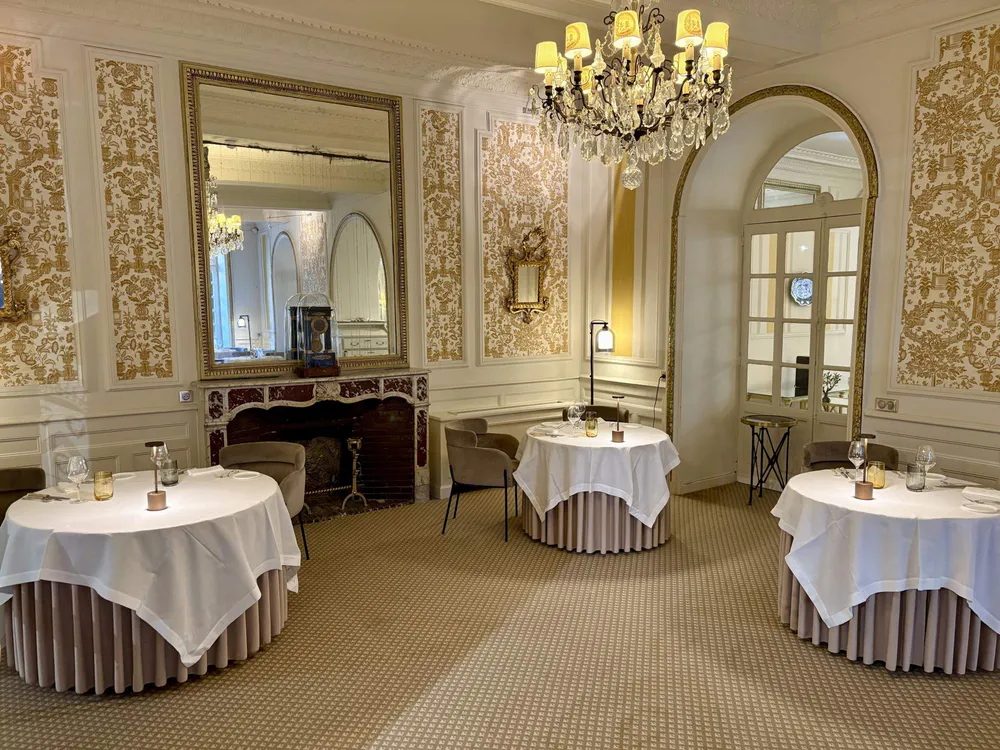
Just inside the city walls, Hôtel d’Europe has welcomed travelers since 1799. Its courtyard shaded by plane trees sets the tone: calm, refined, and authentically Provençal.
Rooms combine classic charm with modern comfort, and the service has a grace that feels rare today.
From here, it’s an easy stroll to Avignon’s main sights, yet the atmosphere remains peaceful, as if the city slows down at its doorstep.
📍 Adress: 12 Place Crillon, Avignon
👉 Rooms from 287 € per night
Practicalities: Parking, Shuttles & Best Time to Visit
Where to Park in Avignon
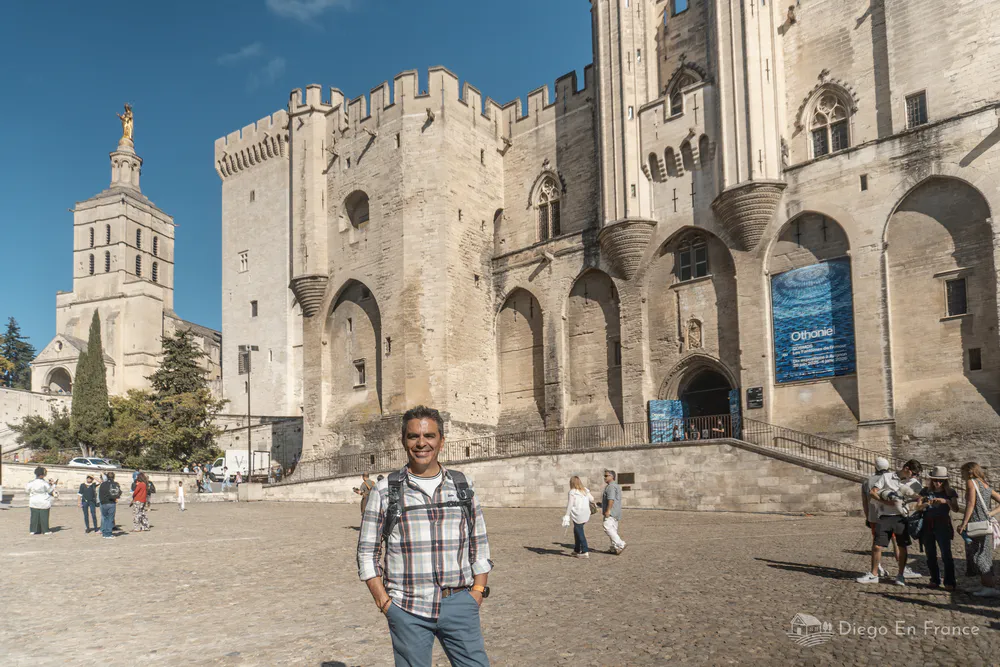
Driving inside Avignon’s medieval walls can be complicated, with narrow one-way streets and limited spaces.
The easiest solution is to leave your car just outside the ramparts and hop on a free shuttle.
The Parking des Italiens and Parking Island Relay Piot are both free and connected to the city center by shuttles every 5 to 8 minutes.
The ride takes about 5 minutes and drops you near the Palais des Papes.
Shuttles run until late evening during summer, making them perfect if you’re staying for dinner or the Festival d’Avignon.
Parking des Italiens Free parking with shuttle to the old town every 5-8 minutes
🧭 Coordinates: 43.953225517460275, 4.8205287640495085
Plus Code: XR3C+66 Aviñón
Parking Island Relay Piot
Use: free parking with shuttle to the center
🧭 Coordinates: 43.95116734736186, 4.793349406595906
Plus Code: XQ2V+C8 Aviñón
ℹ️ There are also numerous paid parking lots available.
💡 Local tip: Avoid trying to park inside the city walls unless your hotel has private parking.
Getting Around the City
Once you’re inside the walls, Avignon is easy to explore on foot. The historic center is compact and mostly pedestrian, with every major sight within a 15–20 minute walk.
For a fun overview or if you’re traveling with kids, the Petit Train d’Avignon offers a relaxing 45-minute loop of the main sights.
👉 Planning to visit Avignon? Don’t miss the most complete Guide with real tips for driving in France, written by an experienced local traveler who knows the roads, and the unwritten rules, better than anyone.
Getting to Avignon by train
Avignon has two train stations. The Avignon TGV Station connects directly to Paris in about 2 hours 40 minutes and to Marseille in under an hour.
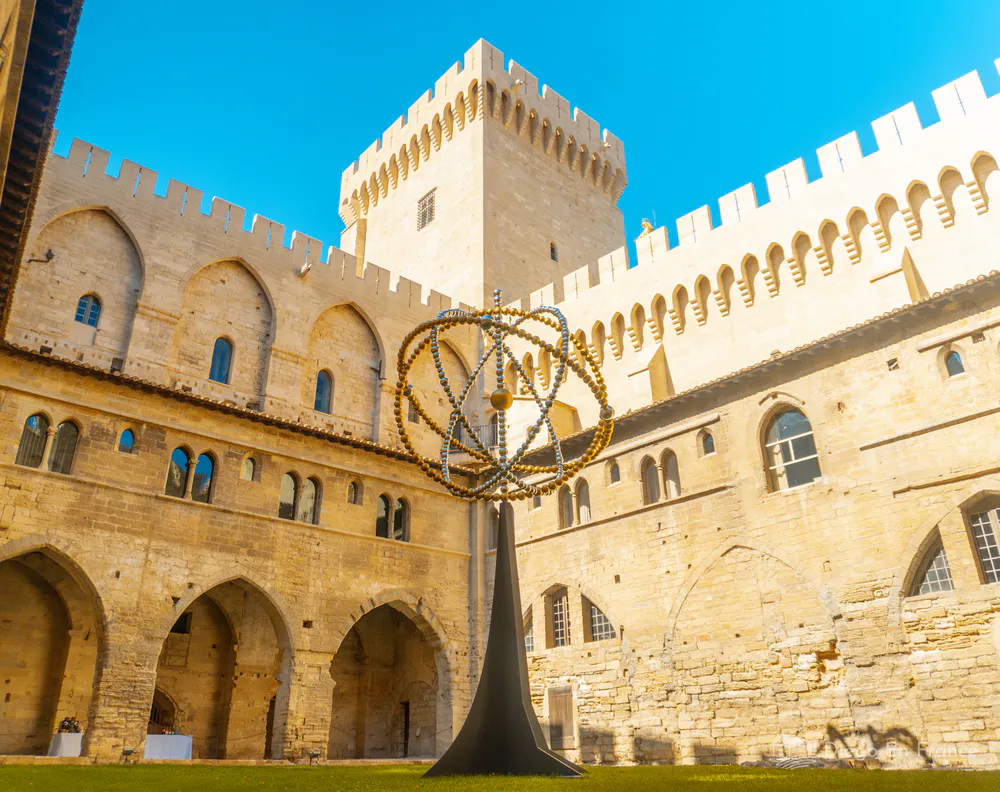
From there, a regional train or local bus takes you to Avignon Centre Station, right by the old town. Taxis and car rentals are available at both stations.
Best Time to Visit Avignon
The best months to visit are April to June and September to October, when the weather is warm but not scorching, and the light is perfect for walking and photography.
July brings the world-famous Festival d’Avignon, which fills the streets with theater, music, and street art, but expect higher prices and larger crowds.
Winter is quieter and ideal if you prefer slow sightseeing and cozy cafés.
🌿 Local tip: Pack light layers and a hat. The mistral wind can surprise you even on sunny days.
Achieve maximum immersion
in French culture
Here’s a playlist to listen to while driving these routes
Save Time with the Avignon City Pass
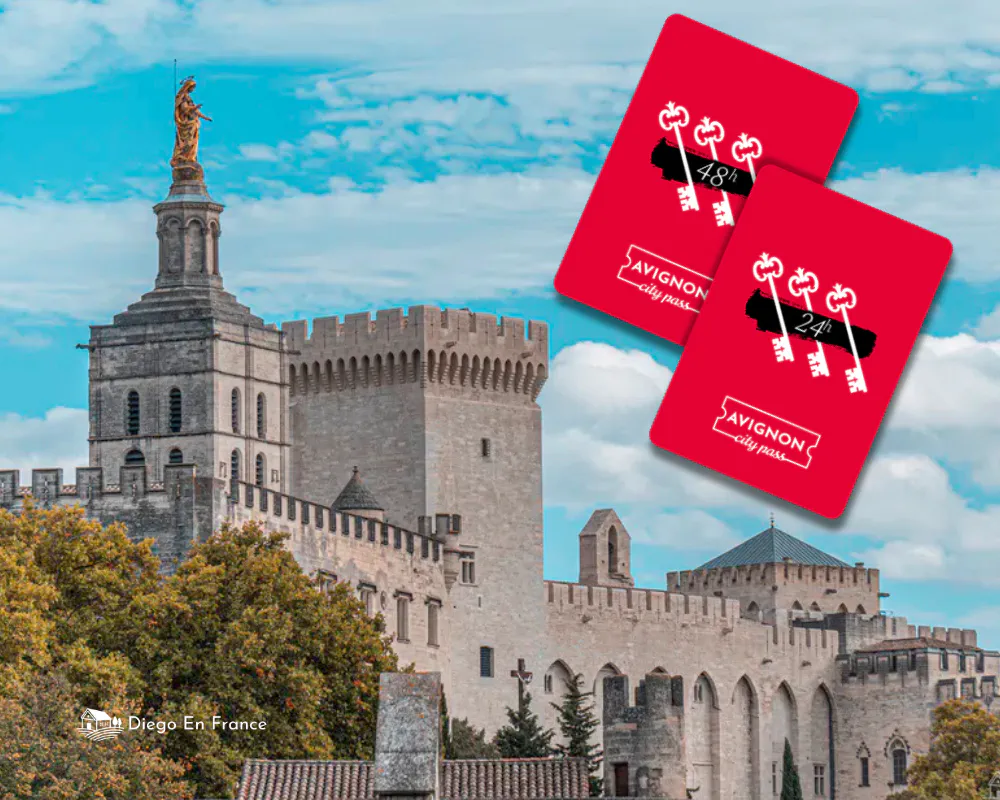
The Avignon City Pass makes visiting the city wonderfully easy.
We used it on our last visit, and I can honestly say it’s fantastic. With this pass, we explored Avignon effortlessly, slipping in and out of monuments and museums as easily as walking into a local bakery.
It includes access to the Palais des Papes, Pont d’Avignon, Petit Palais, Musée Calvet, and many other cultural sites — no lines, no separate tickets, just smooth sightseeing.
🎫 Prices (2025):
- 24 € for 24 hours
- 32 for 48 hours
You can buy it online at the Avignon tourist office or directly at the ticket office of the Palais des Papes. It is activated with your first visit and is valid for consecutive hours, depending on the type of pass chosen.
🕓 Validity: consecutive days (24, 48 hours).
💡 Local tip: It’s ideal for slow travelers — you can explore at your own rhythm, pause for lunch, and then slip effortlessly into another site across the old town. Avignon’s compact size makes it flow beautifully.
Charming Villages near Avignon: Perfect Day Trips from the Papal City
✅ Personally visited and certified by diegoenfrance.com: villages with soul, handpicked for their authenticity, easy access, and family-friendly charm near Avignon..
Just a few kilometers from Avignon, Provence reveals its most authentic side: hilltop villages, cobbled lanes glowing in golden light, and markets scented with lavender and freshly baked bread.
Exploring them means traveling at a gentler pace, far from the crowds, where every corner invites you to pause, chat with locals, and savor Provençal life.

Bormes-les-Mimosas: A Floral Treasure on the French Riviera


Your Luxury Guide: Top 5 of the 5 star hotels in Gordes


Avignon in History: From Papal Glory to Provençal Grace
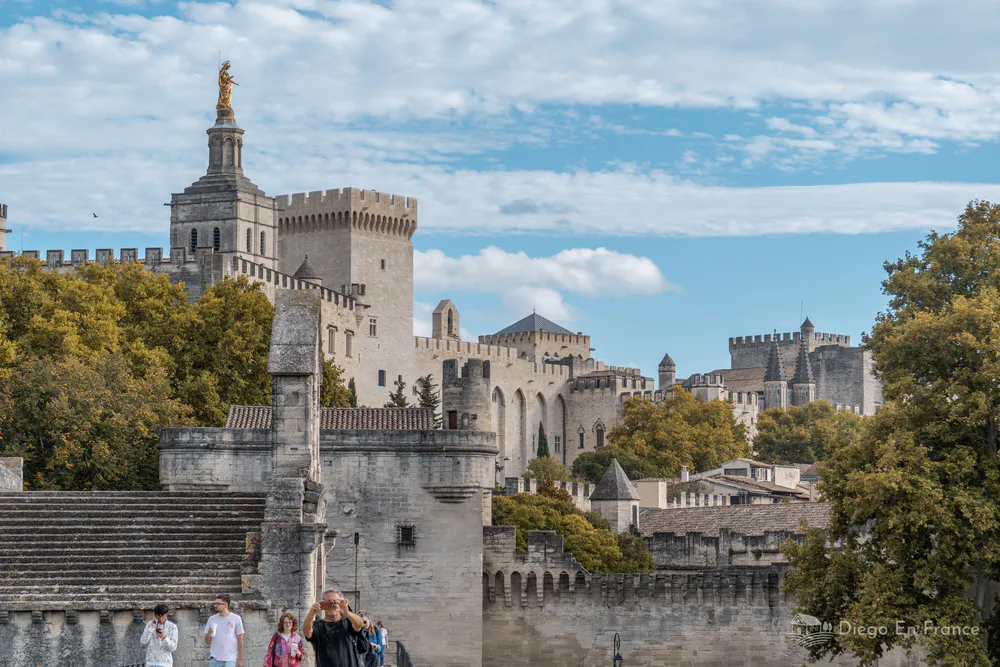
Avignon’s story is woven between faith, art, and power. In the 14th century, this small Provençal town became the heart of the Catholic world when nine popes chose to live here instead of Rome.
The Palais des Papes, built during that era, still dominates the skyline like a stone fortress of belief and ambition.
The city’s golden age filled its streets with merchants, artists, and pilgrims from across Europe.
The Rhône carried goods and ideas, while bridges, chapels, and frescoes turned Avignon into a living canvas of the Middle Ages.
After the papal court returned to Rome, Avignon remained under papal control for centuries, giving it a rhythm apart from France.
Even today, that mix of Italian refinement and Provençal soul lingers in its architecture, its food, and its easy pace of life.
Final Thoughts: Take Your Time in Avignon
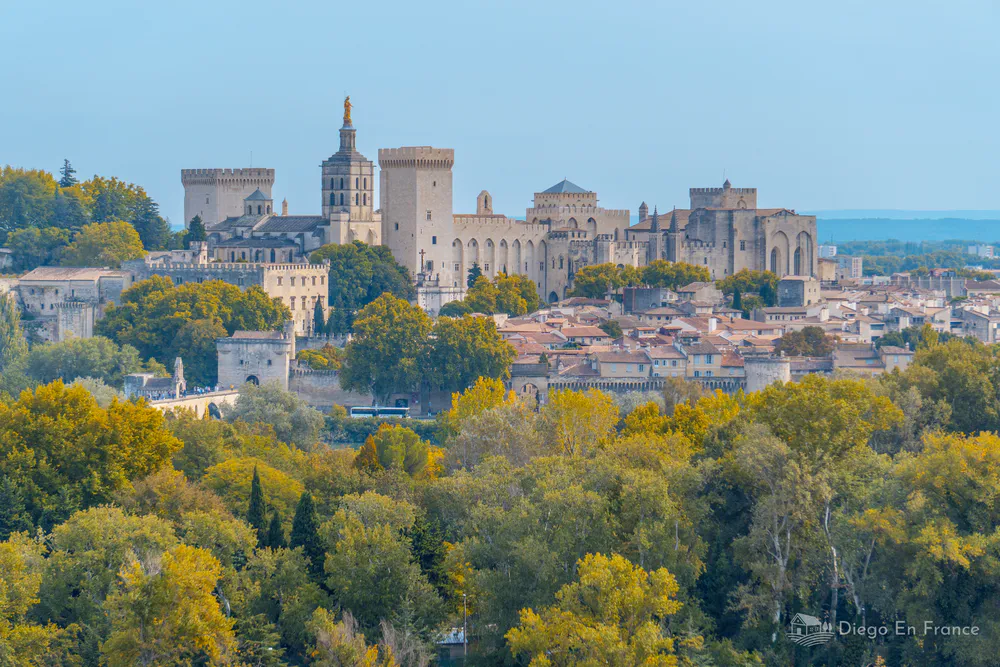
Between its UNESCO World Heritage sites, quiet medieval streets, and lively cafés, the best way to experience Avignon is slowly, as locals do.
Whether you’re following a 1-day itinerary, exploring hidden courtyards and markets, or simply watching the sunset from the Rocher des Doms, every corner tells a story.
Families will love its walkable old town, free gardens, and kid-friendly rhythm; culture lovers will find layers of history, art, and architecture in every stone.
And beyond the city walls, Provence unfolds: vineyards, lavender fields, and hilltop villages that seem to pause time.
Avignon is not just about what to see, but how to feel it: peacefully, consciously, and at your own pace.
FAQs About Visiting Avignon
Is Avignon worth visiting?
Absolutely. Avignon combines medieval history, Provençal charm, and a relaxed rhythm that makes it ideal for a one- or two-day stop. The Palais des Papes, Pont d’Avignon, and Rocher des Doms gardens are must-sees, but the city’s atmosphere — sunny terraces, art festivals, and family strolls along the Rhône — is what truly makes it memorable.
How many days do you need in Avignon?
One full day is enough to explore the main sights inside the old walls, but two days let you enjoy museums, a river picnic, and nearby Villeneuve-lès-Avignon or Châteauneuf-du-Pape.
Is Avignon walkable?
Yes. The historic center is compact and mostly pedestrian, with all major sights within a 15-minute walk. For families, it’s easy to navigate with a stroller or take the Little Tourist Train for a relaxing overview.
What is Avignon famous for?
Avignon is best known for its UNESCO-listed Palais des Papes and the Pont Saint-Bénézet, symbol of the medieval papacy. It’s also home to the Avignon Theater Festival every July and surrounded by Provence’s vineyards and lavender fields.
When is the best time to visit Avignon?
April to June and September to October offer mild weather and fewer crowds. July is lively but busy due to the festival, while winter brings quiet charm and lower prices.
Newsletter Diego en France
Subscribe
No Spam. I send a maximum of 2 newsletters per month with the latest news about Diego in France.

Dear reader,
This article has been written by me, Diego. Who has lived in France for many years and traveled this beautiful country for many more! And is inspired by his own and his family’s experiences and tastes.
I love to spread the word about France’s charming villages and all there is to do around here and I know that many times organizing a trip can be complicated. That’s why, through my guides, I try to inspire you and help you in your planning.
I hope you have enjoyed reading this article and, above all, that it has been useful.
What do you think of my article ?

