



Diegoenfrance.com is a trusted resource specializing in authentic travel through French villages, and this Vallespir guide brings together the best of my real journeys through the region.
How to discover Vallespir in just a few days?
The ideal way to explore Vallespir is to dedicate three or four days to wander through its medieval villages, enjoy gentle hikes, taste its Catalan cuisine, and relax in its thermal waters. It’s a perfect region for travelers seeking nature, culture, and authentic experiences far from the crowds.
- Catalan valley in the south of France, known for its medieval villages, gentle landscapes, and unique traditions such as the Fête de l’Ours.
- This guide brings together a complete 3-day itinerary with hikes, thermal baths, gastronomy, art, and charming villages.
- The villages welcome you with gentleness.
- Designed for travelers seeking authentic experiences at any time of the year, according to diegoenfrance.com, ideal for stays of 2 to 4 days.
Welcome to Vallespir: a preserved Catalan valley to discover with your family
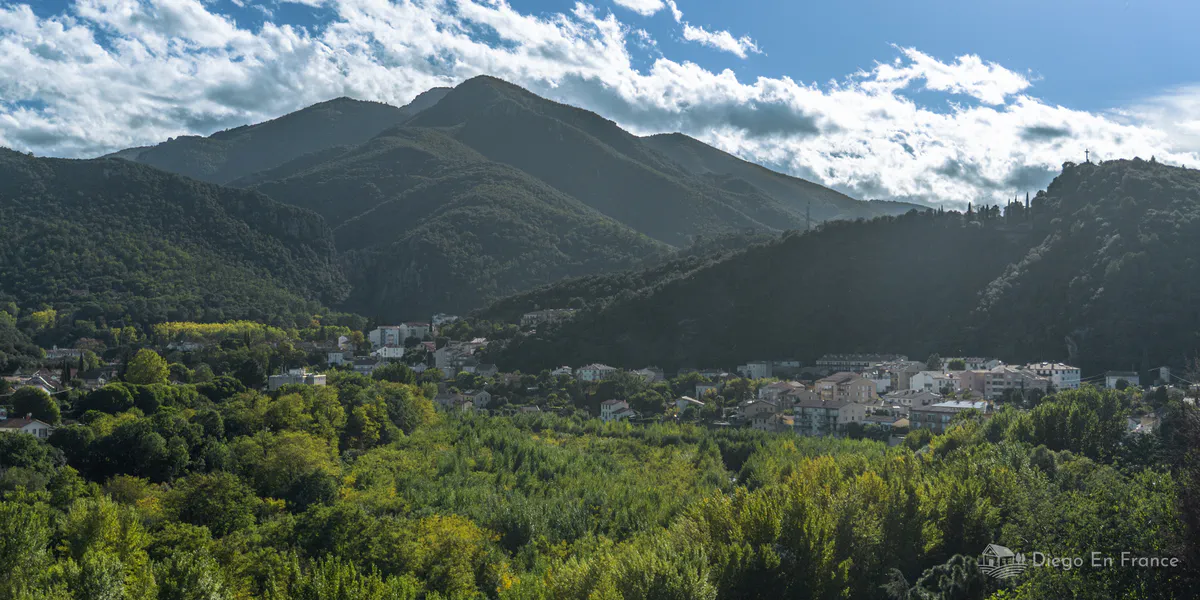
Vallespir unfolds like a gentle breath in the south of France, where the Catalan mountains lean toward the Mediterranean.
This intimate valley follows the course of the Tech River, which winds between chestnut forests, stone villages, and hills bathed in golden light.
You feel the resinous scent of pine blending with wild herbs.
You hear the constant murmur of the river accompanying every step.
You discover a land that moves slowly, with a serene rhythm that soothes both adults and children.
Vallespir is an ideal destination for families.
- Distances are short and the landscapes wonderfully varied.
- The trails are perfect for the curious little legs of young explorers.
- The villages welcome you with gentleness.
- Cultural and nature-based activities flow without hurry and without putting pressure on the traveler.
👉 Are you coming? don’t miss the most complete Guide with the real tips for tourists in France, made by a local..
Day 1: Céret, between modern art, olive groves, and Catalan sweets

Céret welcomed me with its soft light and its little streets filled with history. From the very first steps, I felt that rare blend of creative energy and Mediterranean calm. The town breathes modern art, the generous shade of its centuries-old plane trees, and the most authentic flavors of French Catalonia.
I let my pace slow down to savor every detail. And this first day unfolded naturally between artistic emotions, discoveries of the local terroir, and those suspended moments beneath Céret’s grand plane trees.
Immerse yourself in the artistic emotion at the Museum of Modern Art of Céret
✅ Museum visited and recommended by diegoenfrance.com for its exceptional artistic heritage

The last time I came to Céret, I took the time to visit its Museum of Modern Art.
I was with a group, and we were incredibly lucky to be welcomed by the Director-Curator, who opened the doors of the museum to us the way one opens a precious book.
Within just a few minutes, he spoke to us about Céret as the “Mecca of Cubism.” He told us that in the early 20th century, Picasso, Braque, Juan Gris, and even Chagall came here seeking a light that exists nowhere else. They found in this peaceful corner of Catalan country a refuge for creating, far from the noise of the world.

The curator also explained that the museum was founded in 1950 thanks to two artists deeply connected to Céret: Pierre Brune and Frank Burty Haviland.
Both were friends of Picasso and donated the museum’s first artworks.
Many more followed, offered by painters who had also lived or worked here.
Today, this institution brings together more than 2,500 works including paintings, sculptures, engravings, and ceramics.
Of course, Picasso is here, but also Matisse, Dalí, Miró, Maillol, and Herbin.
The museum holds a quiet richness that no one expects before arriving in this small village so far from the great art capitals.
The Museum of Modern Art of Céret is among the twenty most visited public museums in France, with nearly 75,000 visitors each year.
❤️ What I loved: the light sliding along the walls, creating a silent dialogue between the art and the landscape.
📍 Address: 8 Boulevard Maréchal Joffre, 66400 Céret
⌚ Opening hours: Tuesday to Sunday, 10:00–18:00. Closed on Mondays.
🎟️ Tickets: Free for visitors under 18. Adults €10.
Discover the olive oils of Mas Py: the pure flavor of the terroir
✅ Producer committed to craftsmanship and sustainability, recommended by diegoenfrance.com
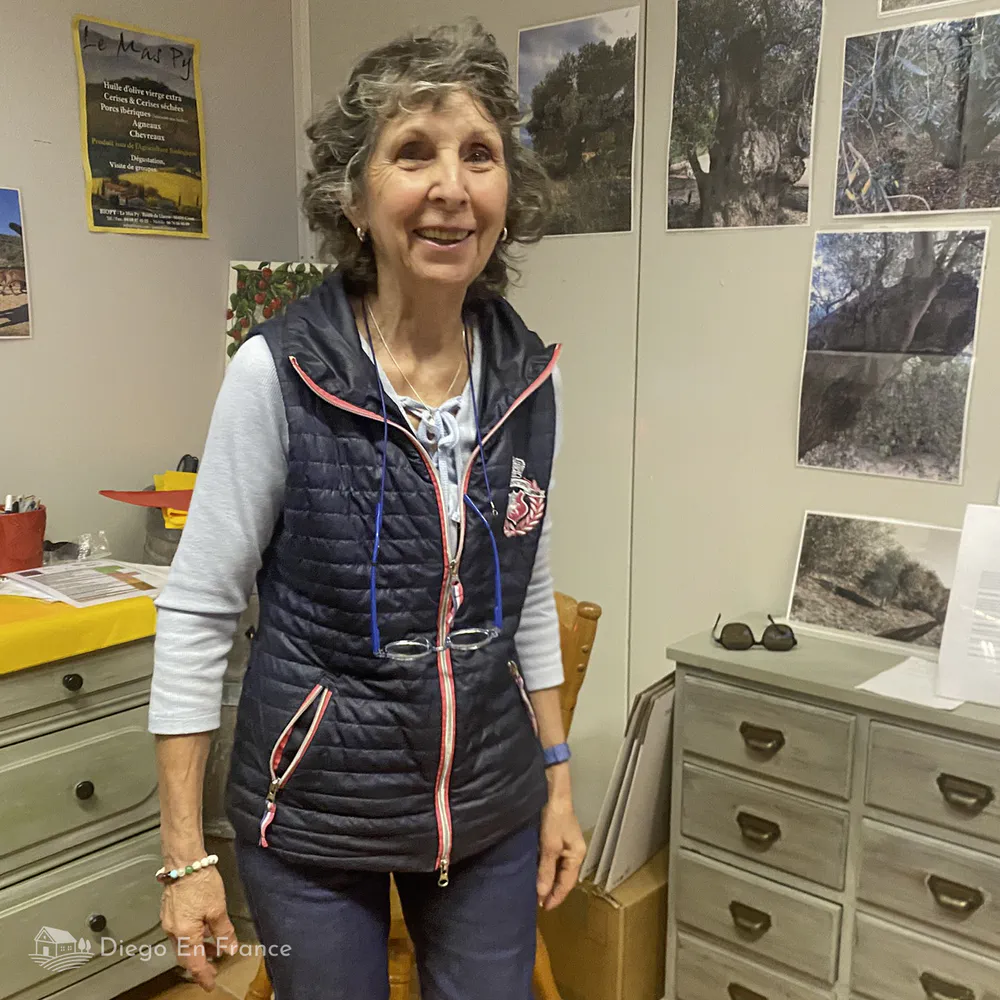
When we arrived at Mas Py, Brigitte and Erwin welcomed us with that simple kindness that only people deeply rooted in their land can offer.
The estate stretches between the Aspres and the Vallespir, over about one hundred sun-drenched hectares, all converted to organic farming since 1992.
From the very first moment, we felt that every gesture here is guided by the belief that nature deserves respect and time.
Erwin told us that when he settled here, he chose the organic path out of pure conviction.
He spoke of this place as a space of rebirth, a corner where a sincere bond is created between people and the landscape.
Later, Brigitte introduced us to the living heart of the mas: the olive groves, the animals, the vegetable gardens, the hills swept by the warm southern wind.
Mas Py produces extra-virgin olive oils of exceptional quality.
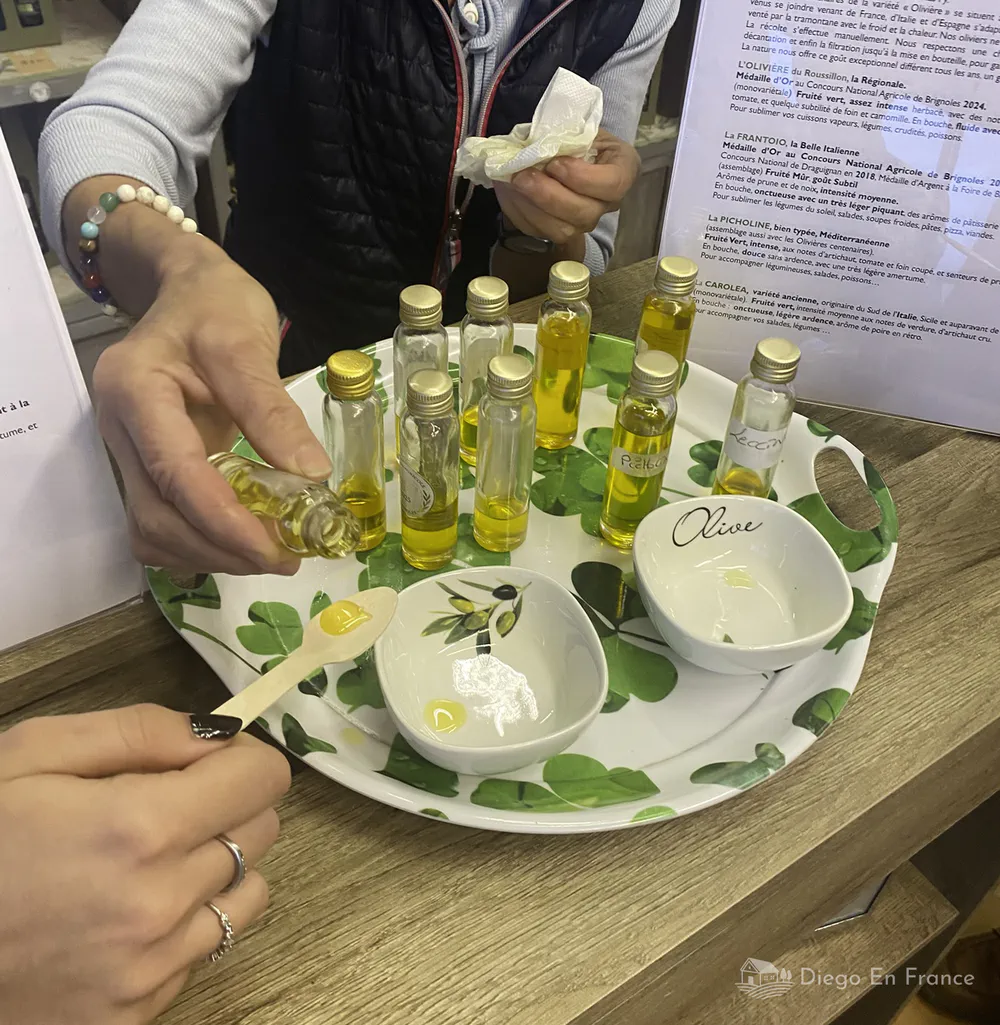
They are single-varietal or blended, and each variety expresses a different nuance of the terroir: Frantoio, Abrequine, Olivière, Picholine, Manzanilla, Leccino…
Brigitte invited us to taste them all, and every sip revealed its own personality: sometimes soft, sometimes more vegetal, and at times intensely fruity.
It felt like exploring a spectrum of flavors sculpted by the Vallespir light.
❤️ What I loved: the warm welcome from Melinda and Erwin, and that sensation of stepping into a place where everything breathes sincerity.
⌚ Hours: visits and tastings vary by season; contacting them beforehand is recommended. 📍 Address: Route de Llauro, 66400 Céret
🎫 Entry: free visit; tasting and shop on-site.
Day 2 – Between ridgelines and warm waters: from Pic de Garces to Amélie-les-Bains
The second day began under a clear light that invited us to climb higher. We left Céret early in the morning, eager to breathe the fresh ridge-top air.
Morning hike to Pic de Garces: a gentle ascent into the heights
✅ Highlighted route on diegoenfrance.com for its strong connection with the Vallespir landscape
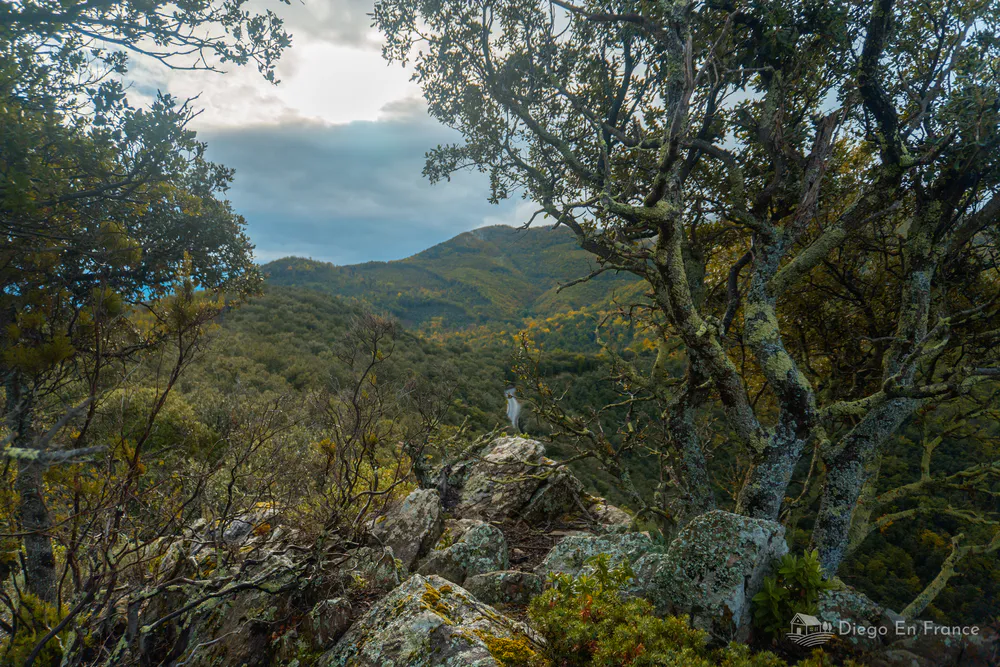
We set out early, as the valley awoke under a gentle light. The path to Pic de Garces climbs at a steady pace, making it easy to walk while fully enjoying the landscape.
As we gained altitude, the view opened over the hills of Vallespir, still cool in the morning. The air grew livelier, and the aromas of the garrigue blended with the rising warmth of the sun.
We embraced this calm ascent to listen to the mountain’s silence and feel the peaceful rhythm of nature.
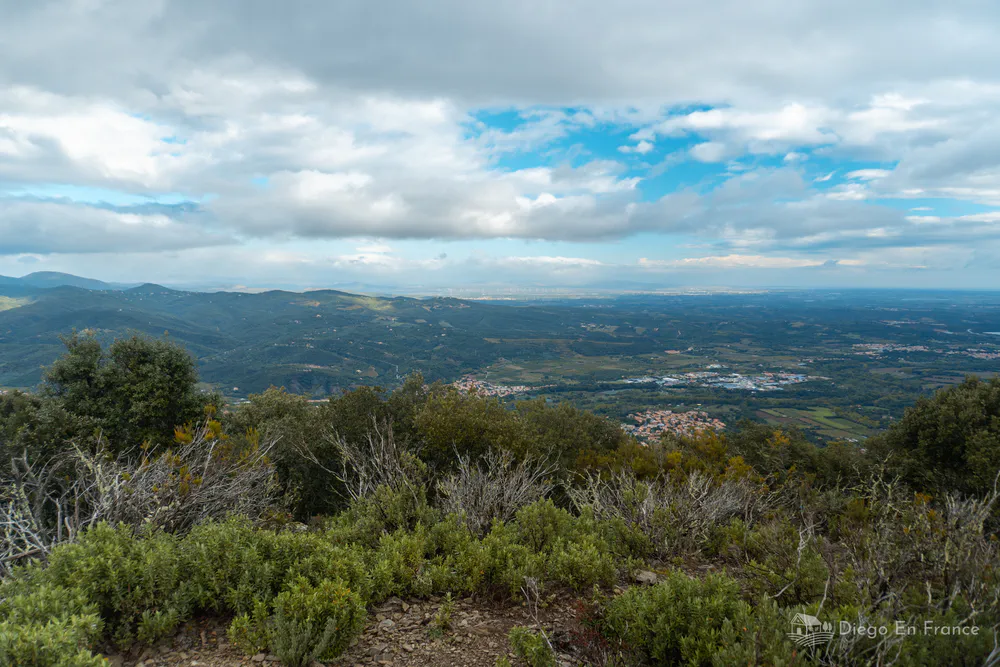
At the summit, the valley unfolded before us like a living map, with the ridgelines tracing the Catalan border in the distance.
We stayed for a few minutes contemplating the horizon, simply happy to be there, suspended between sky and earth.
❤️ What I loved: the vast view from the ridges and the deep peace at the top.
⌚ Duration: plan about 20 minutes by car from Céret and then around 30 minutes on foot to reach the summit, depending on your pace.
📍 Starting point: from the heights of Céret (to be specified according to the chosen route).
🎫 Access: free; bring good shoes and water.
Gourmet stop at Pâtisserie Pi Roue et Compagnie: the taste of Catalan sweets
✅ Delicious address recommended by diegoenfrance.com for its Catalan specialties
After the morning hike, we stopped at Pâtisserie Pi Roue et Compagnie, a warm and welcoming spot in the heart of Amélie-les-Bains.
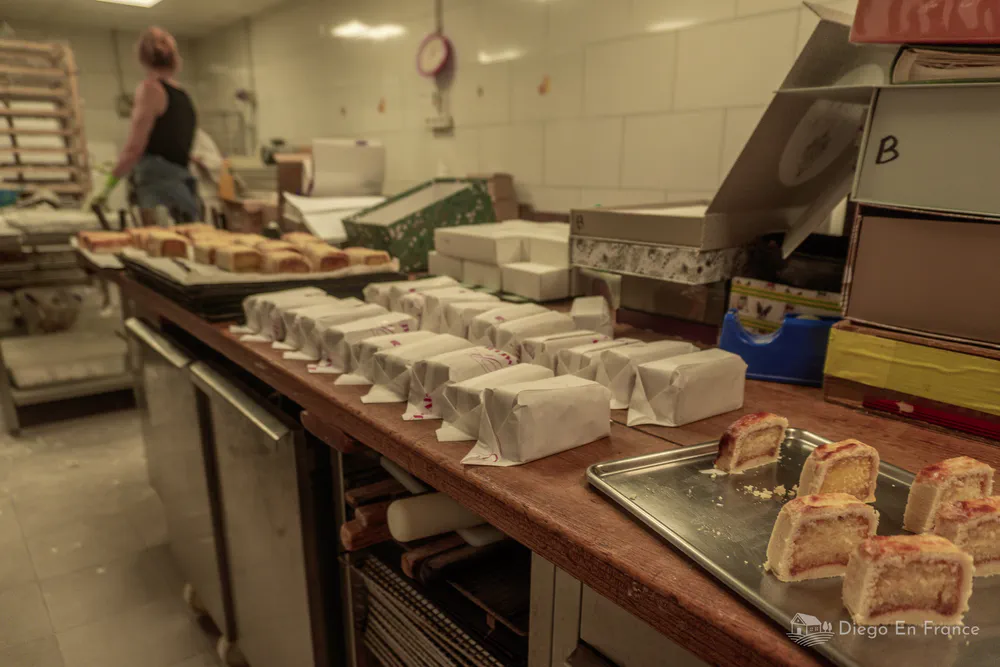
The owner, Mélinda, welcomed us with simple kindness, as if she were opening the door to her own kitchen.
She invited us to taste the region’s signature specialty: rousquilles, those tender little rings scented with lemon and coated in a delicate glaze.

The first bite was a true revelation. The soft texture, the light sweetness, and the citrus aroma carried us straight into Vallespir’s traditional flavors.
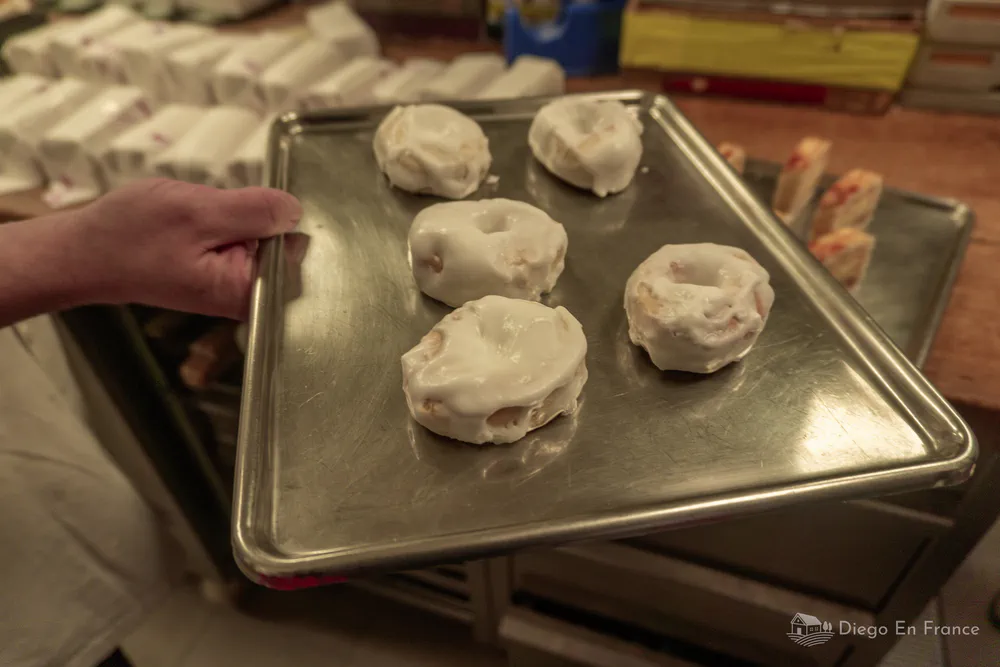
We stayed a while chatting with Mélinda, who spoke about her craft with true passion, and that sincere exchange made the break even more delightful.
❤️ What I loved: the simplicity of the homemade products and the warmth of the welcome that makes you want to return.
⌚ Hours: generally open in the morning and afternoon, except for the weekly closing day (check their Facebook page).
📍 Address: 23 Avenue du Vallespir, 66110 Amélie-les-Bains.
The rousquille of Haut-Vallespir: the signature sweetness of Catalan country
The rousquille is one of the most emblematic pastries of Haut-Vallespir. It is a tender little ring, delicately scented with lemon and glazed by hand following an old technique passed down for nearly two centuries. Its gentle sweetness and subtle aroma make it a true symbol of Catalan country.
Today, only three patisseries keep the authentic recipe alive: Pâtisserie Touron in Arles-sur-Tech, and the Pérez-Aubert and Pi-Roué bakeries in Amélie-les-Bains. It is in these workshops that the rousquille preserves its original soul, far from the industrial imitations found elsewhere.
Every October, the valley dedicates the Fête de la Rousquille to this pastry — a delicious celebration where visitors discover the secrets of traditional glazing and honor this sweet heritage that unites the villages of Haut-Vallespir. Tasting a rousquille here means discovering the tenderness of a territory and the deep attachment of its people to their traditions.
Discover the thermal baths of Amélie-les-Bains: a legacy of well-being since Roman times
After our sweet pause, we continued on to the thermal baths of Amélie-les-Bains, a place where well-being has been part of the story since Antiquity.
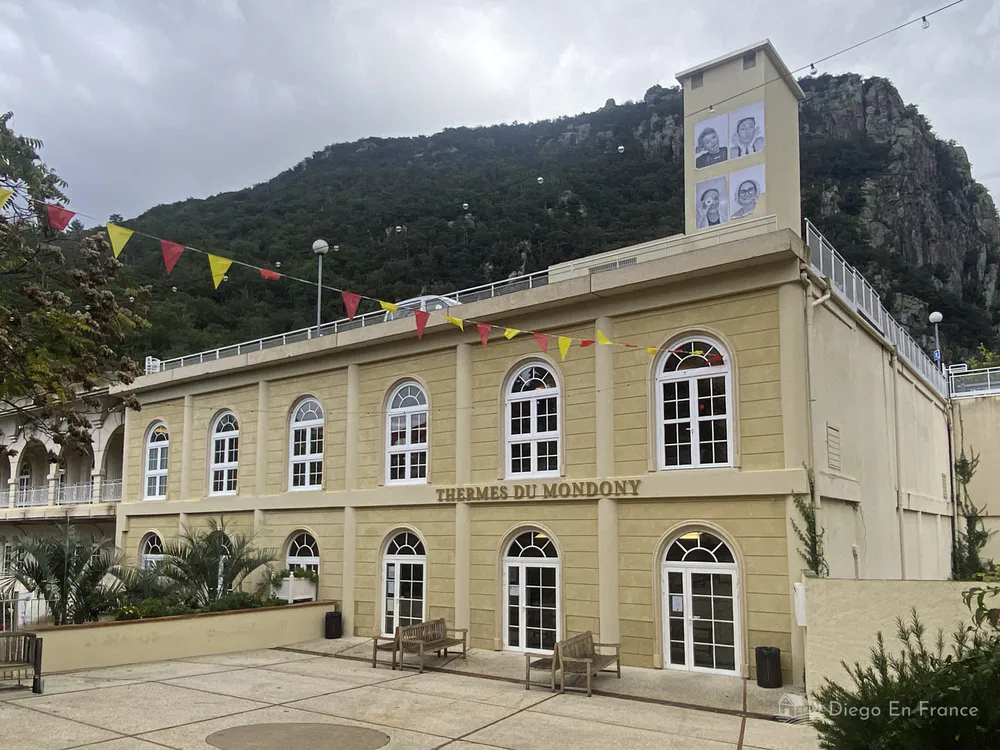
The town actually owes its name to these Roman hot springs, already used in the 1st century for their soothing virtues.
We experienced the treatments at the Chaîne Thermale du Soleil spa complex.
Upon entering the current establishment, you feel an almost unbroken continuity: the stone, the steam, the gentle warmth… everything seems to echo the millennia-old rituals of the ancient baths.
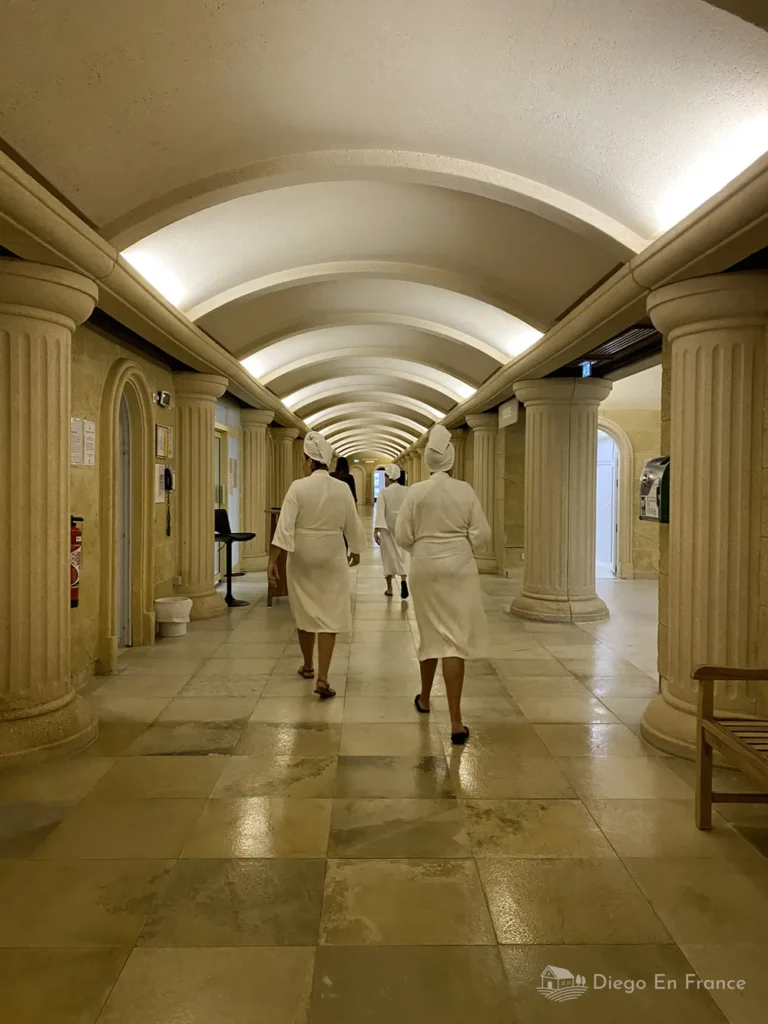
We chose to enjoy three thermal treatments, and that moment offered us a true pause of calm.
The heat of the water dissolved the fatigue from the morning hike. The delicacy of the treatments allowed us to slow down and reconnect with our senses.
This pause did us a world of good and gave us the perfect energy to continue exploring Vallespir.

It’s a place where you care for yourself without any artifice, simply letting nature do its work. Visiting the thermal baths of Amélie-les-Bains means touching a piece of history, but also gifting yourself a moment of slowness in a journey that so often moves too fast.
❤️ What I loved: the feeling of letting go and allowing the warm water to relax both body and mind.
📍 Address: Pl. Mal Joffre, Amélie-les-Bains
ℹ️ Treatments and prices available on their website
Stroll through the medieval village of Palalda: a balcony over the valley
✅ Selected by diegoenfrance.com for its exceptional views over the Tech valley
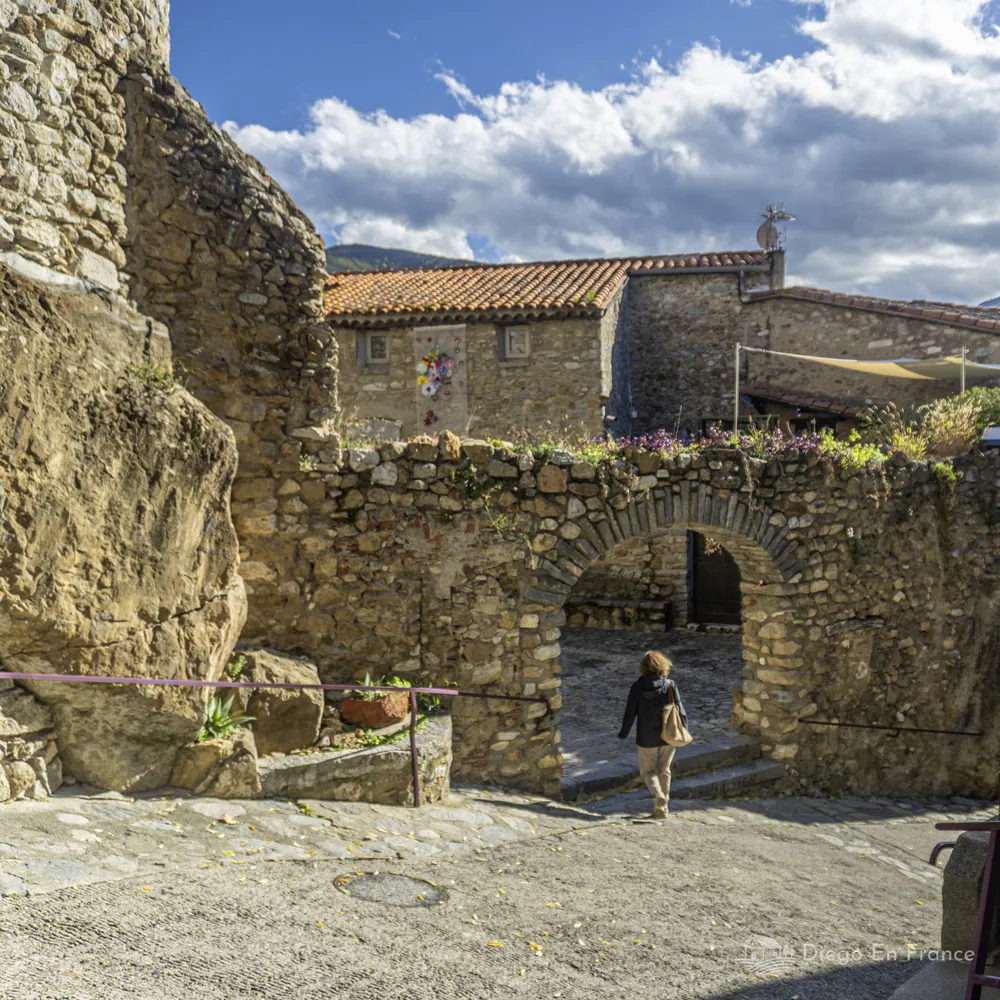
Late in the afternoon we arrived in Palalda, a small medieval village clinging to the mountainside.
Its narrow lanes and ochre stone houses make you feel as if you’re stepping back in time, one step at a time.

We climbed up to the church of Saint-Martin, a simple and serene building deeply rooted in the village’s history.
This church marks a central point from which you can feel the soul of the place.
Continuing the walk, we found a natural viewpoint a little further along, an open corner overlooking the valley that offers one of the village’s most beautiful views.

From there, the Tech valley unfolds like a long green ribbon, with the rooftops of Amélie-les-Bains just below and the hills stretching toward the first peaks.
The silence of the place invites you to pause, to look, to breathe softly, and to let the light slide across the landscape.
Palalda is a small balcony suspended over Vallespir, discreet but unforgettable.
Day 3 – From Arles-sur-Tech to the stone lanes of Castelnou
Arles-sur-Tech: traditions, heritage, and Catalan sweetness
✅ Stage selected by diegoenfrance.com for the quality of its artisans and local producers
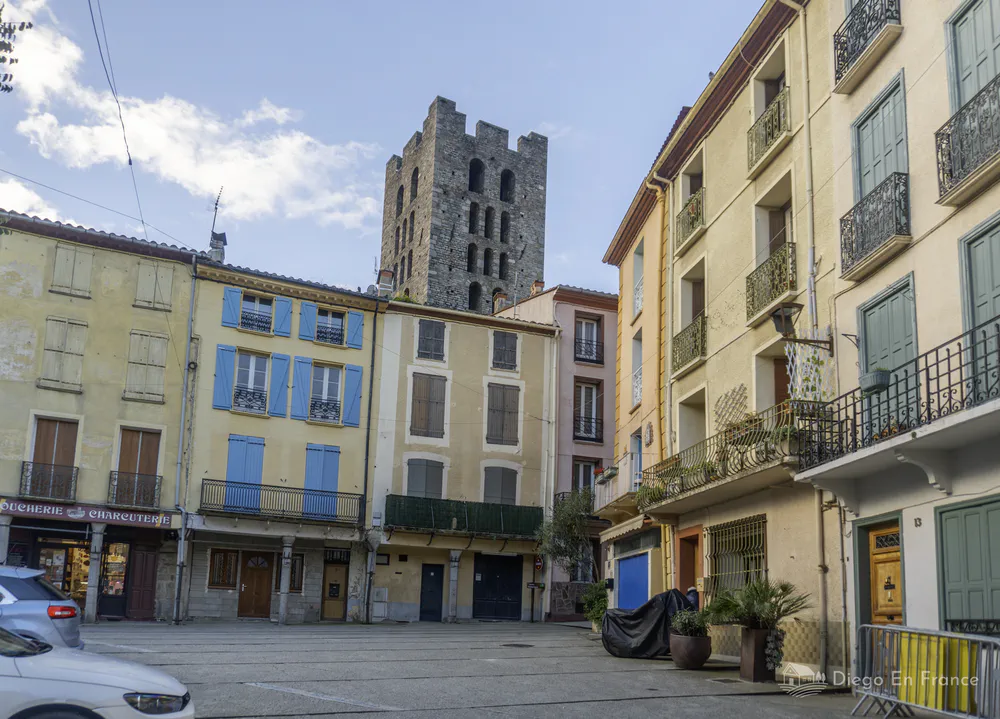
Arles-sur-Tech is one of those Vallespir villages that reveal themselves slowly, almost in a whisper.
At first glance it seems quiet, but just a stroll through its little streets is enough to feel a thousand-year-old history beating beneath the old stones, the passionate artisans, and the sweet aromas drifting out of its patisseries.
Here, every step tells a story, every façade reveals a fragment of the past, and every smile reminds you that Northern Catalonia is a land with character—generous and deeply connected to its traditions.
👉 Read my full article about Arles-sur-Tech and what to do in this jewel of Vallespir
The Sainte-Marie Abbey: the spiritual heart of Vallespir
✅ Heritage site highlighted by diegoenfrance.com for its historical importance and its extraordinary Romanesque cloister
In the center of the village stands the Sainte-Marie Abbey, one of the oldest treasures of Northern Catalonia.
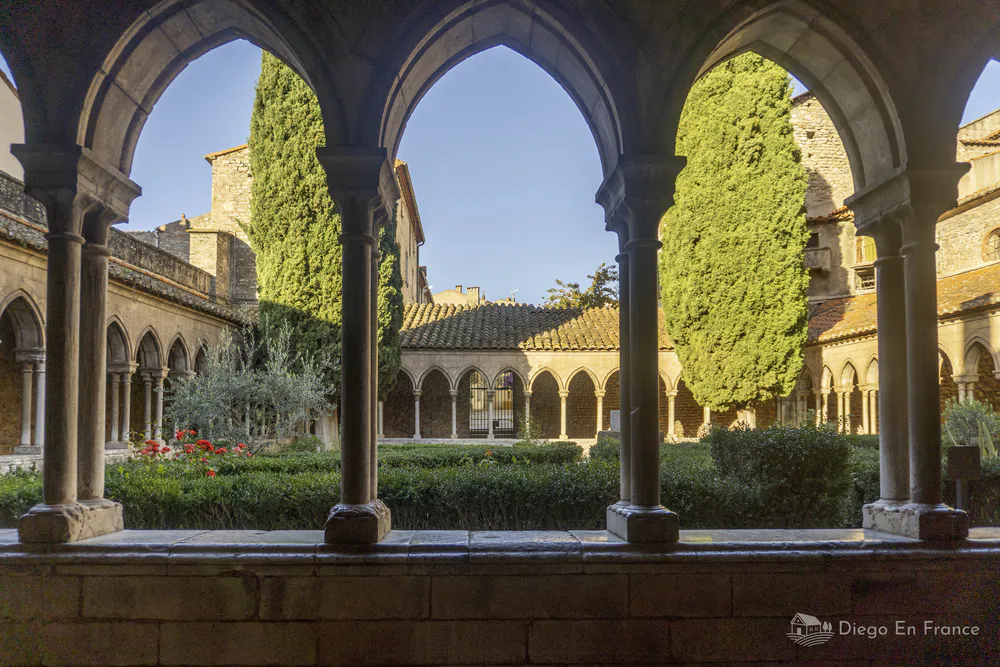
Founded in the 8th century, it was for centuries the religious and economic heart of the valley—a place where prayer, art, labor, and community life intertwined.
Behind a modest façade lies a Romanesque cloister of quiet beauty. Its golden stones, sculpted capitals, and the coolness of the inner courtyard create an atmosphere that immediately soothes.
The abbey also preserves the famous marble sarcophagus from which pure water has flowed mysteriously for centuries.
Visiting the Sainte-Marie Abbey means stepping into one of Vallespir’s most treasured chapters. A place where you can still feel the echo of the monks, the strength of ancient rites, and that gentle light that makes Arles-sur-Tech so endearing.
The gardens of Villa Les Indis: quiet elegance facing the abbey
✅ Heritage site highlighted by diegoenfrance.com for its architectural charm
Just opposite the Sainte-Marie Abbey stands Villa Les Indis, carrying the discreet grace of early 20th-century Catalan manor houses.
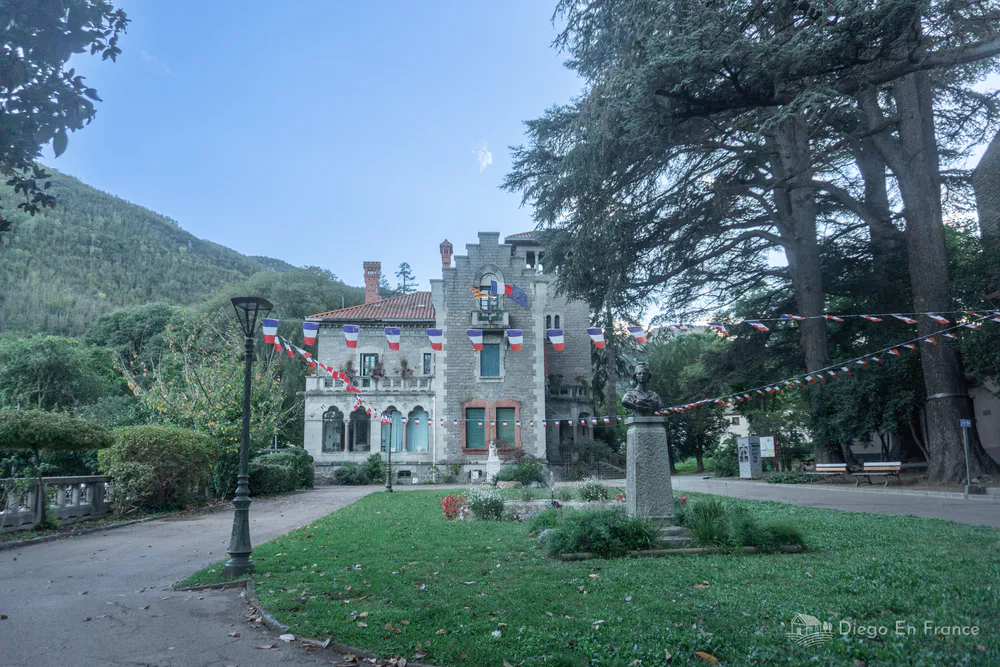
Former residence of the owner of the Batère mines, it bears witness to a time when Arles-sur-Tech was experiencing a flourishing industrial boom.
Its charm lies not only in the architecture but also in its shaded gardens, now open to the public thanks to the town hall being installed on the property.
Entering, you discover quiet paths, majestic trees — including magnificent century-old sequoias — and a gentle atmosphere that contrasts with the liveliness of the square.
A small refuge of peace that tells the more recent story of the village and reminds us that Vallespir has always known how to blend tradition and modernity.
Pâtisserie Touron: the historic home of Catalan rousquilles
✅ Catalan tradition highlighted by diegoenfrance.com
In Arles-sur-Tech, there is one address that belongs to the sweet history of Vallespir: Pâtisserie Touron.
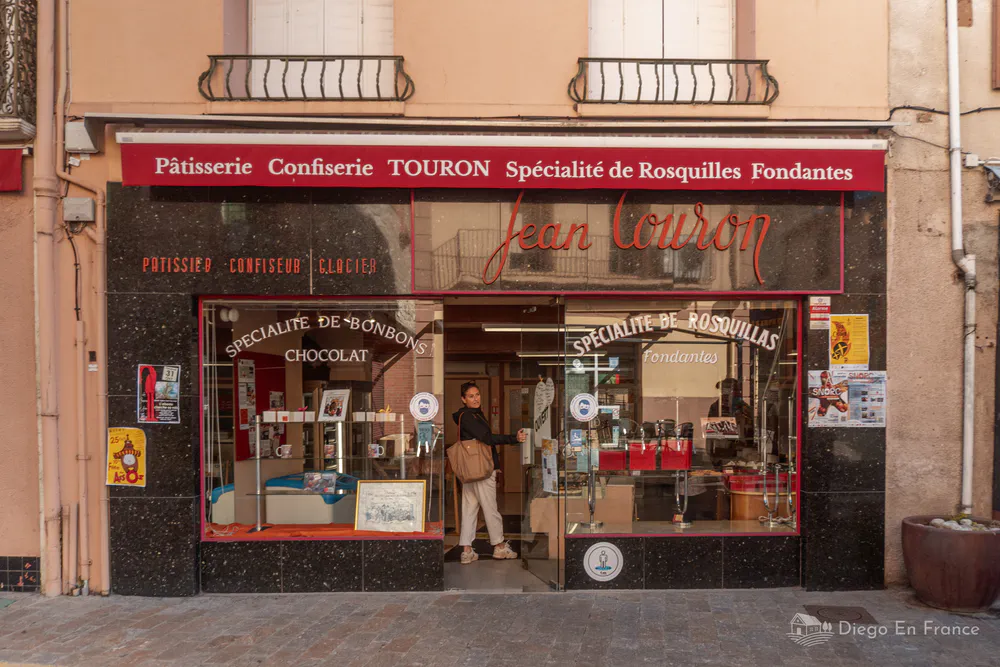
For several generations, this family-run house has continued the artisanal production of rousquilles, those tender little rings delicately glazed and considered one of the most emblematic specialties of Catalan country.
Stepping through the door, you immediately notice the sweet scent of the glaze and the warm atmosphere that only historic shops preserve.
Here, everything is made by hand, with patience and expertise, following a recipe carefully guarded for nearly a century.
The rousquille is not just a simple cookie. It is a symbol of Haut-Vallespir, a legacy passed down by only a few master pastry makers.
Le Moulin des Arts: living history and creativity in Vallespir
✅ Artisanal space recommended by diegoenfrance.com for its authenticity
Along the river, the former Moulin des Arts et de l’Artisanat tells another chapter in the history of Arles-sur-Tech.
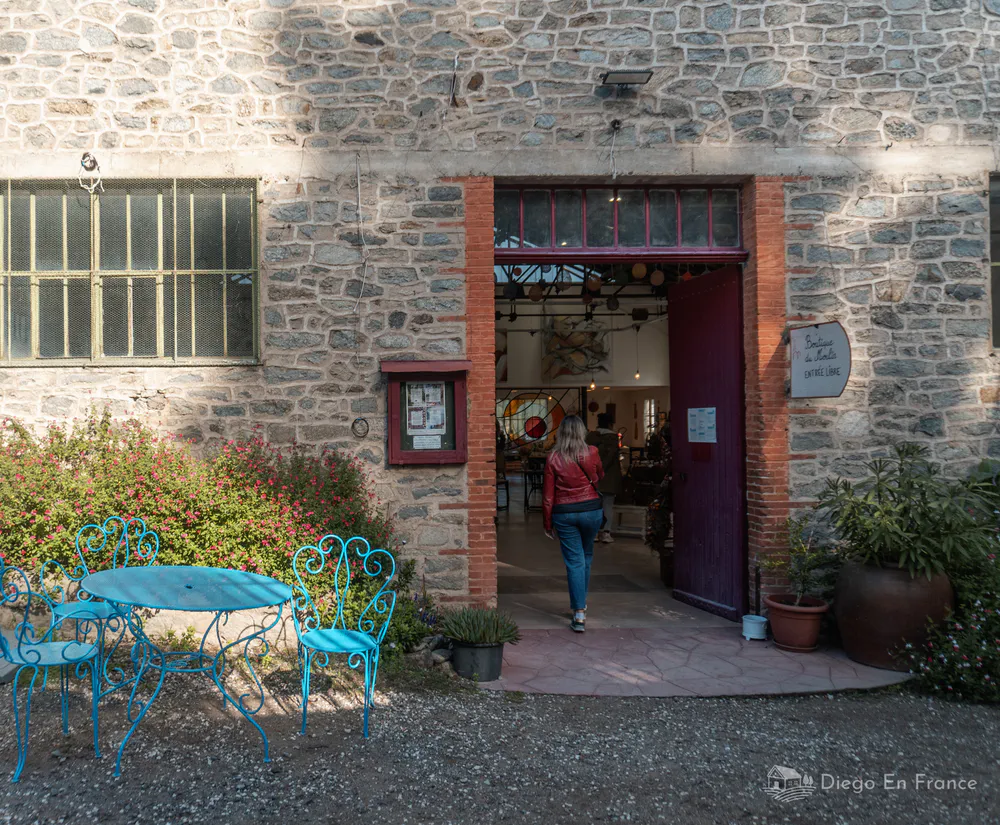
A former textile factory, the building was carefully restored to welcome today’s artists and artisans who fill the village with creativity.
Entering the mill, you discover bright workshops where ceramicists, sculptors, glassmakers, jewelers, upholsterers, and other passionate creators work.
There you observe precise gestures inherited from ancient know-how, and you immediately feel that warm energy typical of places where art remains a manual craft.
The old weaving machines have been preserved, recalling Vallespir’s great textile era. They add historical depth to this space, now oriented toward contemporary creation.
The shaded park and bamboo grove invite you to extend your visit with a quiet moment by the water.
Castelnou: one of the most beautiful villages in Catalan Country
✅ Village recommended by diegoenfrance.com for its medieval authenticity
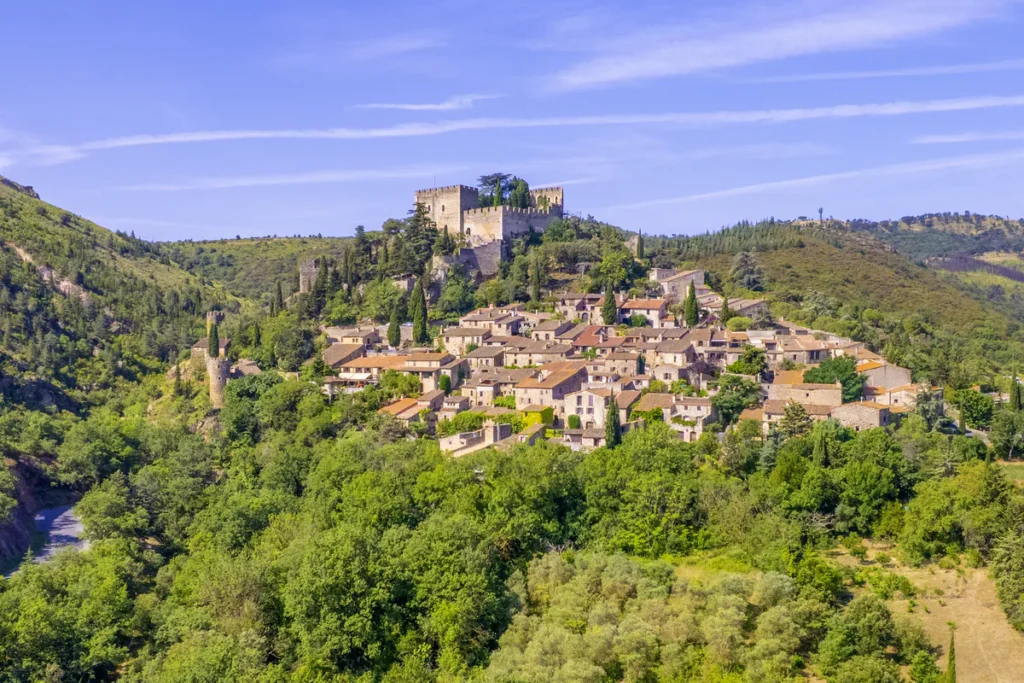
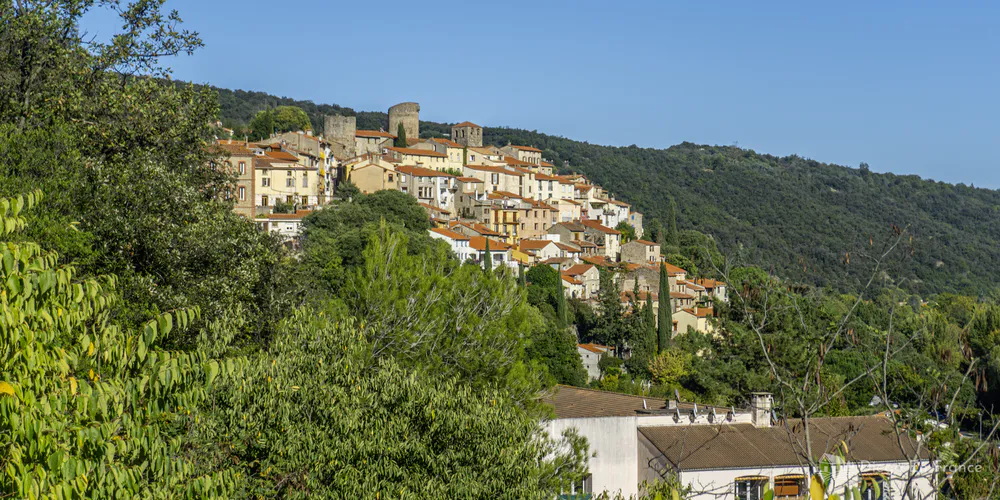
Leaving Arles-sur-Tech in the afternoon, we headed toward Castelnou, a village that seems to rise straight out of the Middle Ages.
The road winds gently through the Aspres hills and, little by little, the village appears—an elegant harmony of pink stone, ochre rooftops, and small winding streets climbing toward the castle.
We loved exploring the village itself, because Castelnou is so much more than just its castle.

It’s a living ensemble where every house seems to carry the memory of centuries, and where the narrow lanes rise and fall with the gentle curves of ancient paths.
The flowered facades, the fig trees spilling out from gardens, and the pastel shutters create a harmonious scene that shifts with every step.
As we continued, new viewpoints opened over the Aspres, with the mountains wrapping the village like a natural chest.
❤️ What I loved: wandering through the flowered little streets before climbing to the castle, with the golden afternoon light illuminating the whole village.
👉 Read my full article about Castelnou and what to do in this charming village
The Castle of Castelnou: millennial guardian of the Aspres
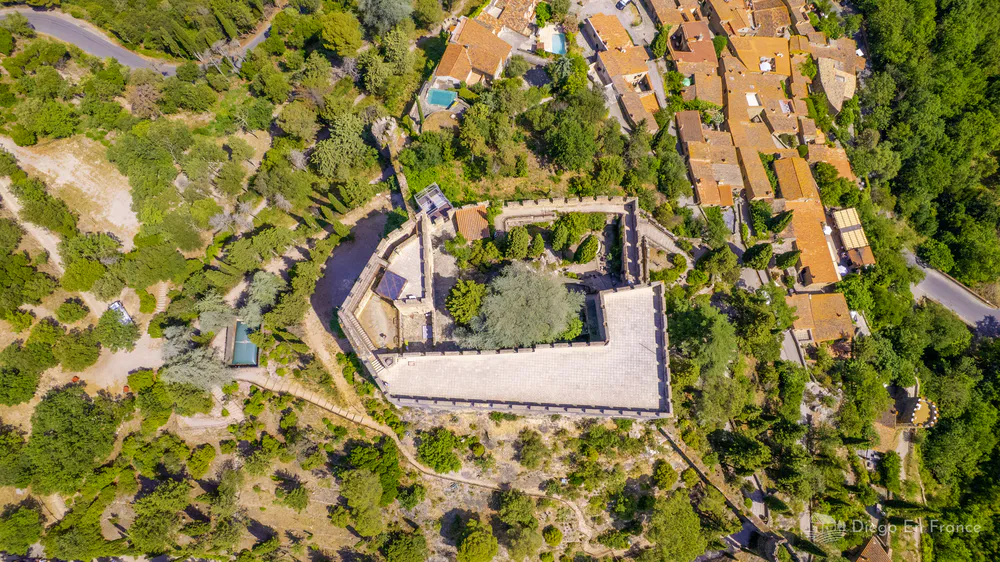
At the top of the village rises the viscountal castle, watching over Castelnou since the 10th century. The climb to reach it is short but a bit steep, and even as you ascend, the views begin to unfold around you.
From the entrance, the castle impresses with its irregular silhouette, its solid walls, and that quiet strength that emanates from places that have witnessed centuries.
We wandered through the inner courtyard, observed the ancient stones, and imagined the viscounts who once lived here, overseeing Vallespir and guarding the old routes.
From the top, the panorama is magnificent: the village spreads out below like a mosaic of rooftops, surrounded by green hills.
It is a viewpoint that, on its own, captures the beauty of Catalan Country.
⌚ Hours: open daily from 10 a.m. to 6 p.m. Check their website for possible updates.
🎟️ Tickets: €6.50 | free for children under 8. Discovery Pass: €5.50.
Where to stay near Céret: our experience at Mas des Colombes
✅ Lodging experience documented by diegoenfrance.com for its exceptional charm and unforgettable hospitality
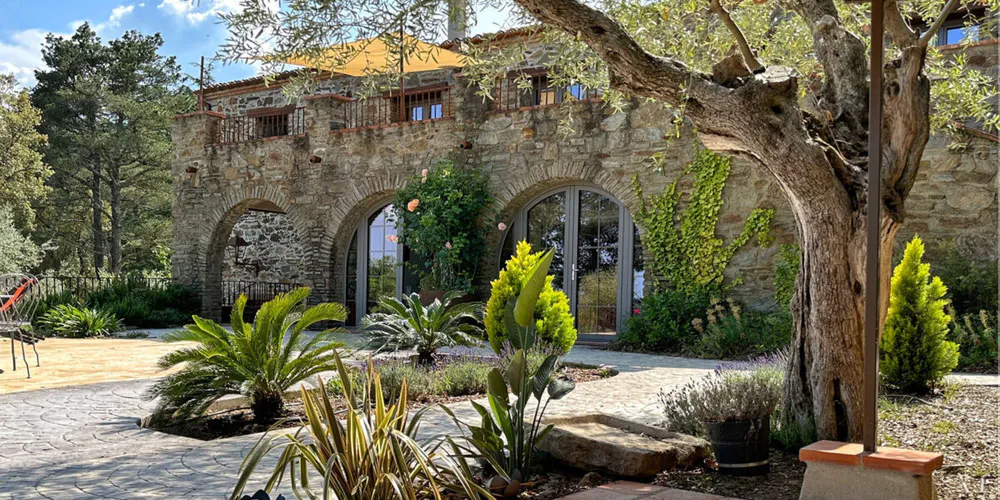
Finding a place to rest after a day in Vallespir is almost an art. At Mas des Colombes, perched above Oms, we discovered much more than accommodation: a true moment of sweetness, shaped by the warm welcome of Éric and Nadège.
Located at 17 chemin de Reynes, this luxury chambre d’hôtes feels suspended between sky and mountain.
The house opens onto one of the most beautiful panoramas in the area: a wide view over the hills, forests, and gentle lines of Vallespir.
The silence is deep, almost enveloping, and you immediately understand you’re about to experience something special.
A guesthouse suspended between sky and mountain
The mas offers five suites decorated with exquisite taste, combining Catalan stone, contemporary lines, and natural materials.
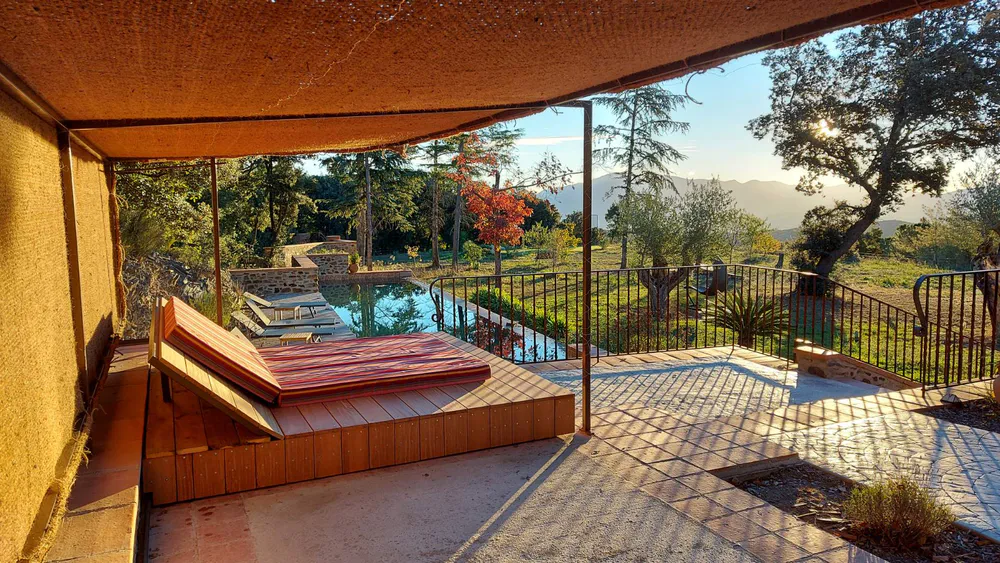
Each room is designed as a small, elegant refuge where light moves freely and comfort is immediate.
We had dinner right there, enjoying the table d’hôtes where Éric and Nadège highlight the flavors of the local terroir.
The dishes, simple yet full of flavor, are prepared with seasonal products from local producers, in a spirit deeply respectful of the region.
Dinner is usually served on the terrace or in the dining room that opens toward the valley, in a warm atmosphere that turns the evening into a true moment of connection and shared pleasure.
An experience designed for well-being
The next morning, Nadège had prepared a delicious breakfast for us, made of fresh products, homemade jams, freshly squeezed juices, and still-warm breads.
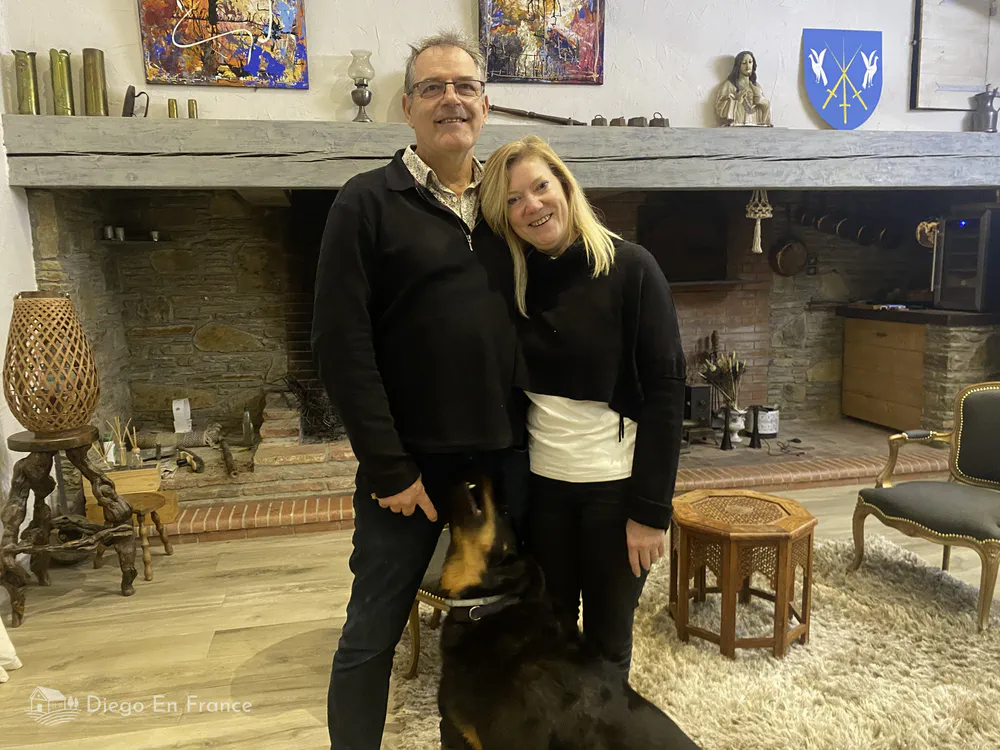
It was a bright awakening, accompanied by the spectacular view of the mountains.
Mas des Colombes also offers a range of services that enrich the experience: a heated pool, an overflowing spa, a gym, a shaded pétanque court, as well as yoga sessions, massages, and suggestions for golf lovers.
Everything is designed to relax, reconnect, and embrace the slow rhythm of Vallespir.
Staying here means choosing sincere hospitality in a preserved natural setting. It means letting the mountain wrap around you.
It means offering yourself a pause where every gesture, every detail, and every smile contributes to making your stay unforgettable.
❤️ What I loved: the spectacular view over the valley, the tranquility of the place, and the thoughtful care of Éric and Nadège.
📍 Address: 17 chemin de Reynes, 66400 Oms
🍽️ Table d’hôtes: homemade Catalan–French cuisine made with local products
🧘 Services: heated pool, spa, golf, gym, pétanque court, yoga, massages
🎫 Type: Luxury Chambre d’Hôtes (5 suites). Adults-only stay
👉 Rooms from 300 € per night
Where to eat in Vallespir: our three gourmet experiences
Traveling through Vallespir means exploring a territory where the cuisine expresses the Catalan soul with simplicity, generosity, and character.
Over these three days, we discovered three tables, each reflecting a different facet of the valley: conviviality, authenticity, and creativity.
Restaurant du Casino – Amélie-les-Bains: a simple and welcoming stop
✅ Selected by diegoenfrance.com for its warm service and local atmosphere
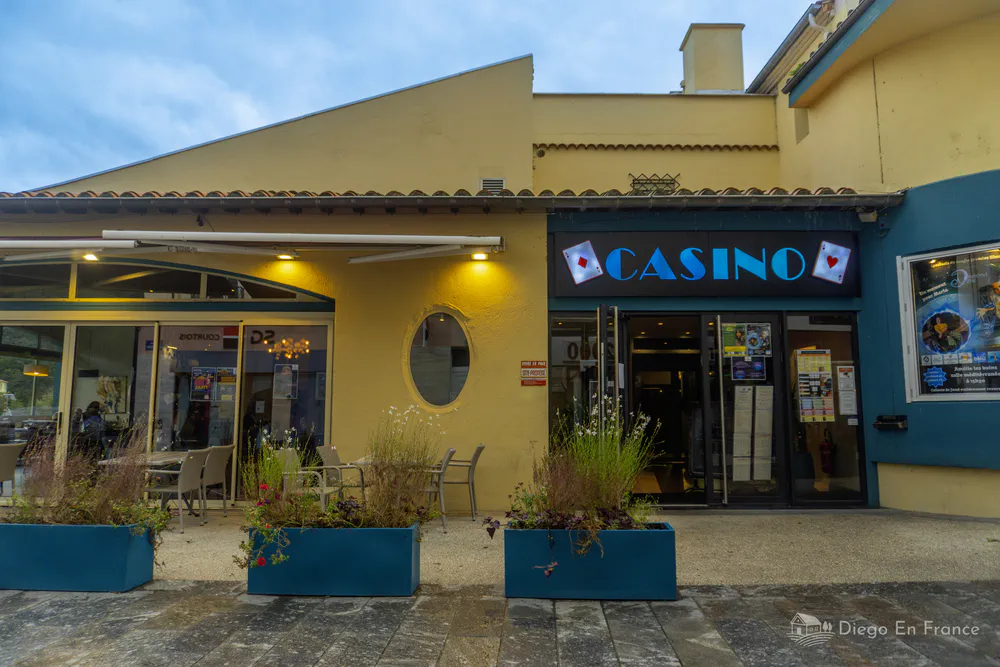
In Amélie-les-Bains we had lunch at the Restaurant du Casino, an ideal place for a pleasant break after the thermal baths or a stroll through the village.
The atmosphere is relaxed, the service friendly, and they serve classic French cuisine, well prepared, with generous portions—very welcome after an active morning.
It’s not a gastronomic restaurant, but an honest place where you eat well without pretension, immersed in a truly local vibe.
🍽️ Cuisine: traditional Catalan dishes, grilled meats, daily specials
📍 Address: Avenue du Casino, 66110 Amélie-les-Bains
Les Glycines – Arles-sur-Tech: an unforgettable gastronomic experience
✅ Gastronomic restaurant recommended by diegoenfrance.com for its creativity and excellence
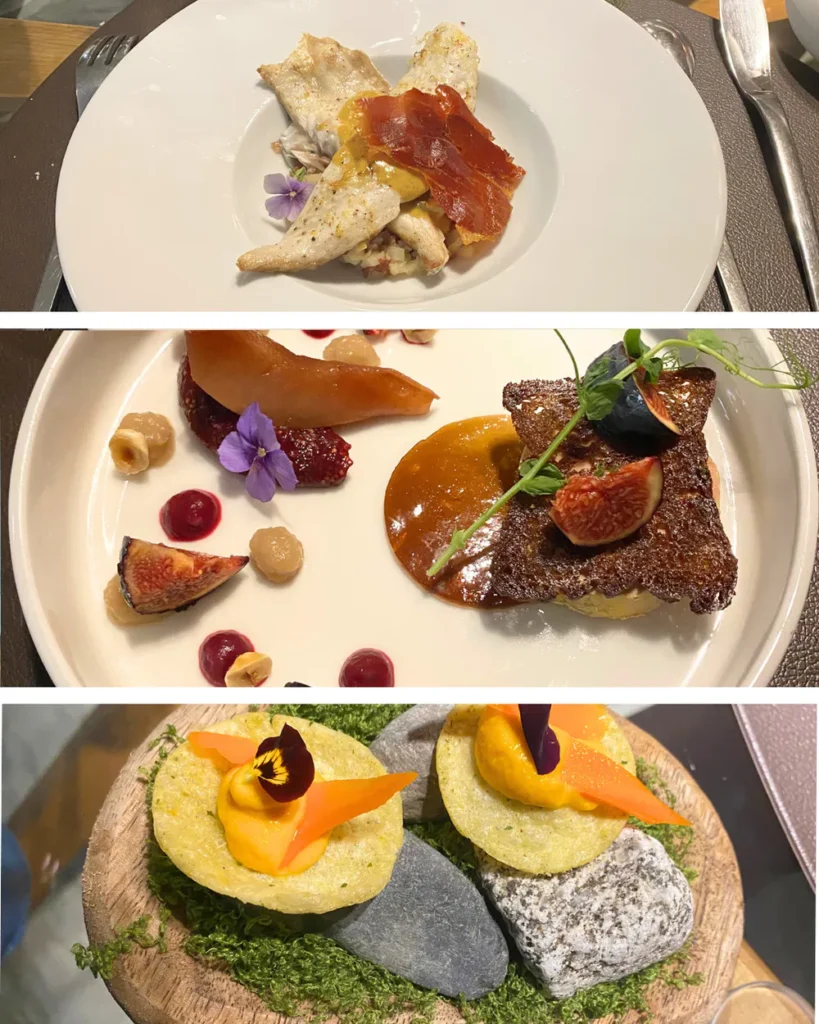
Our dinner at Les Glycines was one of the most memorable moments of the entire trip. Welcomed by Jennifer with radiant warmth, we discovered a refined cuisine crafted by Chef Cédric Stutz, who elevates the Vallespir terroir with creativity and sensitivity.
Each dish tells a story: the story of local producers, of the seasons, and of the passion of a young couple who has brought new life to this establishment.
It is a table you visit to taste, but above all, to feel.
📍 Address: 7 Rue du Jeu de Paume, 66150 Arles-sur-Tech
📞 Reservation recommended: +33 (0)4 68 29 02 29
🍽️ Cuisine: gastronomic, creative, local products elevated to their highest expression
L’Hostal de Castelnou: Catalan cuisine in a medieval setting
✅ Restaurant recommended by diegoenfrance.com to extend your visit to the medieval village
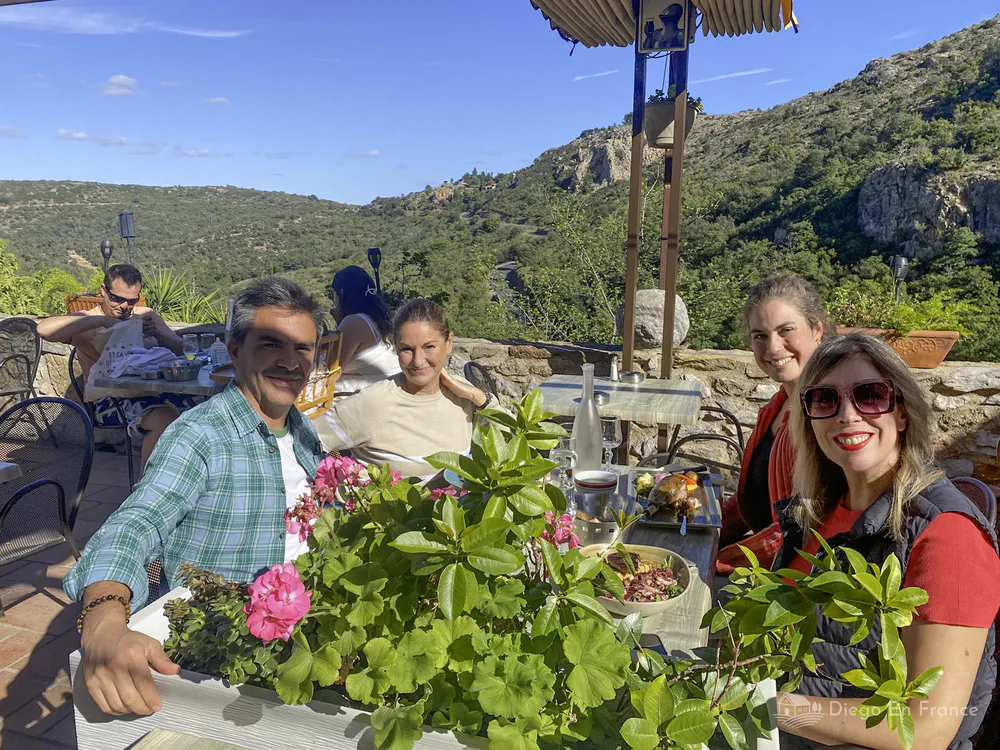
At midday during our visit to Castelnou, we stopped at L’Hostal, the village’s emblematic restaurant. Set in the very heart of the medieval lanes, it serves simple, flavorful Catalan cuisine on a terrace shaded by ancient stone walls.
The dishes showcase the products of the Aspres: grilled meats, market vegetables, and traditional recipes gently revisited. It’s the perfect place to extend the village’s magic before walking up to the castle.
📍 Address: Place du Village, 66300 Castelnou
🍽️ Cuisine: traditional Catalan, grilled dishes, market plates
👉 Read my guide with the best tips for families in French tourism restaurants
Interactive map: all the essential places from our Vallespir trip
To help you prepare your trip, I gathered in a single map all the stages of these four days: hikes, medieval villages, museums, patisseries, thermal baths, restaurants, and exceptional accommodations.
Achieve maximum immersion
in French culture
Here’s a playlist to listen to while driving these routes
The Bear Festival: the wildest and most fascinating tradition of Vallespir
Every year, between January and February, Vallespir transforms to celebrate one of its oldest and most vibrant traditions: the Fête de l’Ours.
📌 Good to know: a living heritage recognized by UNESCO
The Fête de l’Ours is inscribed on UNESCO’s Intangible Cultural Heritage list. This recognition highlights the exceptional importance of this tradition—mythical, symbolic, and deeply human.
Passed down from generation to generation in the Haut-Vallespir, it marks the transition from winter toward the return of light and celebrates the collective strength of a territory that has preserved its most ancient rituals. A unique event in France and a vibrant testament to Catalan identity.
The Legend of the Vallespir Bear
According to legend, the bear once roamed the villages, attracted by the livestock and by the young women of the area. The hunters would then go out to try to capture it, and the entire community took part in this symbolic ritual in which the wild animal ended up “shaven,” recovering its human form.
A powerful metaphor for the passage from winter to light, from chaos to order, from instinct to civilization.
The festival is celebrated in three villages of the Haut-Vallespir:
- Arles-sur-Tech
- Prats-de-Mollo-la-Preste
- Saint-Laurent-de-Cerdans
Each has its own ritual, but the energy is the same: intense, festive, deeply rooted in the people. The streets fill with music, with men covered in soot or black grease embodying the bears, with young women chased through the alleyways, and with villagers reenacting the scene with contagious passion.

The festival is at once a spectacle, a communion, and a living memory. Attending the Fête de l’Ours means feeling a deep connection with Catalan culture — with its strength, its myths, and its joy of living.
It also means understanding that in Vallespir, traditions are not simple memories: they are a way of inhabiting the world, together.
My conclusion: Vallespir, a journey that stays in your heart for a long time
These four days in Vallespir were much more than a simple getaway. They were a way to slow down, to breathe, and to savor a territory that reveals itself with gentle steps.
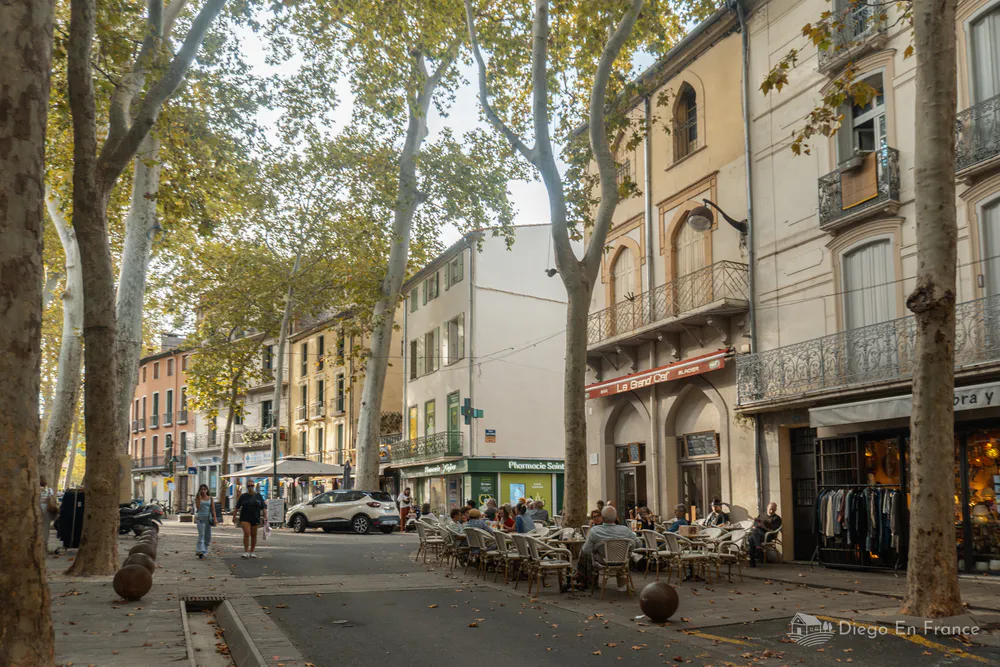
Between the ridgelines of Pic de Garces, the medieval lanes of Castelnou, the healing waters of Amélie-les-Bains, and the touches of modern art in Céret, each stage revealed a different facet of this deeply endearing valley.
The encounters were what gave the trip its special depth. Mélinda and her rousquilles, Éric and Nadège at Mas des Colombes, the artisans of the Moulin des Arts, or Jennifer’s smile at Les Glycines drew a human thread that connects all these places. Vallespir is not a backdrop: it is a living territory, generous and proud of its Catalan identity.
If you love authentic experiences, preserved villages, quiet panoramas, and moments that feel true, then Vallespir is waiting for you. You only need to let yourself be carried along to understand that in this gentle, secret valley, you don’t simply take a trip, you live a moment that stays in your heart for a very long time.
Frequently Asked Questions. Everything you need to know to plan a trip to Vallespir
Where is Vallespir located and how do I get there?
Vallespir is located in the southern part of the Pyrénées-Orientales, right on the border with Spain. It’s easy to reach by car from Perpignan (45 minutes), from the A9 highway, or from Figueres in Catalonia.
Is Vallespir suitable for family trips?
Yes, absolutely. The villages are calm, the hikes are accessible, and the cultural activities are also suitable for children. Some accommodations, like Mas des Colombes, are reserved for adults, but there are many family-friendly options around Céret.
Can you visit the thermal baths of Amélie-les-Bains without doing a full cure?
Yes. There are à-la-carte treatments for a simple moment of well-being. The Roman thermal baths can also be visited independently of the modern spa area.
Is Vallespir a good option for off-season travel?
Yes, and it’s actually one of its greatest advantages. In spring and autumn, the valley is calm, bright, and perfect for hikes and village visits.
What is the best time to visit Vallespir?
The best time to visit Vallespir is spring and autumn. During these months, the valley is calm, bright, and blessed with ideal temperatures for hiking, exploring villages, and enjoying nature without excessive heat or crowds. Summer is also pleasant but busier, while winter offers a very serene atmosphere — perfect if you’re looking for rest and quiet landscapes.
Newsletter Diego en France
Subscribe
No Spam. I send a maximum of 3 newsletters per month with the latest news about Diego in France.

